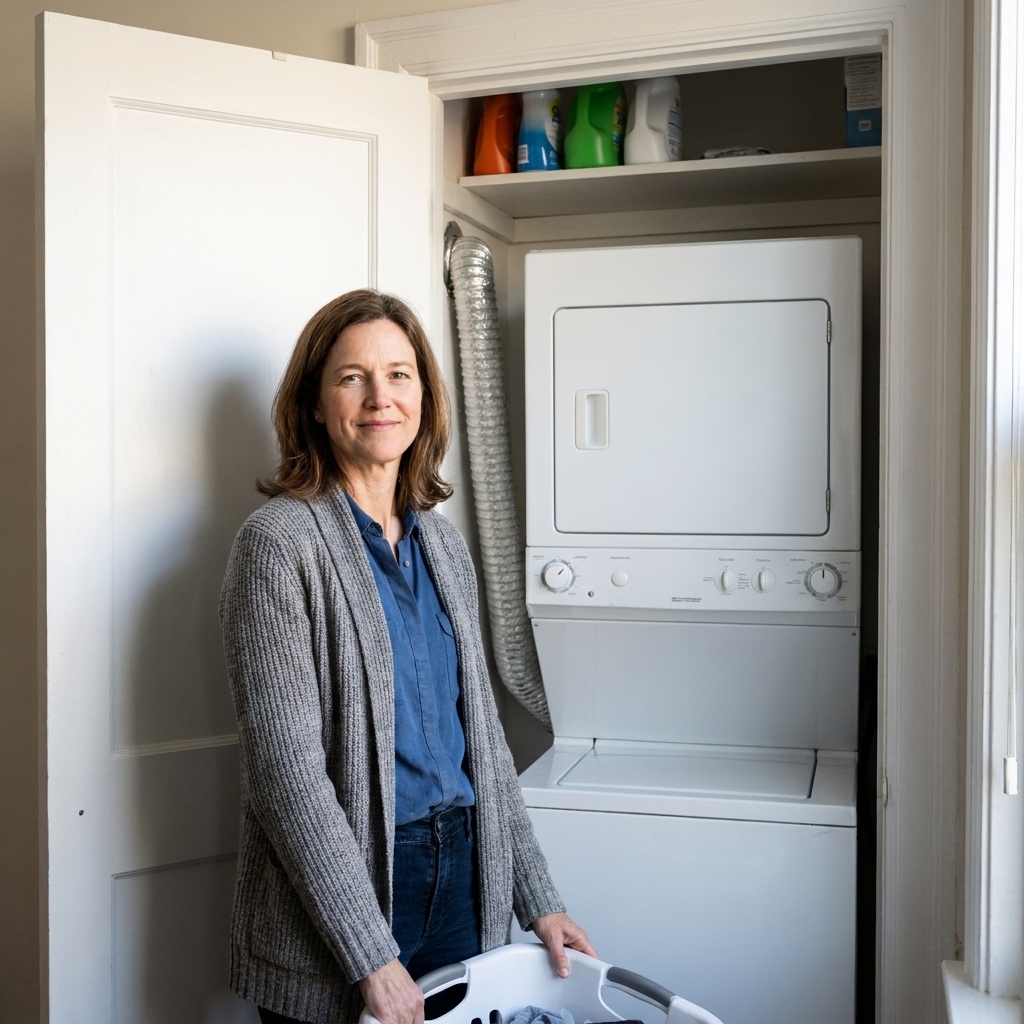

When I first tried to “fix” my own hallway laundry closet, I thought the answer was simple: stack the machines, end of story. Then I actually lived with it through three kids, muddy sports uniforms, and that one week when the dryer vent started acting up and I had to pull everything out like a game of appliance Jenga.
Stacked can save the most floor space. Side-by-side can create the most usable work surface and day-to-day flow. The best choice depends on what kind of space you are short on: walking room, storage, folding space, or access.
The quick verdict
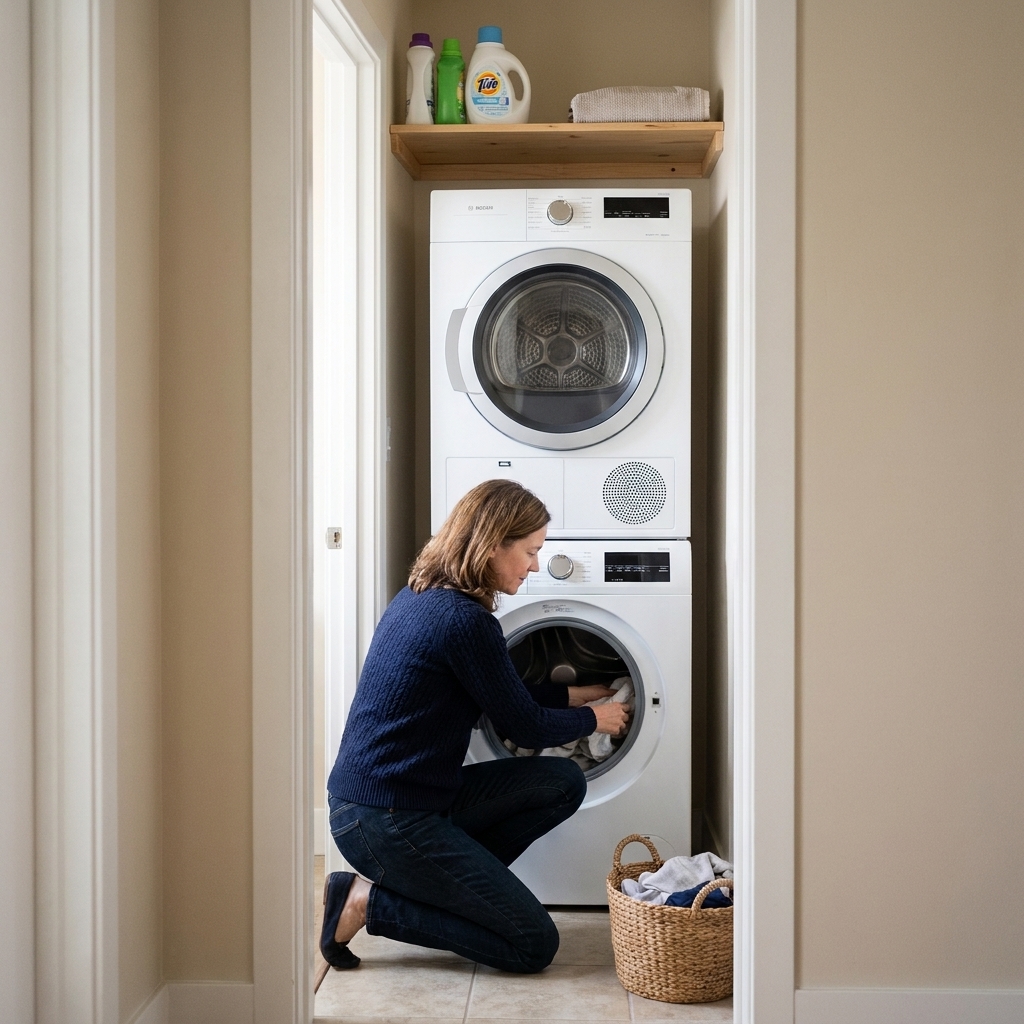
- If your laundry area is a closet or tight nook: stacked usually saves the most floor space.
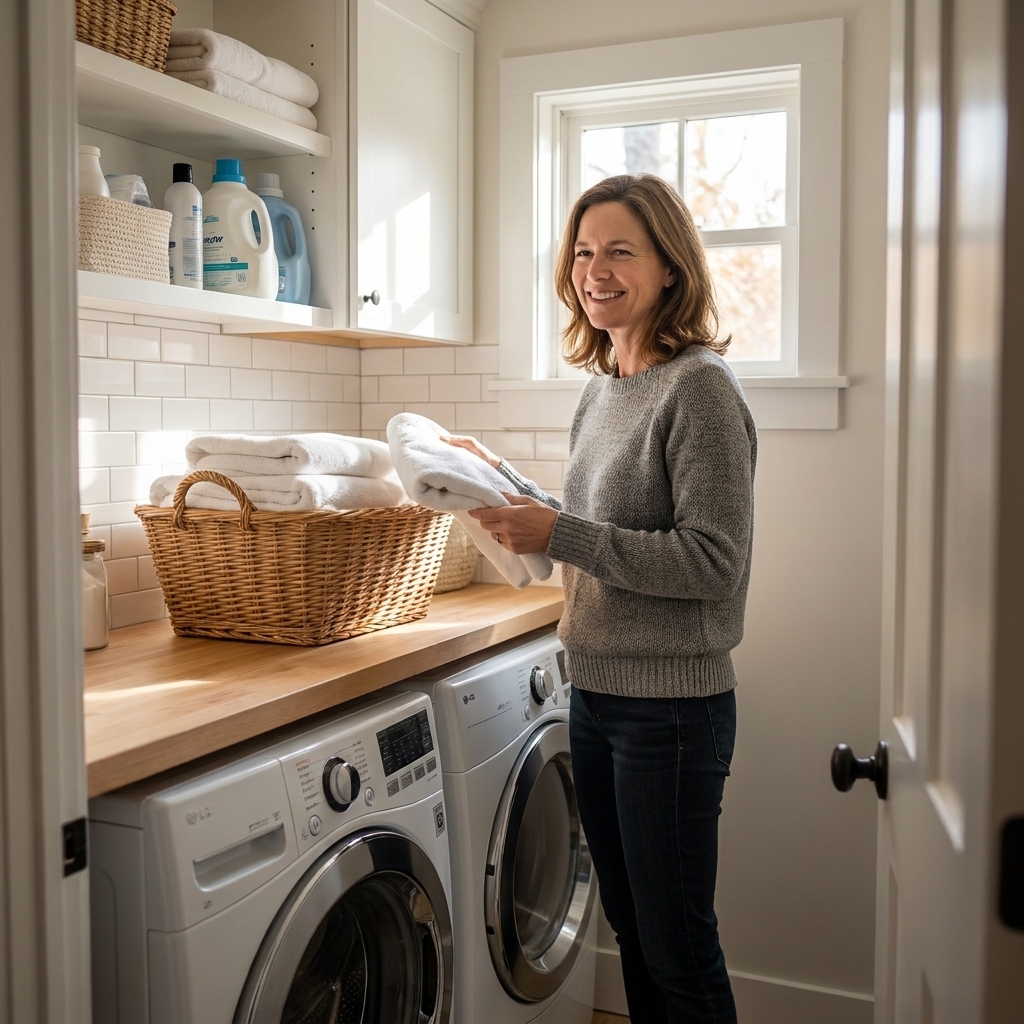
- If you need a continuous folding surface: side-by-side usually saves the most effort, and often feels bigger even when it is not.
- If your goal is maximum storage and workspace: the winner is often a hybrid: stacked machines plus a wall-mounted fold-down surface or a narrow pull-out.
What “space saved” really means
Most of us picture “space” as square footage. In a laundry room, usable space is more like a four-part puzzle:
- Footprint: the floor area your machines occupy.
- Clearances: door swing, lid opening, venting, and access for hookups and maintenance.
- Work zones: where you sort, treat stains, fold, and stage baskets.
- Vertical storage: shelves and cabinets you can reach and actually use without climbing like a raccoon.
Stacked usually wins on footprint. Side-by-side often wins on work zones. Vertical storage is the wildcard because stacking creates a tall “tower” that can block the only wall wide enough for two shelves or a cabinet run.
Floor footprint: stacked usually wins
Many full-size washers and dryers are about 27 inches wide, but it is not universal. Compact sets are often closer to 24 inches, and some larger models run wider. Before you decide, check the spec sheet for the exact width and depth of the models you own or plan to buy.
Put two machines side-by-side and you are dedicating roughly double the width along one wall, plus whatever gap you need for hoses, cords, and vibration.
With a stacked setup, you are typically using the width of one machine, then going up. That often frees up floor space for things like:
- a slim rolling cart
- a tall hamper
- a step can for lint and dryer sheets
- actual standing room where you are not pinned against a door
My mom-of-three reality check: floor space is what keeps laundry from spilling into the hallway. If you are constantly stepping over baskets, stacked is a strong move.
One more thing people miss: depth. A “27-inch” machine can be much deeper once you include the door, hoses, and the vent elbow. In closets, depth is often the real dealbreaker.
Clearances and access: side-by-side is often easier
This is the part people forget until the first repair call.
Stacked layout clearance concerns
- Service access: if the dryer is on top, reaching vent connections and controls can be harder.
- Vent routing: the vent path is still the boss of your layout. In very tight closets, space behind the dryer can be the limiting factor. Follow your model’s installation manual for required clearances and approved venting parts. I go deeper on the real-world closet side of this in Airflow and Dryer Vent Clearance in Ultra-Compact Laundry Closets.
- Door swing: if your closet doors are tight, stacked can reduce your ability to open doors fully and pull out drawers or lint screens comfortably.
Side-by-side layout clearance concerns
- More width required: you need enough wall length plus side clearance.
- Walkway pinch points: in a narrow room, side-by-side can reduce the aisle to an annoying shuffle.
Bottom line: side-by-side is often simpler for maintenance, venting checks, and day-to-day use. Stacked can still be totally serviceable if you plan for access and follow the installation requirements.
Appliance limits for stacking
Quick reality check before you fall in love with a stacked plan.
- You usually need front-load machines to stack. Most top-load washers are not designed to have a dryer mounted above them.
- Use the correct stacking kit. Many brands require a model-specific stacking kit for safety and stability. If your washer and dryer are mismatched, verify compatibility before you commit.
- Plan for a safe setup. A level floor, proper anchoring, and the right kit matter. A wobbly stack is not a “small problem.”
Storage: what walls you gain or lose
This is where the “which saves the most space?” debate gets interesting. Stacked saves floor, but it can also eat the most valuable vertical real estate: the wall space directly above and beside the machines.
When stacked gives you more storage
- You can add shelves or a cabinet on the adjacent wall because you freed up floor width.
- You have a corner or narrow wall where a tall cabinet fits better than a countertop run.
- You are using back-of-door storage and do not need overhead cabinets above the machines.
If you have not tried using the back of the door, it is one of my favorite “found space” tricks. See Back-of-Door Laundry Closet Storage Ideas.
When side-by-side gives you more storage
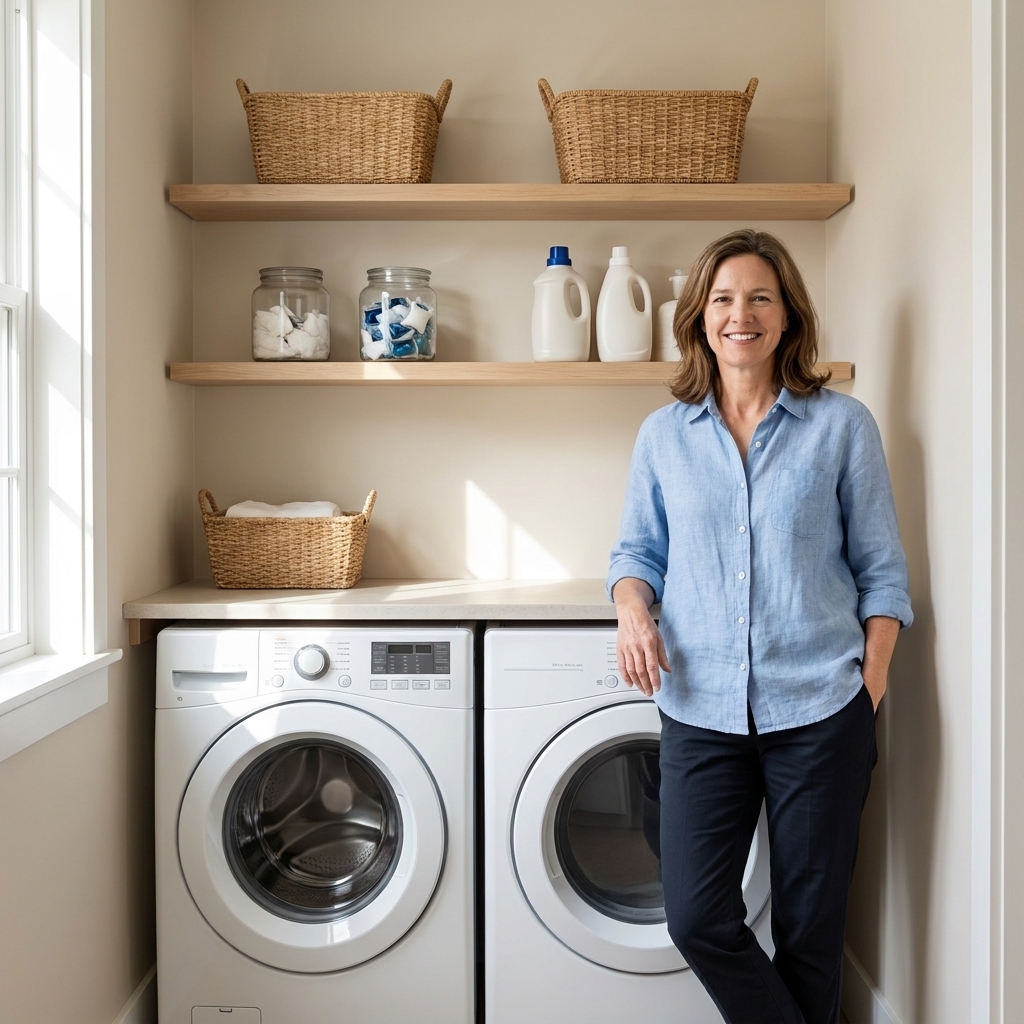
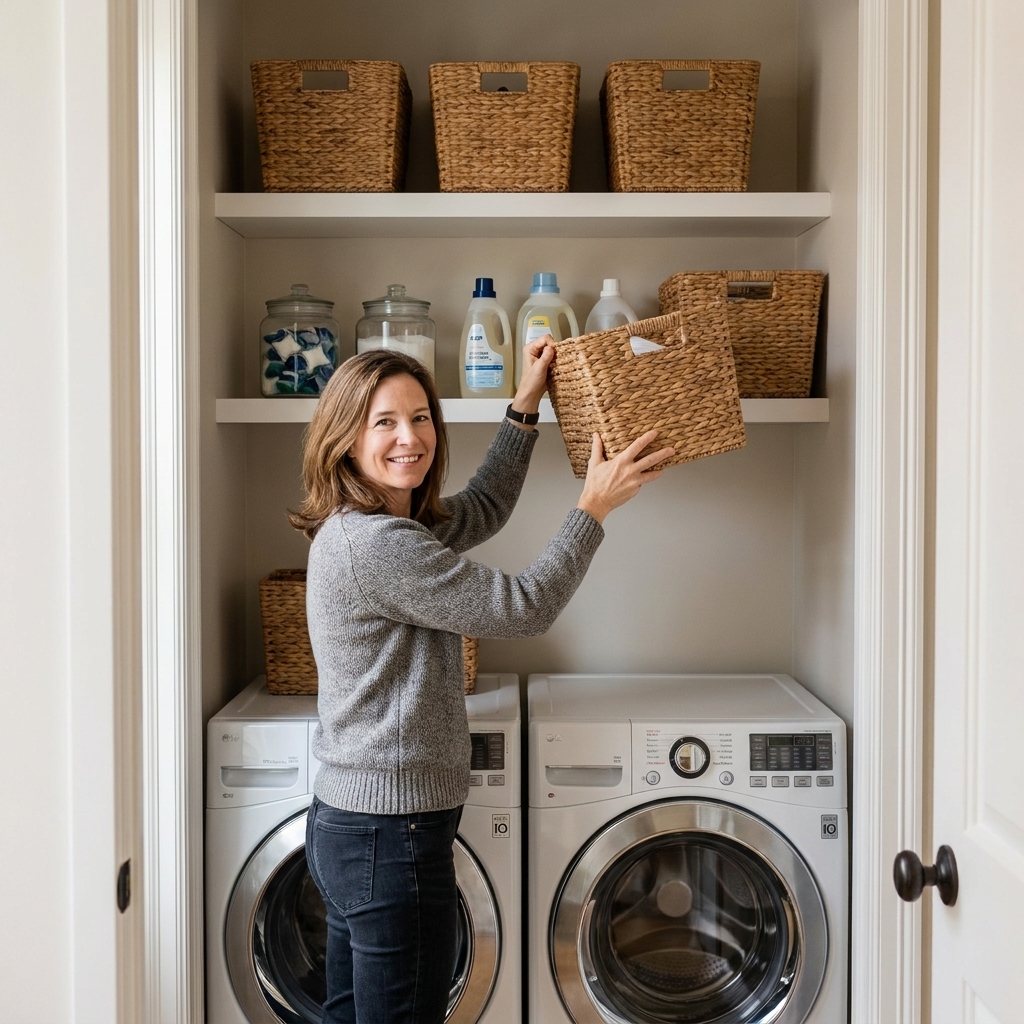
- You can run continuous shelving or cabinets above both machines.
- You can add wall storage that is easy to reach without a step stool.
- You can keep detergents up high but still visible and accessible, especially if you decant into matching, easy-grab bottles. (I am a big fan of simplifying the chaos here: Decanting and Organizing Laundry Supplies.)
Practical takeaway: if your room has one long usable wall, side-by-side often creates better “organized storage space.” If your room is more like a closet where width is the problem, stacked usually creates better “I can breathe and move” space.
Workspace and folding: side-by-side wins
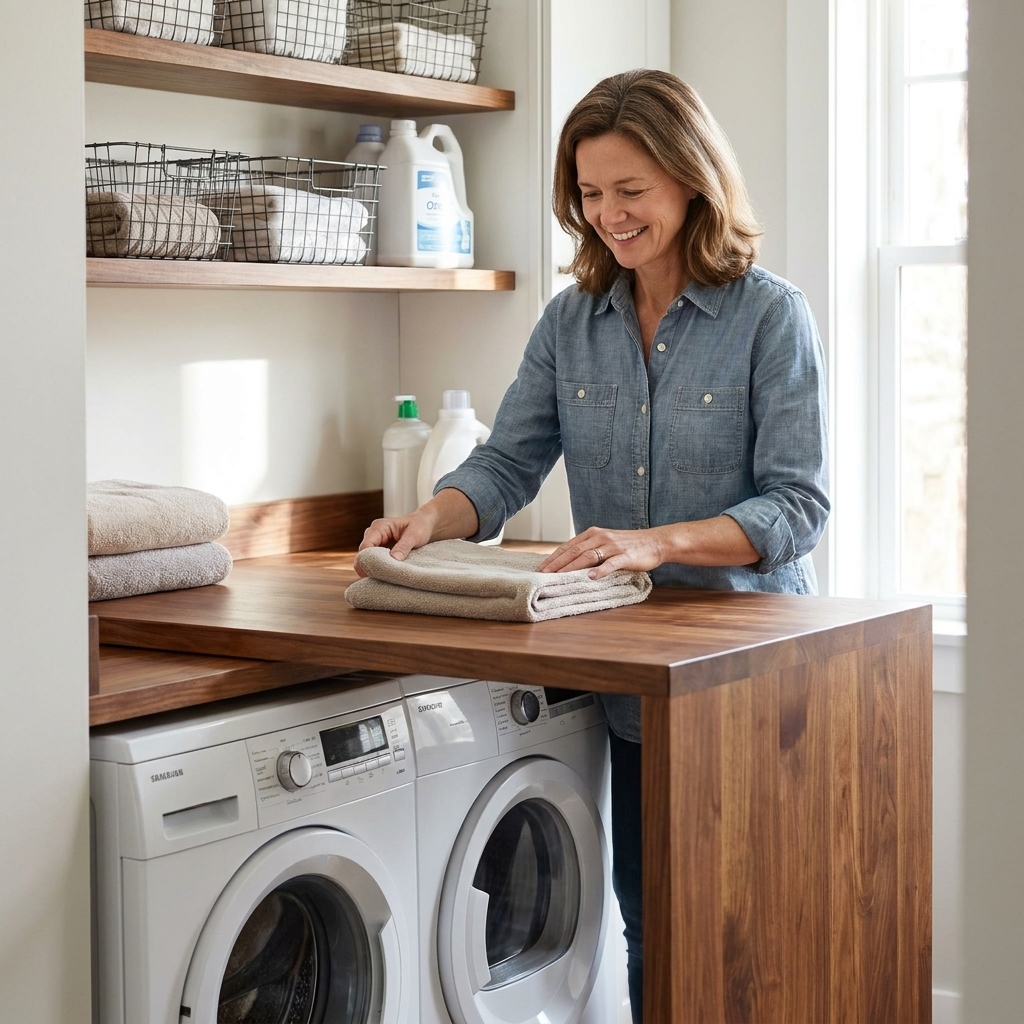
If you want a real folding station, side-by-side is the friendliest setup because you can top both machines with a single continuous counter. That one move changes how laundry feels: you stop balancing piles on the dryer and you start finishing loads in the room they were washed in.
If you already have front-loaders and you are dreaming of that smooth countertop look, my favorite DIY is here: DIY Waterfall Countertop Folding Station Over Front-Loaders.
Can stacked still have a folding zone?
Yes. It just usually needs to be separate from the machines. Options I love in tight spaces:
- Wall-mounted fold-down surface: perfect in a hallway laundry or closet. Pair it with the guide in How to Install a Space-Saving Fold-Down Wall Drying Rack and you have a tiny-zone workhorse wall.
- Narrow rolling cart: a sturdy cart can act like a mini landing pad for baskets and supplies.
- Pull-out shelf in a base cabinet: if you have room for even one slim cabinet, a pull-out “folding shelf” is gold.
Ergonomics: who uses the room?
As a busy mom, I have learned that “space-saving” is only a win if everyone can use it safely.
Stacked can be tough if:
- you are shorter and cannot comfortably reach dryer controls or the drum
- kids help with laundry and cannot safely load or unload
- you have back or shoulder issues and bending, lifting, or reaching is a struggle
Side-by-side can be tough if:
- you are constantly navigating around open appliance doors in a narrow aisle
- your laundry area is a pass-through and baskets become traffic cones
My rule: if the person doing most of the laundry has to use a step stool several times per load, stacked might save square footage but cost you sanity.
Measure these 6 things
Before you pick a configuration, grab a tape measure and jot down:
- Wall length where machines would sit
- Room depth from back wall to the edge of the walkway
- Door swing for the room or closet doors
- Appliance door clearance (especially front-loaders)
- Vent path and the manufacturer-required room behind the dryer
- Hookup locations (water, drain, gas or electric)
If your machines are currently wedged in and you are trying to reclaim the dead space between them, this is a quick win: Genius Storage for the Gap Between Washer and Dryer.
Best layouts for tiny spaces
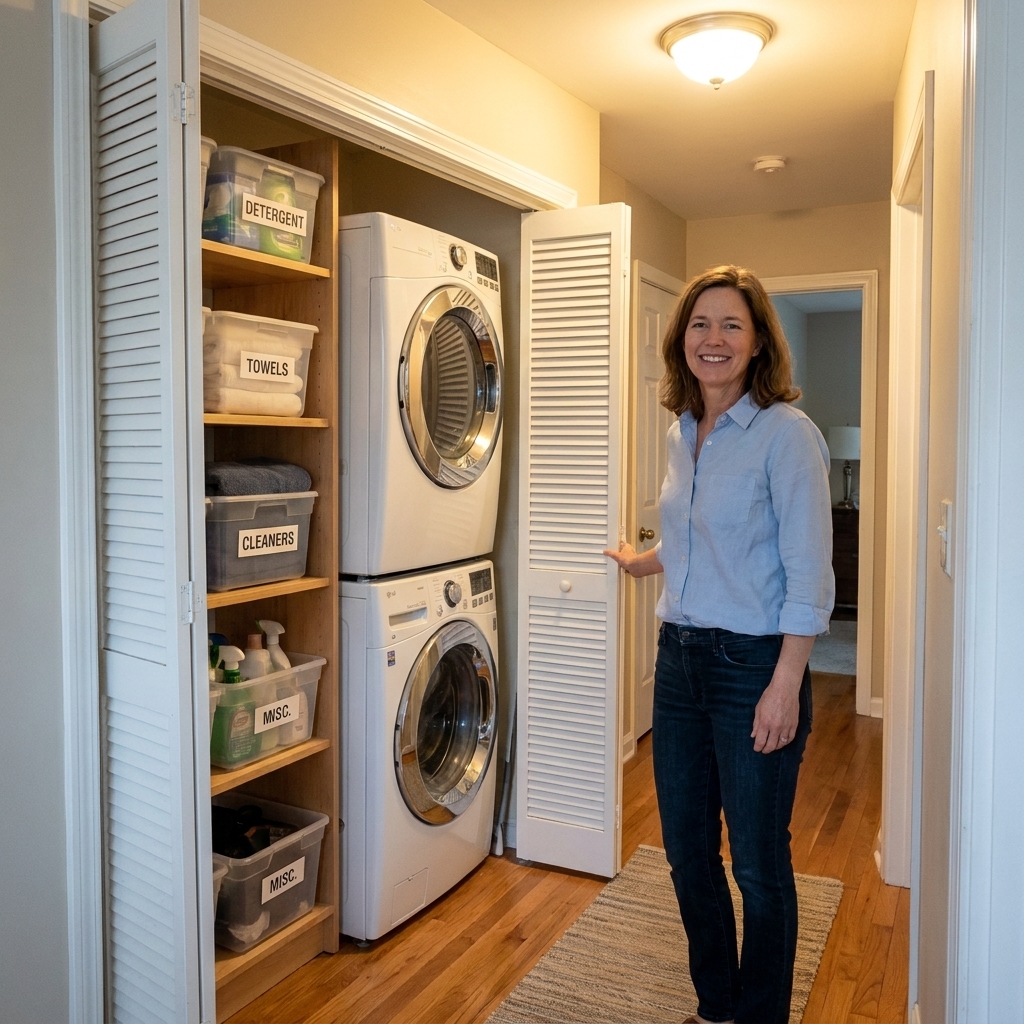
1) Bi-fold laundry closet
Usually best: stacked, because you need standing room and door clearance.
Bonus move: add storage that does not steal depth. This guide can help you squeeze every inch: Maximizing Storage in a Tiny Bi-Fold Laundry Closet.
2) Narrow galley laundry room
Usually best: stacked if the aisle is tight, side-by-side if you have enough depth for a comfortable walkway even with doors open.
3) Laundry in a mudroom or shared utility space
Usually best: side-by-side with a counter, because you want a landing zone for backpacks, pet stuff, and random life.
4) Family laundry zone with multiple hampers
Usually best: whichever layout leaves room for a sorting system you will actually keep up with. I built mine so the “pre-sorting” is automatic: Built-In Laundry Sorting Hamper System for Families.
Vertical storage: the real trick
People ask me, “Which setup gives more vertical storage?” and my honest answer is: the one that leaves you a clean wall where shelves will not fight doors, vents, and your elbows.
If you are planning shelves, it helps to choose the right type for the job. I break down the pros and cons here: Floating Shelves vs. Wire Racks for Laundry Storage.
And if your machines are side-by-side and you are craving more drawer-like storage without remodeling, consider pedestals you can build or buy. I am partial to deep drawers for bulk items: DIY Washer and Dryer Pedestals With Deep Drawer Storage.
My decision checklist
- Go stacked if you need floor space for standing room, a hamper zone, or to keep doors from feeling cramped.
- Go side-by-side if you want a true folding counter and easy-to-reach overhead storage.
- Prioritize access if your vent is tricky or your machines are in a closet. A layout that is hard to service is not a space-saver, it is a future headache.
- Design for your habits: if you fold in the laundry room, you need a surface. If you fold on the couch, maybe you need storage more than counter space.
FAQ
Does stacking always save space?
It almost always saves floor space when you are comparing similar-capacity machines, but it does not always save usable space. If stacking blocks a wall where you could have added shelves, or makes maintenance impossible without pulling machines out, you may lose the advantage.
Is a countertop over side-by-side machines worth it?
If you fold in the laundry room, yes. A continuous surface prevents the clean pile from migrating to the nearest chair. Even a simple removable top can make the room feel more functional.
What if my laundry space is a closet and I still want a folding area?
Use a separate folding zone: a wall-mounted fold-down surface, a narrow rolling cart, or a nearby linen-closet shelf that becomes your folding perch. Small spaces work best when each surface has one job.