
I have installed both floating shelves and wire racks in laundry rooms, closets, and that awkward little hallway nook that somehow becomes the command center for a family of five. If you are staring at bare walls and a growing pile of detergent, stain remover, baskets, and “where do we put this?” items, the right shelf system really can make the whole routine feel calmer.
Let’s break down floating shelves versus wire racks the way a real laundry room actually uses them: cost, strength, install hassle, and how they look when life gets messy.
At a glance
If you need a quick decision, here is the big picture. Then we will dig into the details that usually make the choice clear.
| Factor | Floating shelves (wood) | Wire racks |
|---|---|---|
| Typical cost | Moderate to higher, depending on wood and brackets | Usually lower, especially pre-made kits |
| Weight capacity | Can be very strong when engineered well and anchored into studs or blocking | Varies by gauge and bracket spacing; can sag if spans are long or support is light |
| Installation | More measuring and leveling; best when you can hit studs | Faster install; adjustable; still needs solid anchors |
| Aesthetic | Warm, custom, built-in look | Utility look; can feel visually busy |
| Maintenance | Easy wipe-down; great for folded items and baskets | Can collect lint and dust; small items can tip; wire lines can happen on folded linens |
| Best for | Pretty storage, baskets, folded linens, folding zones | Bulk storage, rentals, quick upgrades, odd wall widths |
Cost
Floating shelves
Floating shelves can be budget-friendly or surprisingly pricey. The cost swings based on two choices: the wood and the hardware.
- Budget build: pine boards, leftover trim, and basic heavy-duty brackets you conceal with a face board.
- Mid-range: pre-made “floating” shelf kits plus decent anchors, or stained poplar with hidden bracket rods.
- Higher-end: thick hardwood shelves, custom brackets, or a full built-in look with side panels.
One sneaky cost with floating shelves is tools and finishing. If you need a new level, stud finder, sander, or stain, that can bump the total.
Wire racks
Wire racks usually win on upfront cost. Kits are common, widely available, and often include the standards, brackets, and shelves in one box.
- Budget win: one long wire shelf above the machines for detergents and baskets.
- Expandable: systems with vertical tracks where you can add shelves later.
If you are doing a quick refresh or outfitting a laundry closet, wire racks can give you functional storage for less money, fast.
Weight and safety
In a laundry room, the heavy stuff adds up quickly: big detergent jugs, boxes of dryer sheets, spare paper products, and those jumbo baskets of “clean but not folded.” Here’s the honest truth: either option can be strong, but only if it is installed correctly.
Two guardrails I always use before I load a shelf up:
- Check the manufacturer’s load rating for any pre-made wire system or floating shelf kit.
- Plan support spacing so weight is carried by studs, blocking, or the right anchors for your wall, not wishful thinking and drywall alone.
Floating shelves
Floating shelves can be very strong when the shelf support is anchored into studs or into solid blocking behind the drywall. The bracket type matters a lot here. A chunky wood shelf sitting on sturdy visible brackets is usually more forgiving than a true “floating” rod system that only has a couple of attachment points.
I reach for well-supported wood shelves when I want to store:
- detergent refills and stain removers
- bins of cleaning supplies
- stacked towels and extra linens
- heavy baskets (especially if kids tend to yank them off the shelf)
Common failure point: hidden “floating” rod brackets installed only into drywall anchors, especially when the shelf is deep and heavily loaded.
Wire racks
Wire shelves do great with lighter, bulky items like toilet paper, empty baskets, or folded rags. Sag risk depends on the shelf gauge, how long the span is, and how often it is supported. If you are storing anything dense (detergent jugs, big bins of cleaners), you will want more brackets and more attachment into studs whenever possible.
Common failure point: overloading the center of a long wire shelf with heavy containers, plus using weak anchors.
My mom-of-three rule: If it would hurt your foot when it falls, give it a shelf system that is properly supported into studs or blocking. If it is light and annoying rather than dangerous, wire is usually fine.
Install difficulty
Floating shelves
Floating shelves are not hard, but they are less forgiving. You typically need careful layout so the shelves are level, evenly spaced, and not bumping into doors or appliance lids.
Expect to spend time on:
- finding studs and planning bracket locations
- making sure shelves clear the washer and dryer vibrations
- cutting boards square, sanding, and finishing
- installing brackets perfectly level so the shelf does not tilt
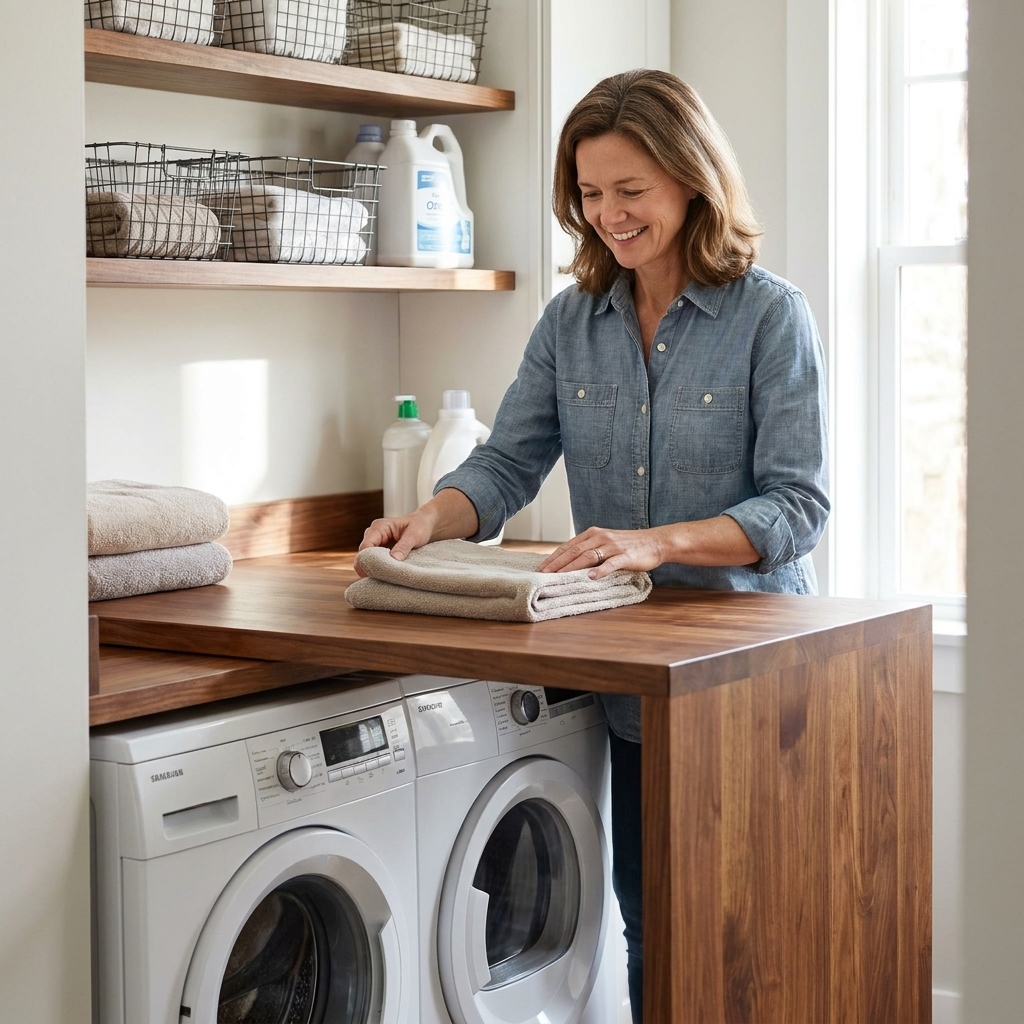
If you like the idea of a true folding station vibe, floating shelves pair beautifully with a counter over front loaders. I shared my own build process here: DIY waterfall countertop folding station over front loaders.
Wire racks
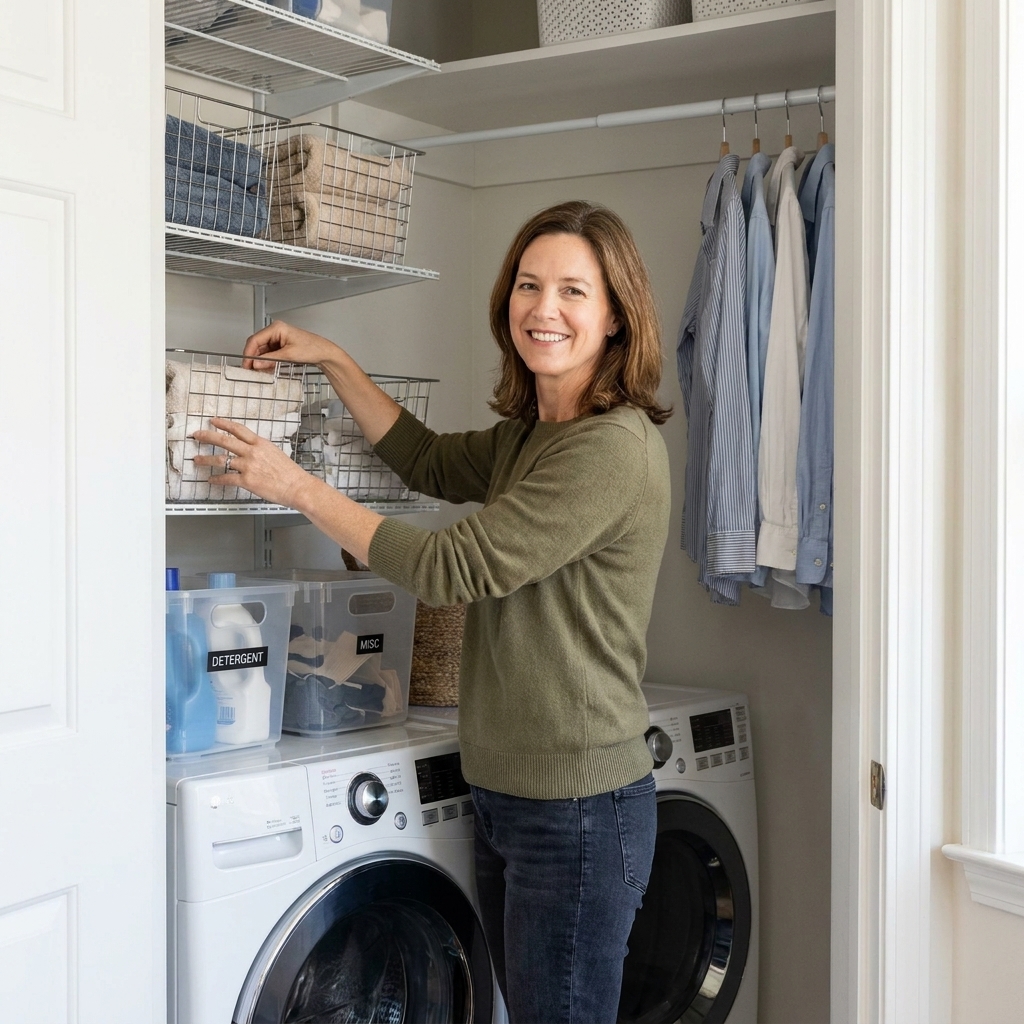
Wire racks are usually quicker because they are pre-sized and made to mount with a predictable set of clips and brackets. They are also forgiving in tight closets because you can often:
- cut the wire shelf to fit width
- add a second shelf later without redoing everything
- adjust height if you guessed wrong the first time
One caution: wire systems still need solid anchoring. If you cannot hit studs, use the strongest anchors allowed for your wall type and keep heavy loads near supports.
Looks in real life
Floating shelves
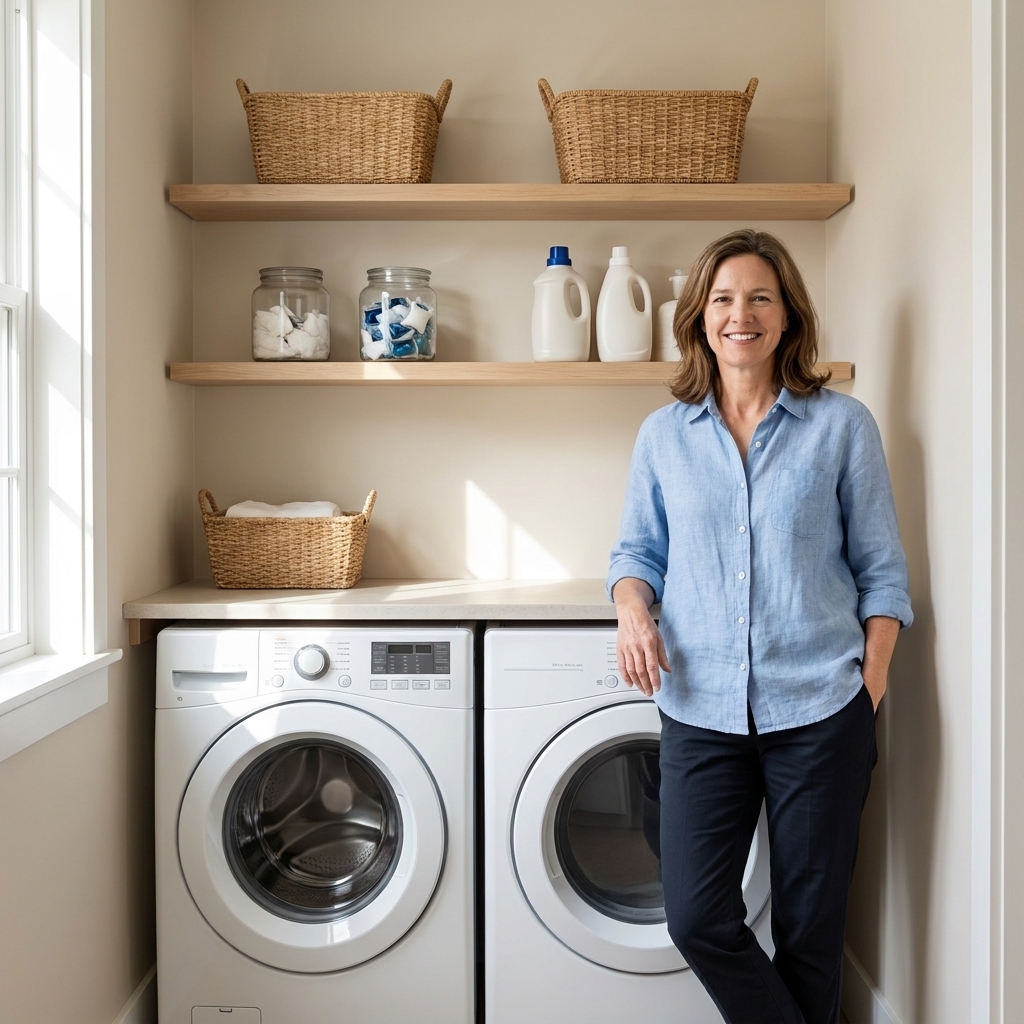
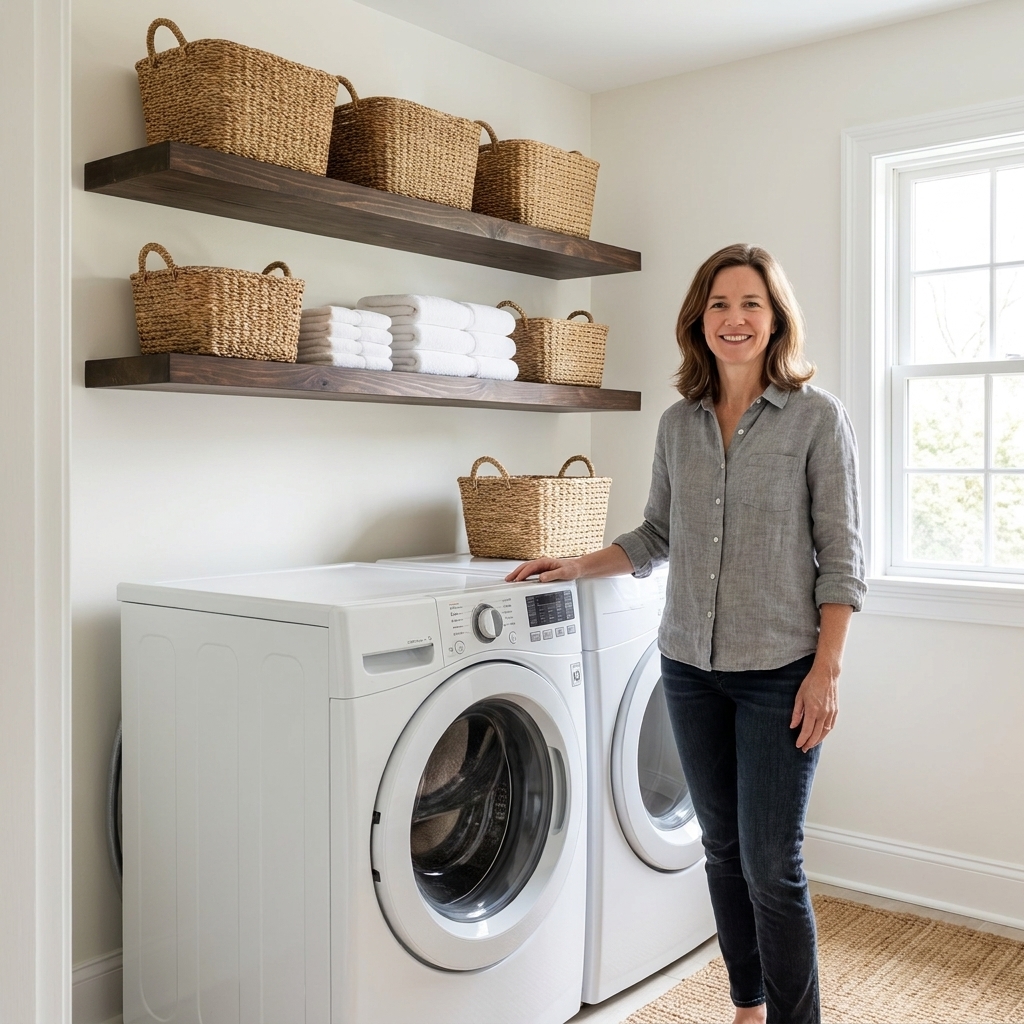
Floating shelves give that warm, intentional look that can make even a tiny laundry corner feel like a room, not a storage accident. Wood also tends to hide visual clutter better. Put mismatched detergent bottles in a basket, and suddenly it looks organized.
If your laundry area is visible from a hallway, kitchen, or mudroom, floating shelves are often worth the extra effort just for the calmer look.
Wire racks
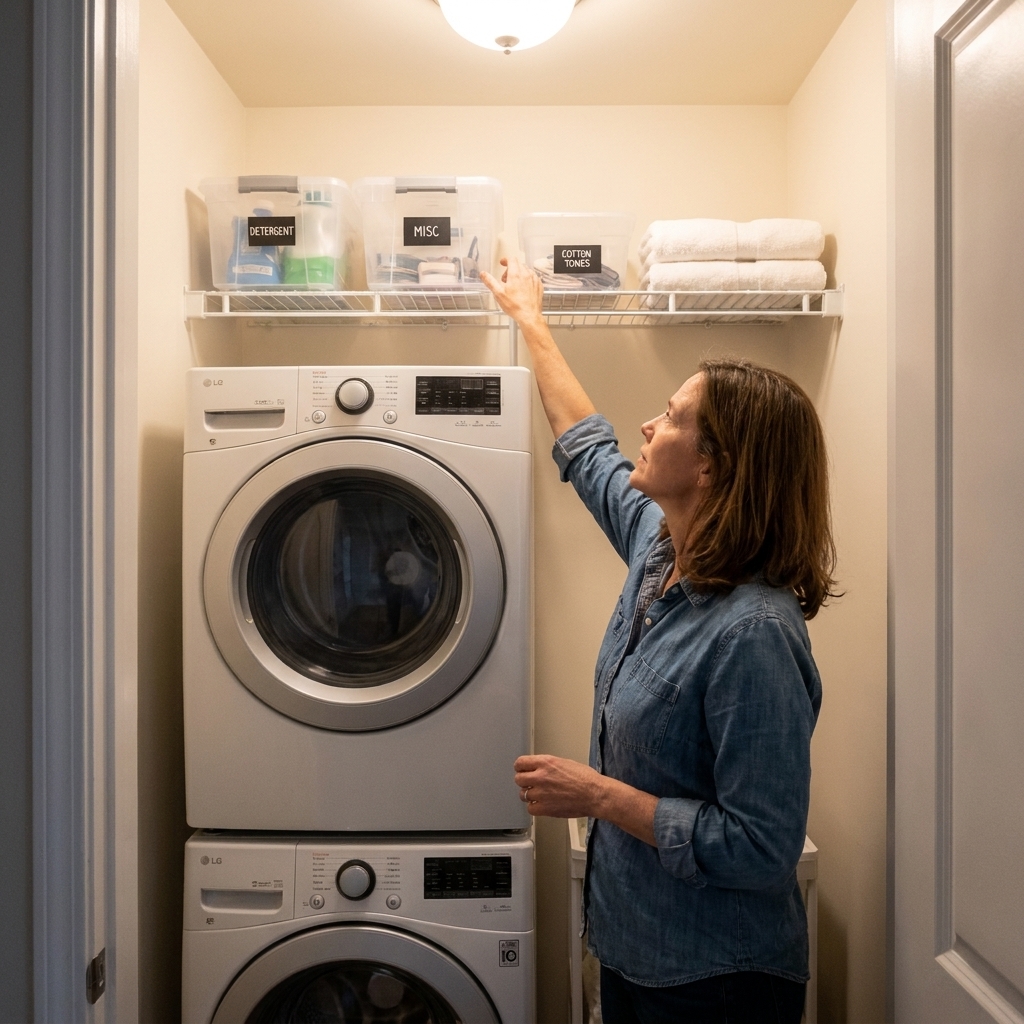
Wire racks read as utility storage. That is not a bad thing, but they can look cluttered fast because everything is on display and the wire pattern adds visual noise.
My favorite way to make wire racks look tidy is to commit to matching bins. When everything is contained, the wire fades into the background.
Everyday quirks
Wire rack quirks
- Small items can tip: clothespins, stain sticks, and little spray bottles fall over easily.
- Dust and lint can build up: the wire grid can catch lint and dust bunnies, especially above the dryer.
- Wire lines can happen: folded items can pick up lines if they sit there a long time.
Floating shelf quirks
- Depth matters: too deep and you bump your head while switching laundry. Too shallow and your bins will not fit.
- Spacing is everything: leave room for tall bottles and for your hands to grab bins without scraping knuckles.
- Finish choices: unsealed wood can stain in a laundry room. Paint or a good sealer keeps life easier.
Moisture and venting
Laundry rooms are sneaky-humid. Between damp towels, steam, and dryer heat, your shelves take a beating.
- Wood shelves: seal them. Even if you love the raw wood look, a clear sealer (or a good primer and paint) helps protect against water rings, detergent drips, and that “mystery splash” that always shows up.
- Wire racks: in a damp basement or a laundry area with poor ventilation, wire can eventually show rust at chips or scratches. A dehumidifier and keeping the dryer venting properly makes a bigger difference than most people expect.
Walls and anchors
Not every laundry room has nice, predictable drywall over studs, and that changes the plan fast.
- Drywall with studs: the best case. Hit studs whenever you can, especially for heavy storage.
- Plaster: use the right drill bit and anchors rated for plaster, and take your time. Old walls crack when you rush.
- Masonry or brick: you will need masonry fasteners and a hammer drill. This is totally doable, but it is not the same install as drywall.
When in doubt, I would rather add a properly secured backer board into studs and mount shelves to that than rely on a handful of random anchors.
What is best for you?
Choose floating shelves if...
- your laundry space is visible and you want it to feel cohesive with the rest of your home
- you want to store heavier supplies more confidently, with supports anchored into studs or blocking
- you love baskets and folded stacks and want them to look intentional
- you are building around a countertop or folding station
Choose wire racks if...
- you need a fast, affordable upgrade
- you are in a rental or need something easy to remove later
- your walls are tricky and you want an adjustable system
- you mostly store light, bulky items and bins
My favorite compromise
In a family laundry space, a hybrid often wins:
- Floating shelf over the folding zone for baskets and the things you see every day.
- Wire rack higher up for backstock like paper towels, extra soaps, and seasonal items.
If you are working with a truly tight footprint, you might also like browsing our small-space ideas in Small Spaces & Closets or storage-focused projects in Organization & Storage.
Quick sizing tips
- Depth: 10 to 12 inches is great for slim bins, cleaning caddies, and detergent bottles without feeling like a head-bonker over appliances. If you want to park full-size laundry baskets up there, you may need 12 to 16 inches, but test your head clearance and reach first.
- Height above machines: leave breathing room for tall bottles and for vibration. If your machines are top loaders, make sure lids clear comfortably.
- Spacing between shelves: plan one tall zone for bottles (about 12 to 16 inches) and one shorter zone for folded towels (about 9 to 11 inches).
FAQ
Do floating shelves hold more weight than wire shelves?
They can, but it depends on the bracket style, how many studs you hit, and how the shelf is built. Some true “floating” rod systems have lower load ratings than people expect. Wire shelves can also be very solid when the system is rated well and supported often. If you are unsure, check the manufacturer’s load rating and add supports rather than guessing.
Are wire shelves bad for laundry rooms?
Not at all. They are affordable, adjustable, and great for closet-style laundry spaces. The key is to use bins so small items do not wobble or fall through, and to avoid overloading the center of long shelves.
What looks more modern?
Most people consider simple wood floating shelves more modern and finished. Wire racks read more utility. If you want wire but a cleaner look, keep the shelf line simple and use matching bins.
What if I cannot find studs where I need the shelf?
For floating shelves, consider adding a painted backer board secured into studs first, then mount brackets into that. For wire racks, use the strongest anchors suitable for your wall type and add extra brackets when possible.
My bottom line
If you want your laundry room to feel like a peaceful, hard-working space, floating shelves are often the long-term win for strength and style when they are properly supported. If you need a quick, budget-friendly storage boost, wire racks are a perfectly solid choice, especially when paired with bins and installed with enough brackets.
And if you are like me and you want it all, the hybrid setup is what I keep coming back to: pretty shelves where your eyes land, practical shelves where only you see the chaos.