
The first time I decanted detergent, I did it for the shallowest reason possible: my laundry closet was tiny, dark, and the mismatched bottles made it feel even more chaotic. I poured everything into pretty containers, lined them up, and for about 48 hours I felt like I had my life together.
Then reality hit. A cap dripped. A “helpful” kid tried to top off the wrong bottle. And I realized decanting only works when it is done safely and set up for actual, messy, everyday laundry.
This guide is exactly what I wish I had before I started: what to decant, what to leave alone, which containers actually behave, and how to organize it all so your shelves stay calm even when the laundry never ends.
Decanting basics
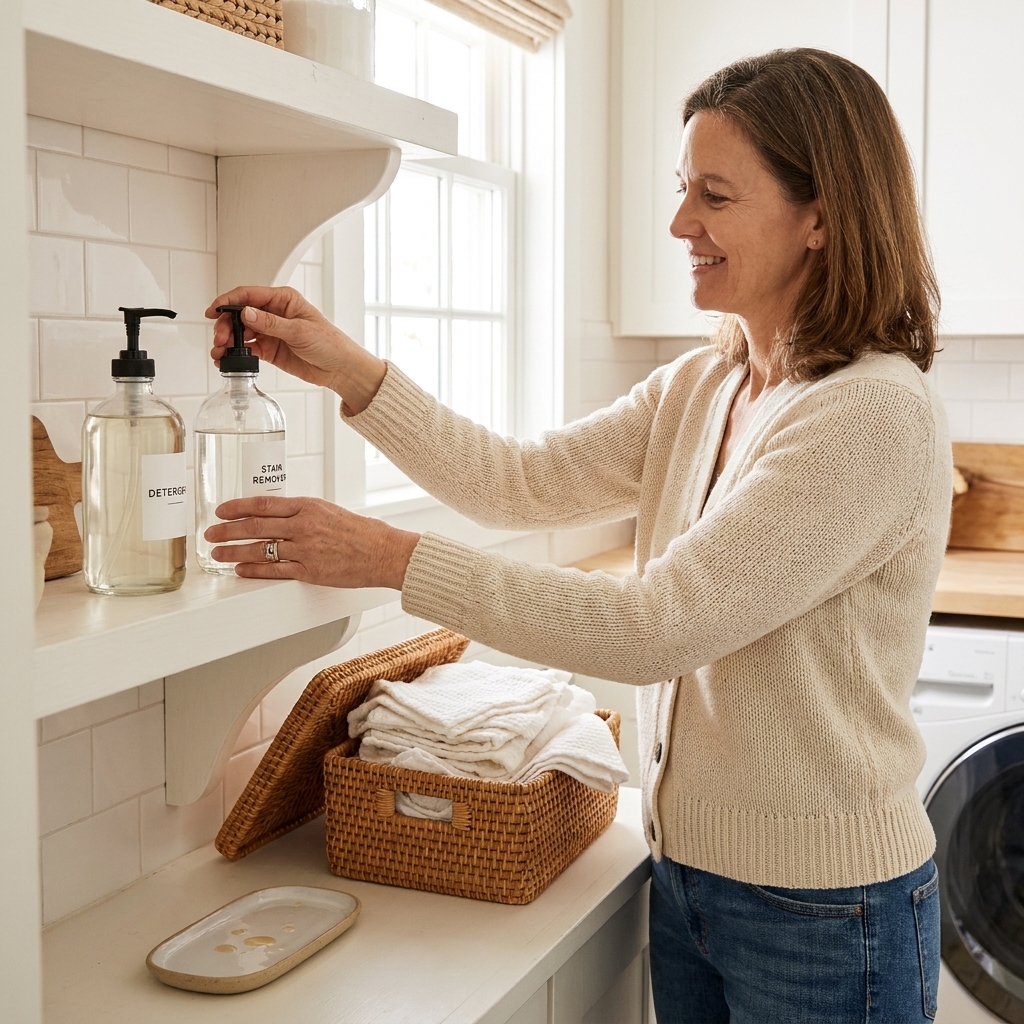
Decanting just means transferring a product from the original packaging into a different container. In a laundry room, that usually looks like moving detergent, scent boosters, or stain remover into jars, pump bottles, or lidded canisters.
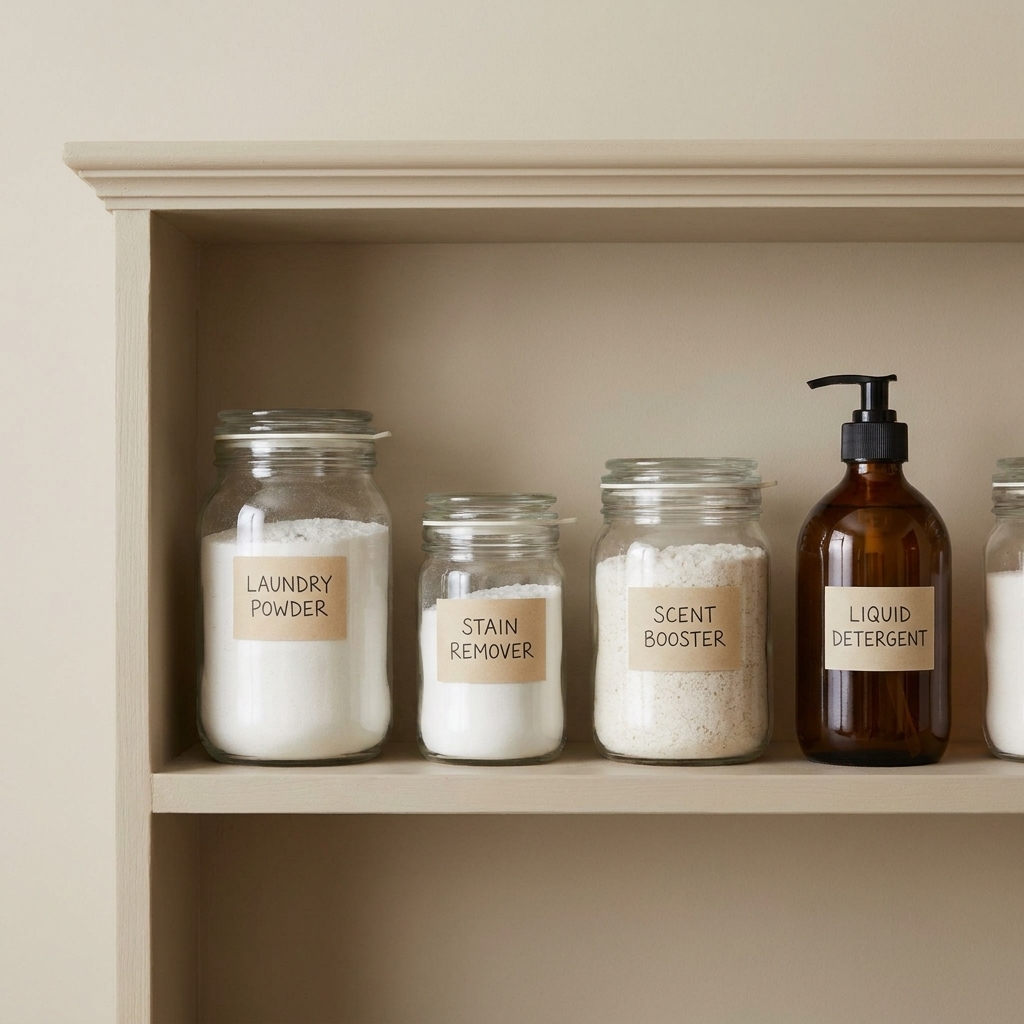
- Less visual clutter: matching containers make even a basic shelf look intentional.
- Better fit for small spaces: shorter, squarer bottles often fit where bulky jugs do not.
- Faster routines: a pump at counter height is easier than wrestling a heavy jug.
- Cleaner shelves: if you plan for drips, your setup stays livable.
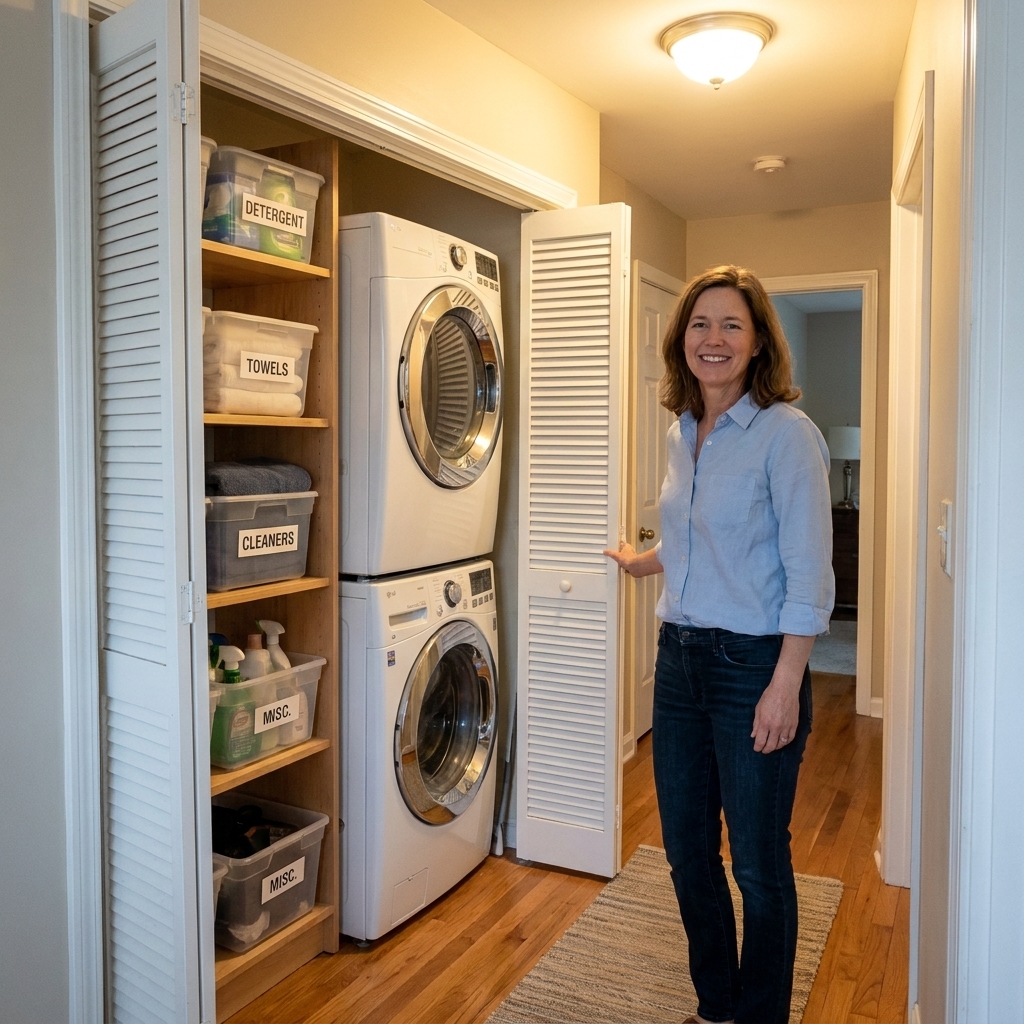
If your laundry area is cramped, you may also like my small-space thinking in Maximizing Storage in a Tiny Bi-Fold Laundry Closet.
Safety first
I love a pretty shelf, but I love safe kids and stable, effective products more. Here are the “do not decant” rules I follow in my own home.
Do not decant if you will lose safety info
Original labels include first-aid instructions, ingredient disclosures, and the phone number to call in an emergency. If you decant anyway, you need to recreate that clarity with labeling, and you need to be honest about whether you will keep up with it.
Never mix products or “top off”
Do not combine different brands or formulas, even if they seem similar. Some ingredients can react dangerously. For example, never mix bleach with ammonia or acids, and do not pour random cleaners together just because they are both “laundry” products. Even when there is no obvious reaction, you can still cause clumping, separation, or reduced cleaning power.
Also skip topping off. Finish one batch, wash the container, dry it fully, then refill.
Keep pods and single-dose packs in original packaging
Laundry pods and other single-dose packs should stay in their original, child-resistant packaging, especially in homes with kids or guests. If you absolutely must move them, use a truly child-resistant container and store it up high. For most families, the safest choice is leaving them as-is.
Think twice about bleach
Bleach is one of the easiest products to decant badly. It can degrade with light and heat, and it can corrode metals. Many manufacturers recommend keeping bleach in the original opaque container, and that is honestly my favorite advice.
If you decant bleach at all, do it only into an opaque, bleach-rated HDPE container with a tight cap (no metal pump parts), label it loudly, store it high and separate, and plan to use it quickly. Never put bleach in a glass bottle with a metal pump.
What you can decant
Here is a practical breakdown for the most common laundry products.
Liquid detergent
- Best containers: HDPE or PET plastic, or glass with a non-metal, chemical-safe cap or pump. A wide base matters.
- My tip: if you use a pump, calibrate it once. Pump into a tablespoon so you know what one pump equals, then write it on the label.
- Watch for: highly fragranced or solvent-heavy formulas can be harder on pumps, gaskets, and some plastics. If the product smells intensely perfumey or feels “solvent-y,” test compatibility and avoid decorative metal components that can corrode.
Fabric softener
- Best containers: a pump bottle or flip-top squeeze bottle.
- Watch for: residue buildup. Softener can get gummy around threads, so pick containers with simple parts you can clean.
Stain remover (liquid)
- Best containers: a smaller HDPE or PET bottle with a sturdy pump or flip-top.
- Watch for: strong formulas. When in doubt, keep it in the original bottle or choose a container specifically meant for chemicals rather than a novelty dispenser.
Scent boosters (beads)
- Best containers: glass jars with gasket lids or screw-top lids.
- My tip: use a scoop that lives in the jar so you are not hunting for it with damp hands.
Laundry powder
- Best containers: airtight canisters. Glass can look great, but a tight seal matters more than anything.
- Watch for: humidity. If your laundry room gets steamy, you may need a more aggressive seal.

Jars vs pumps
Glass jars
- Best for: scent beads, powders, clothespins, dryer balls, and clean rags.
- Pros: easy to see levels, easy to wipe, classic look.
- Cons: breakable, and wide-mouth jars can invite spills when you are rushing.
Pump dispensers
- Best for: liquid detergent, stain remover, fabric softener, and hand soap if your laundry sink doubles as a mudroom station.
- Pros: one-handed use, less glugging, easier for older kids learning chores.
- Cons: pumps drip, pumps clog, and cheap pumps fail fast.
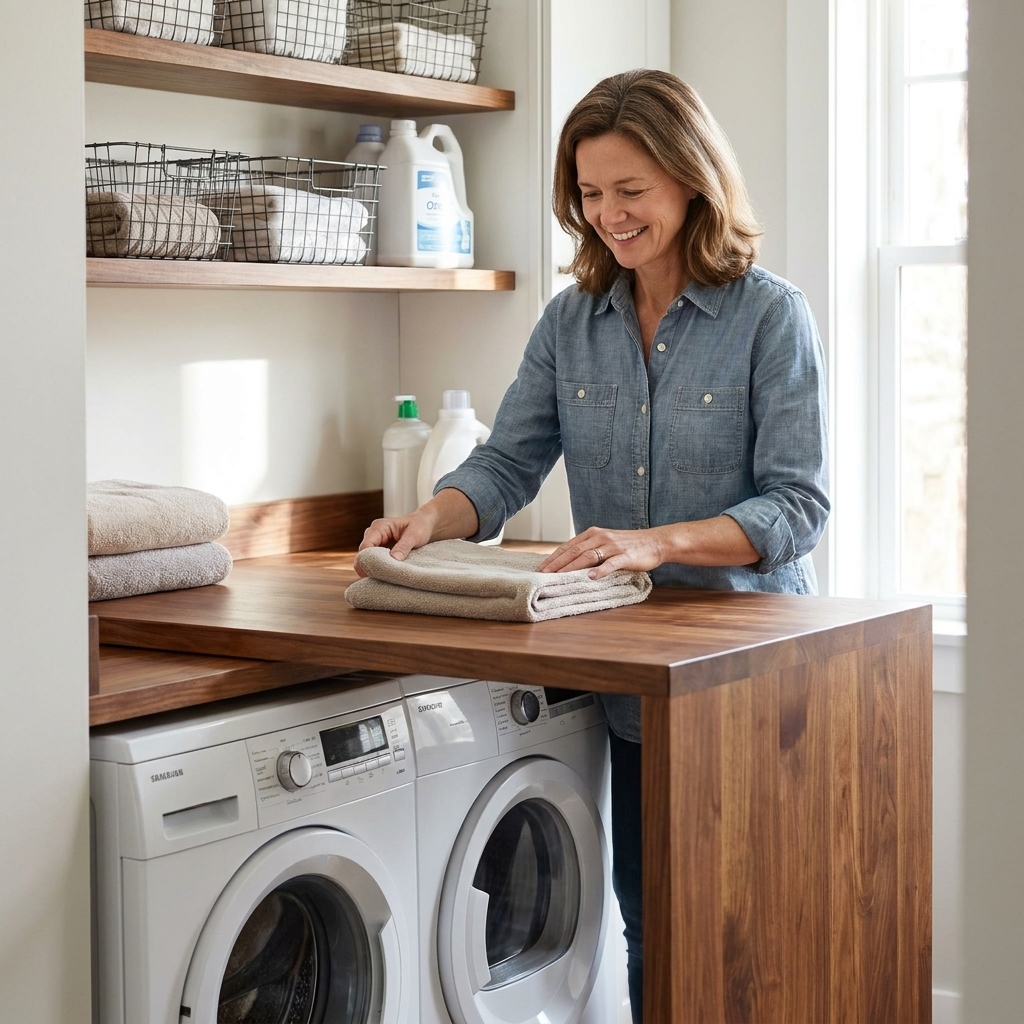
If you are planning a folding zone, decanting pairs beautifully with a clear, wipeable work surface. See DIY Waterfall Countertop Folding Station Over Front Loaders for a setup that makes laundry feel less like a punishment.
Container checklist
Before you buy anything new, measure your shelf depth and the vertical space you have to work with. Then use this checklist.
- Wide opening: makes refilling possible without funnel frustration.
- Stable base: especially for pumps. Narrow bottles are pretty until they tip.
- Leak-resistant closure: screw tops beat corks for sticky products.
- Simple parts: fewer crevices means easier cleaning.
- Compatible materials: when unsure, choose HDPE or PET for liquids and reserve glass for dry goods and gentler products.
- Space for a label: a smooth front panel is your friend.
Drip control
This is my make-or-break rule: assume liquids will drip, and build your setup so drips are not a crisis.
- Use a tray: keep pumps and pour bottles on a small tray so the shelf itself stays clean.
- Leave headspace: overfilled bottles are the ones that burp and ooze.
- Wipe the nozzle weekly: two seconds now saves you from mystery goo later.
How to decant cleanly
This is the part nobody shows on the pretty videos. Here is my real-life method that keeps detergent off your baseboards.
Step 1: Set up a decanting station
- Lay down a towel or a baking sheet to catch drips.
- Have a funnel ready. A wide-mouth funnel is worth it.
- Keep paper towels and warm water nearby for quick wipe-ups.
Step 2: Wash and fully dry containers
If the container is brand new, I still rinse it and let it dry. Any leftover moisture can clump powders and can thin or separate some concentrates.
Step 3: Transfer one product at a time
Open only one original container at a time and finish that transfer before you touch the next product. It is boring, but it prevents mix-ups.
Step 4: Do not overfill
Leave headspace. Pumps need room to displace liquid, and jars are easier to scoop from when they are not filled to the brim.
Step 5: Wipe threads and bottoms
Before you put it on a shelf, wipe the threads and the base. That is how you stop the slow sticky creep that makes shelves grimy.
Labels that work
My personal rule: a label has to help a tired parent at 10 p.m., not just look cute at noon.
What to put on the label
- Product name: “Detergent” is fine, but “Free and Clear Detergent” is better if you keep more than one.
- Basic directions: if you pump detergent, write something like “1 pump = 1 tbsp” after you measure it once.
- Safety note if needed: “Keep out of reach of children” is not overkill.
- Date decanted: optional, but helpful if you rotate scents or formulas.
Do not let the original label info disappear
If you want the clean decanted look but also want peace of mind, keep the original bottle in a backstock bin, cut out the instructions and store them with your refills, or snap a photo of the label for quick reference. Also, if a manufacturer specifically says “do not transfer,” I listen. It is not worth being stubborn.
Organizing the system
Decanting is only step one. The organization is what keeps your space from sliding back into chaos.
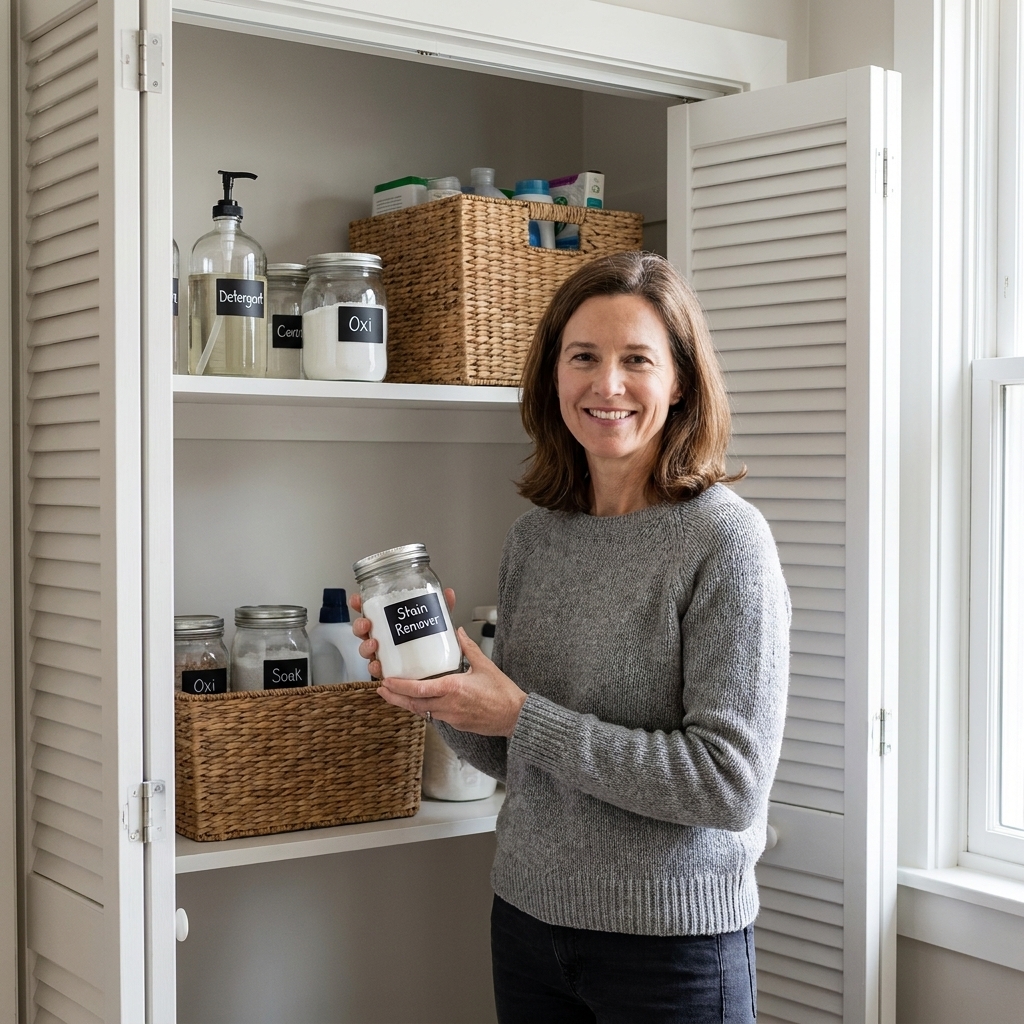
Create zones
- Everyday zone: detergent, stain remover, scent boosters, dryer sheets or balls.
- Backstock zone: refills, extra bottles, bulk containers, and anything you do not want kids grabbing.
- Tool zone: measuring scoop, stain brush, microfiber cloths, lint roller.
Protect products from heat and light
Store supplies away from sunny windows and heat sources. Light and heat can shorten the life of some products, and it is another reason bleach is happiest in its original opaque bottle.
Keep heavy stuff in the right place
If you store refills, big jugs, or anything your kids should not access, place them low and stable or high and secured, depending on your safety needs. Just do not put heavy, slippery jugs at eye level where you have to muscle them down.
Match storage to your shelf style
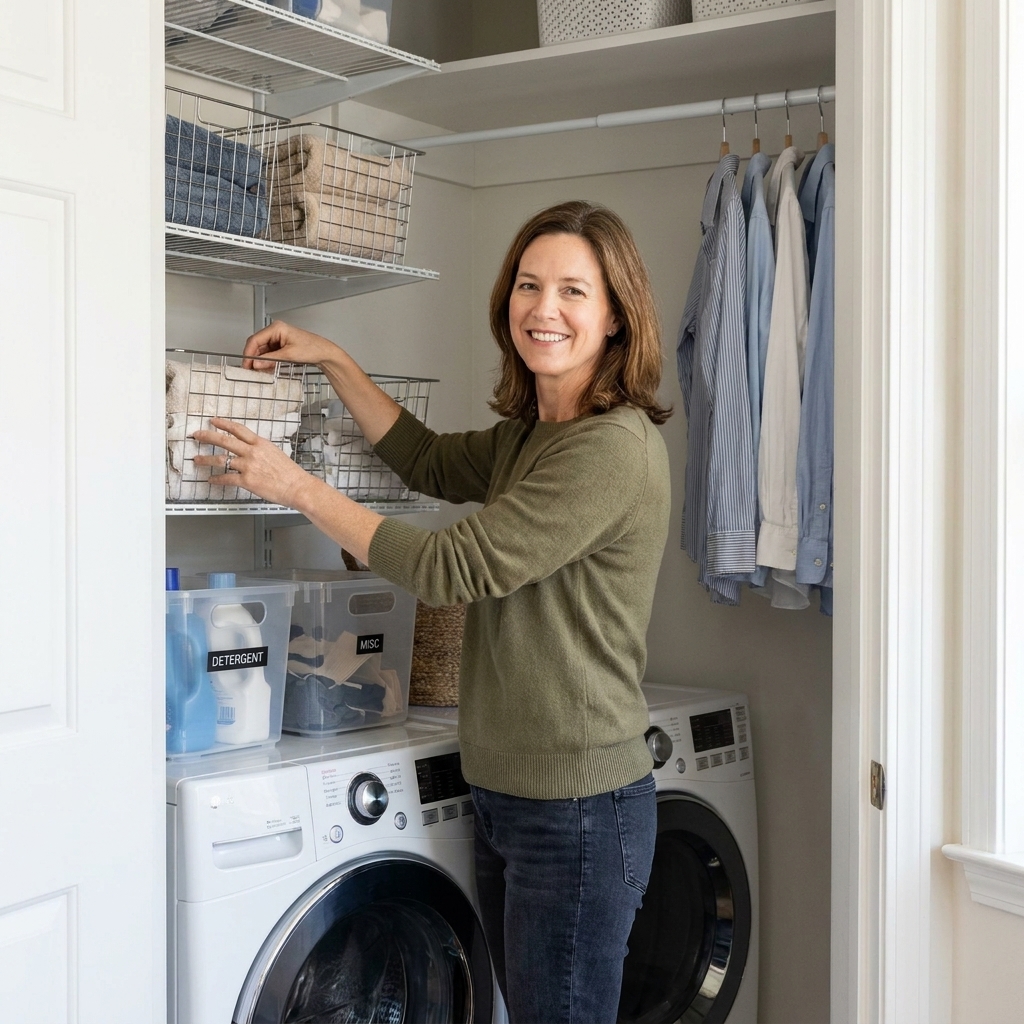
If you are deciding between shelf types, I break it down in Floating Shelves vs Wire Racks for Laundry Storage. In short, solid shelves look cleaner for decanted containers, and wire racks breathe better for damp items, but they can feel busier visually.
Kid and pet proofing
I have three kids. I love them. I also do not trust them with blue liquid in a pretty bottle.
- Store up high when possible: especially stain removers, sanitizers, and anything scented.
- Use locking cabinets if you have them: even a simple latch goes a long way.
- Avoid drink-like containers: no bottles that look like beverage bottles.
- Skip candy-colored pods in jars: they are too tempting, even for older kids.
- Place glass thoughtfully: keep it away from where pets wag tails and kids swing backpacks.
Cleaning and upkeep
Weekly
- Wipe pump nozzles and jar rims.
- Check the tray for drips and wipe it out.
- Do a quick inventory so you are not refilling mid-crisis.
Monthly or as needed
- Wash pump tops and let them dry fully.
- Wipe shelf surfaces with warm soapy water.
- Replace any labels that are peeling or smudged.
When switching products
Empty, wash, and dry the container completely before filling with a new formula. This is the best way to prevent clogs, odd textures, and that mystery film that shows up when products do not play nicely.
Small space ideas
- One hero set: decant only your everyday three to five items and keep everything else in a backstock bin.
- Go vertical: use a high shelf for refills and a mid shelf for daily use.
- Use dollar store pieces strategically: trays, bins, and drawer organizers can do a lot of heavy lifting. I shared some of my favorite finds in 15 Dollar Store Organization Hacks for a Budget Laundry Makeover.
- Make space to fold: even a narrow countertop keeps your decanted setup from becoming a dumping zone.
Quick FAQ
Will decanting ruin detergent?
Usually no, as long as the container is clean and dry, you are not mixing formulas, and you keep it sealed. The bigger risk is mess and mislabeling, not the detergent going bad.
Is glass safe for laundry supplies?
Glass is great for dry goods and many gentler liquids. If you have kids, pets, or a high-traffic laundry walkway, consider using HDPE or PET for liquids and reserving glass for dry items stored up high.
How do I stop pumps from dripping?
Choose better-quality pumps when possible, wipe the nozzle weekly, and keep the bottle on a tray. Drips are common, so build the system expecting them.
What is the simplest setup for beginners?
Start with one detergent pump, one stain remover bottle, and one jar for scent boosters or powder. Label them clearly, put the liquids on a tray, and call it done. You can always expand later.
My bottom line
Decanting can make a laundry space feel calm and intentional, but the prettiest setup in the world will not survive if it is hard to use, hard to clean, or unsafe for your household.
Keep it simple, label like you mean it, and set up your shelves to handle drips and real-life speed. That is when a “pretty” laundry shelf turns into a system that actually supports your week.