
My laundry closet is the kind you can totally ignore until you open the bi-fold doors and get bonked by a rogue hanger, a stray dryer sheet, or a bottle of stain spray doing a slow-motion fall. It is a tight little pocket of the house with big expectations.
The good news is that tiny bi-fold laundry closets can hold a surprising amount if you treat every surface like valuable real estate, especially the doors and the vertical wall space. Here is exactly how I squeeze in more storage without making the space feel jammed or impossible to maintain.
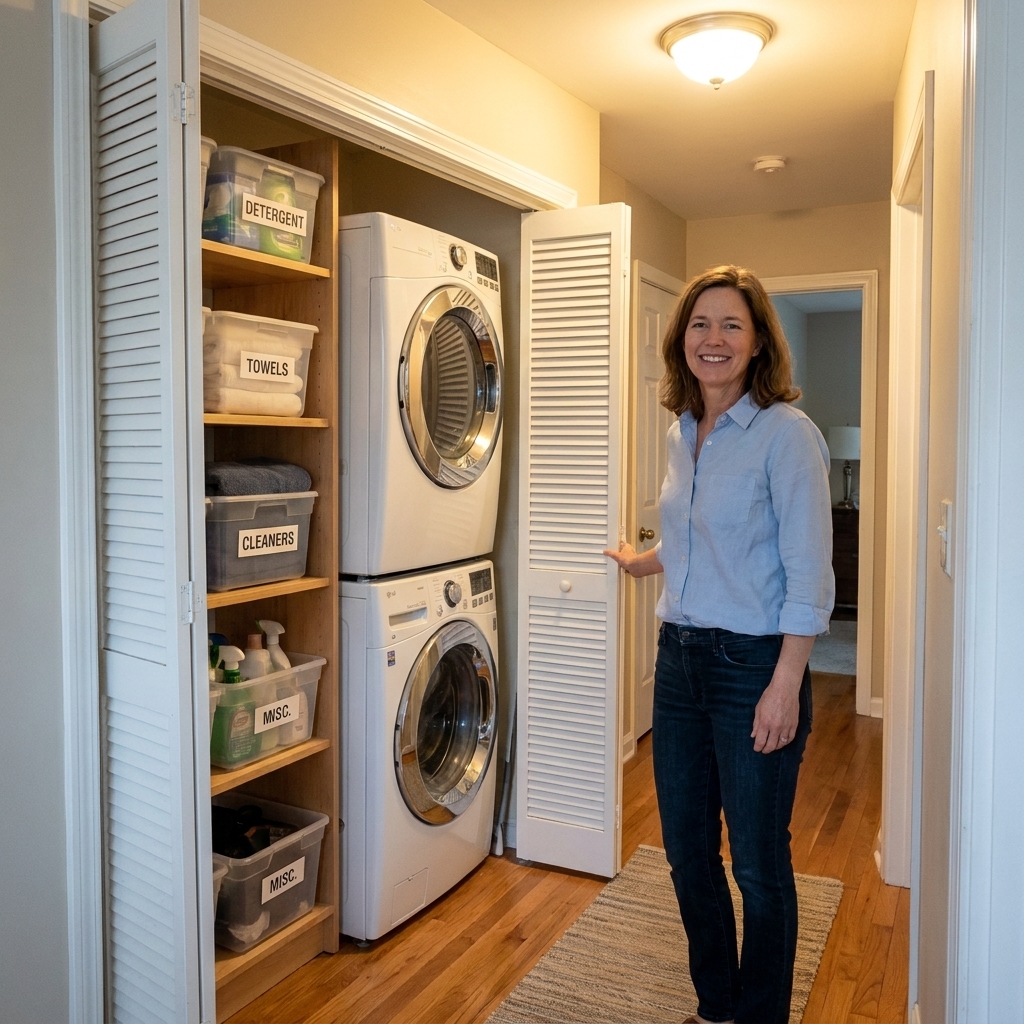
Start with a 10-minute reset
Before you buy anything, do this quick reset. It keeps you from organizing clutter into prettier clutter.
- Pull everything out that is not attached: detergents, baskets, extra bulbs, lost socks, the whole pile.
- Wipe down shelves, baseboards, and the tops of machines. Laundry closets collect dust like it is their job.
- Measure three things:
- Door interior: width and height.
- Side walls: usable depth for shelves or hooks.
- True clearance: space in front of the machines with the doors fully folded open (and if your machines wobble or vibrate, give yourself a little extra breathing room).
- Make a “lives here” list: laundry soap, stain remover, hamper(s), drying rack, iron or steamer, extra towels, cleaning rags. Everything else needs a different home.
If you are short on time, set a timer and just do the measuring plus the “lives here” list. That alone prevents most storage mistakes in bi-fold closets.
Use bi-fold doors the smart way
Bi-fold doors are tricky because anything too thick can stop the doors from folding cleanly or bump the machines. The goal is shallow, flexible storage that fits your measured clearance, not someone else’s closet.
Best door storage for bi-fold closets
- Over-the-door pocket organizer with fabric pockets for dryer sheets, stain pens, clothespins, and lint roller refills.
- Thin wire rack system mounted with screws, often around 2 to 3 inches deep, but only if your door clearance says yes.
- Command-style hooks for a small folding drying rack, a mesh lingerie bag, or a hand broom and dustpan.
- Magnetic strip on a metal door surface for small scissors or a measuring scoop, if your door is steel.
My “no slam” rules
- Keep it light. Doors are for small items, not detergent jugs.
- Keep it slim. Bulky organizers turn your door into a battering ram.
- Use the panel that moves least in your setup. Bi-fold hardware varies, so watch which leaf swings inward the most and keep storage off the one that does the heavy moving.
- Test the fold before committing. Hold an organizer up with painter’s tape and open and close the doors a few times.
Renter note: Fabric pocket organizers and adhesive hooks are usually the easiest wins without drilling. If you cannot screw into the door, stick to lightweight items and adhesives rated for the surface.
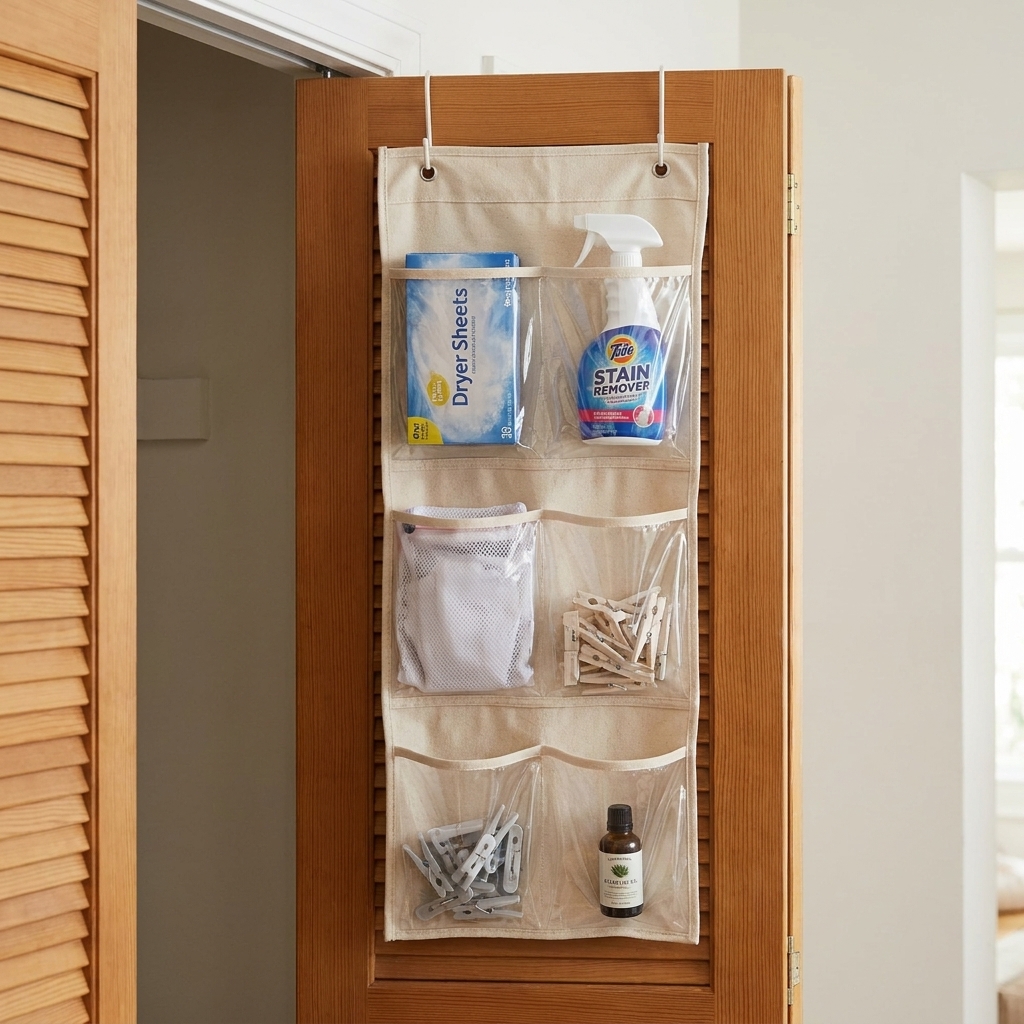
If your bi-fold doors barely clear the machines, skip rigid racks and stick to fabric pockets and hooks. They flex instead of cracking or catching.
Go vertical on walls
In tiny laundry closets, the secret is building upward so your floor stays clear and your hands can still work. Think “tall and tidy,” not “stuffed and stacked.”
Vertical storage ideas that work
- Side-wall shelves for refill items, rags, and backstock. Even a narrow shelf can hold a lot.
- A shelf above the door for rarely used items like bulk paper towels, extra vacuum bags, or seasonal table linens, but only if you have head clearance and it will not interfere with the door track, trim, or door swing.
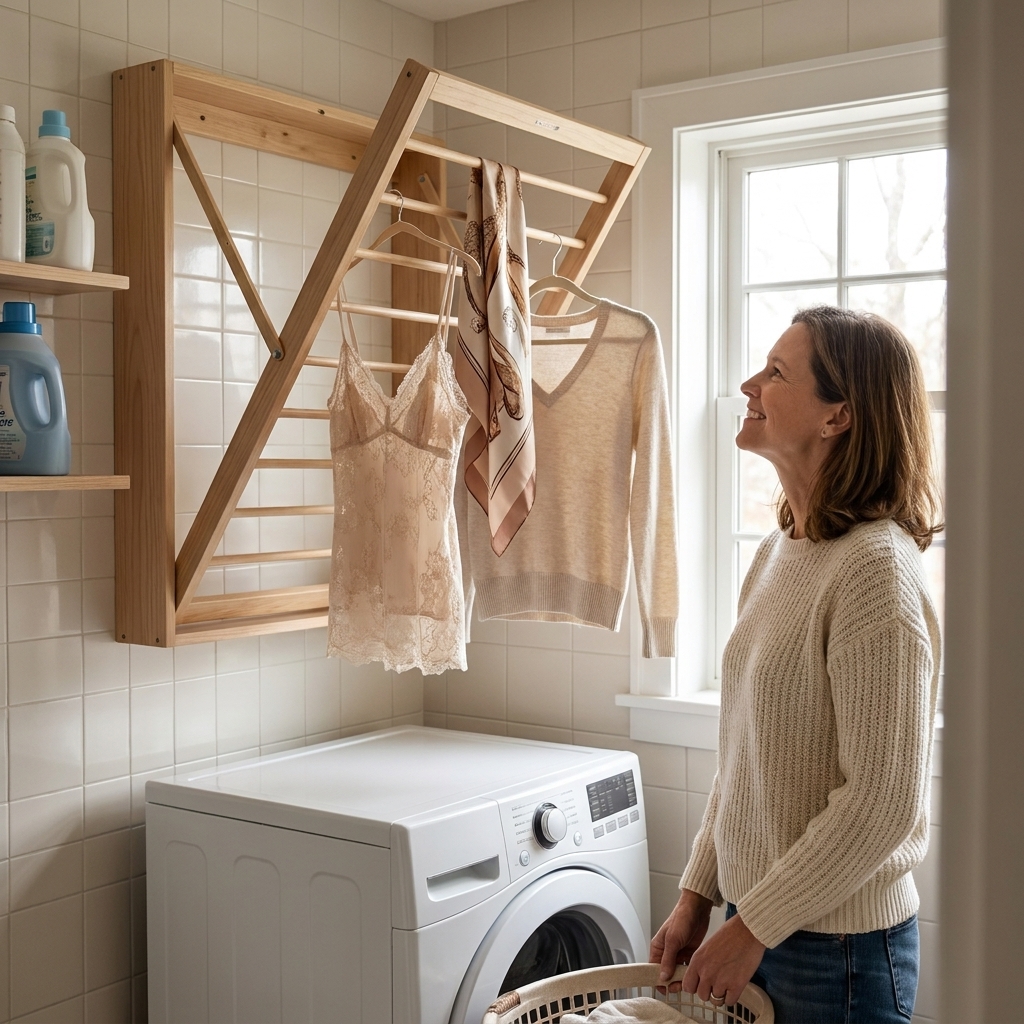
- Wall-mounted rails with hooks for hang-dry items, a spray bottle, or a small basket of clothespins.
- Over-the-washer shelf that spans the width above the machines, if you have the room and the cords and venting stay accessible.
Spacing guidelines I use at home
- Everyday supplies at chest height: detergent, stain remover, dryer sheets.
- Backstock up high: refills, extra sponges, overflow toiletries.
- Heavy items low: liquid jugs and big tubs should not live on the top shelf in a closet you access weekly.
Two safety checks I never skip: keep shelves clear of washer hookups and shutoff valves, and never block dryer venting or airflow. A closet that is “organized” but overheats or makes repairs a nightmare is not actually organized.
If you want DIY-friendly shelving ideas, you can browse our project approach on DIY Projects & Builds. I am a big believer in simple, sturdy shelves over complicated systems that only work on day one.
Stackable bins that behave
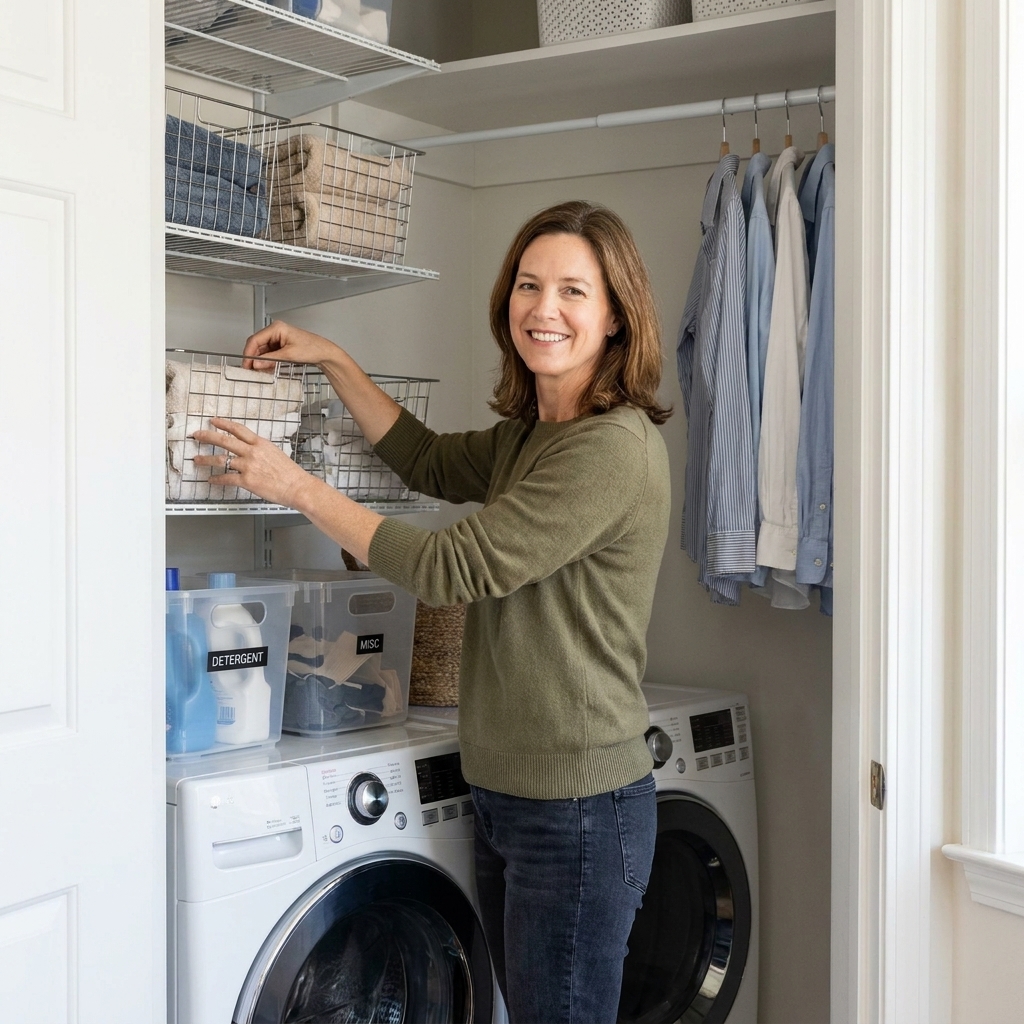
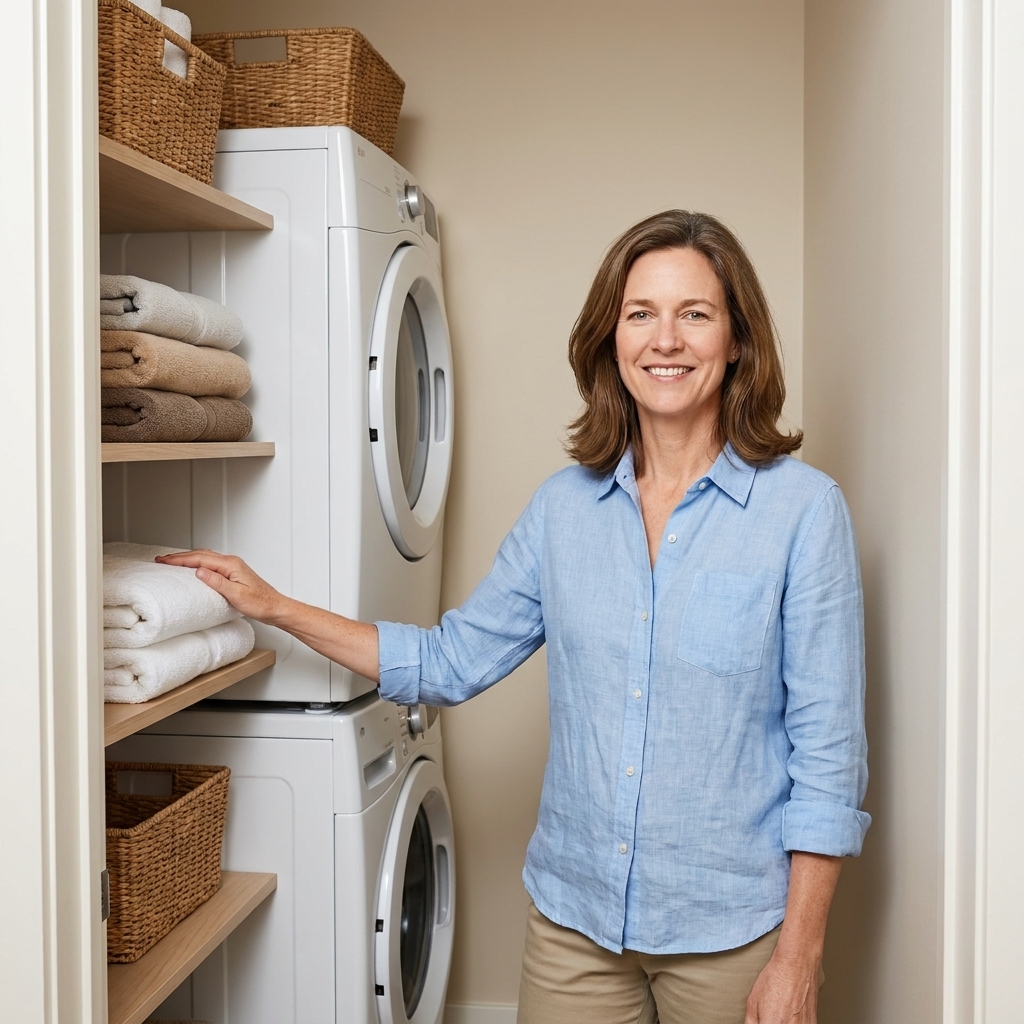
Stackable bins are the easiest way to create drawers in a closet that came with none. The trick is choosing bins that match what you store and how often you reach for it, and leaving a little airflow so the closet does not turn into a mildewy cave.
Pick the right type of bin
- Open-front stacking bins: best for daily grab items like dryer balls, lint rollers, stain sticks.
- Lidded stackable bins: best for backstock and rarely used items, especially if your closet gets dusty.
- Clear bins: best if multiple people do laundry and you do not want constant questions.
- Soft bins: best for awkward spaces and shelves with a little wobble. They also look calmer visually.
My bin system for family laundry closets
- Bin 1: Daily (detergent pods, dryer sheets, dryer balls)
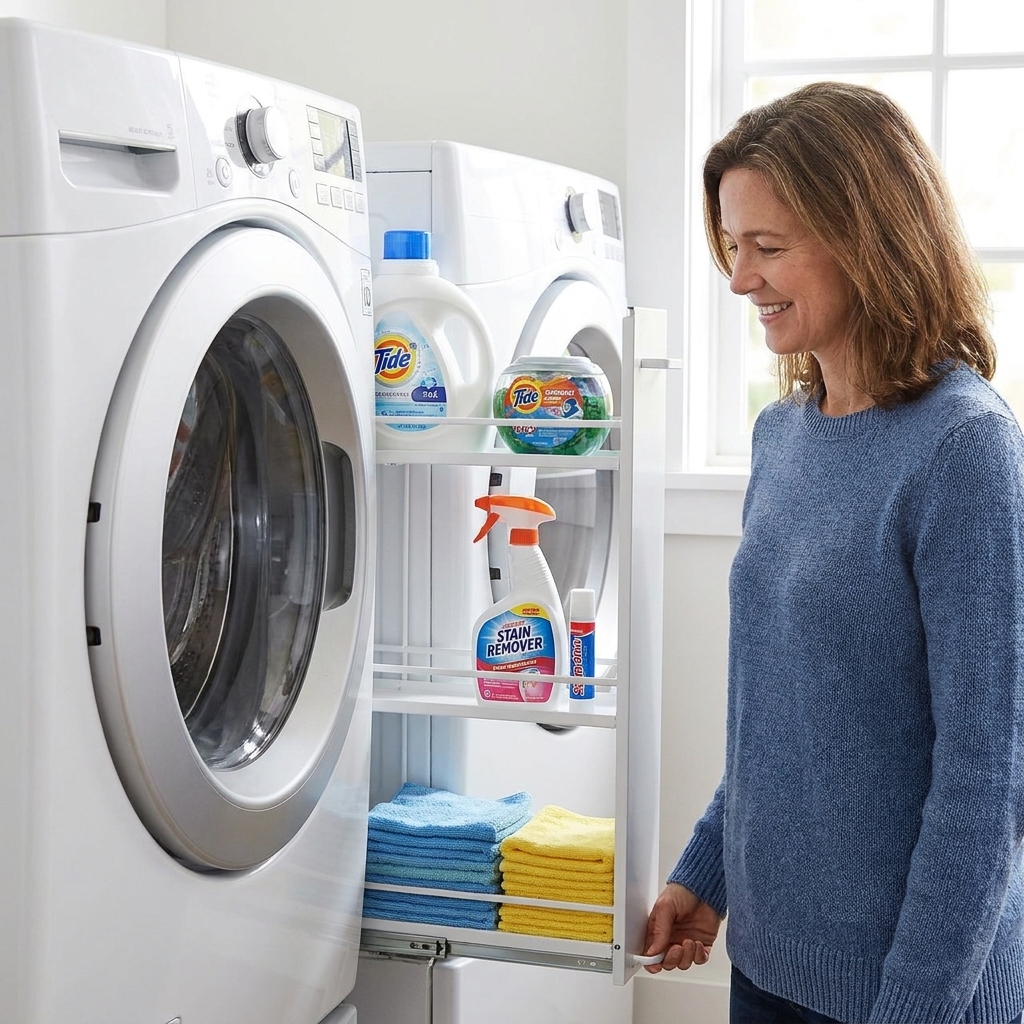
- Bin 2: Stains (sprays, oxygen booster, old toothbrush for scrubby jobs)
- Bin 3: Delicates (mesh bags, stain pen, sweater comb)
- Bin 4: Backstock (refills and extras, up high)
Use one consistent bin footprint so stacks stay stable. If you mix sizes, everything tips the second a kid yanks out the bottom bin.
If you have little kids or curious pets, keep pods and chemicals up high or in a lidded bin. Laundry closets are usually right at eye level for the smallest members of the household.
Micro-zones that function
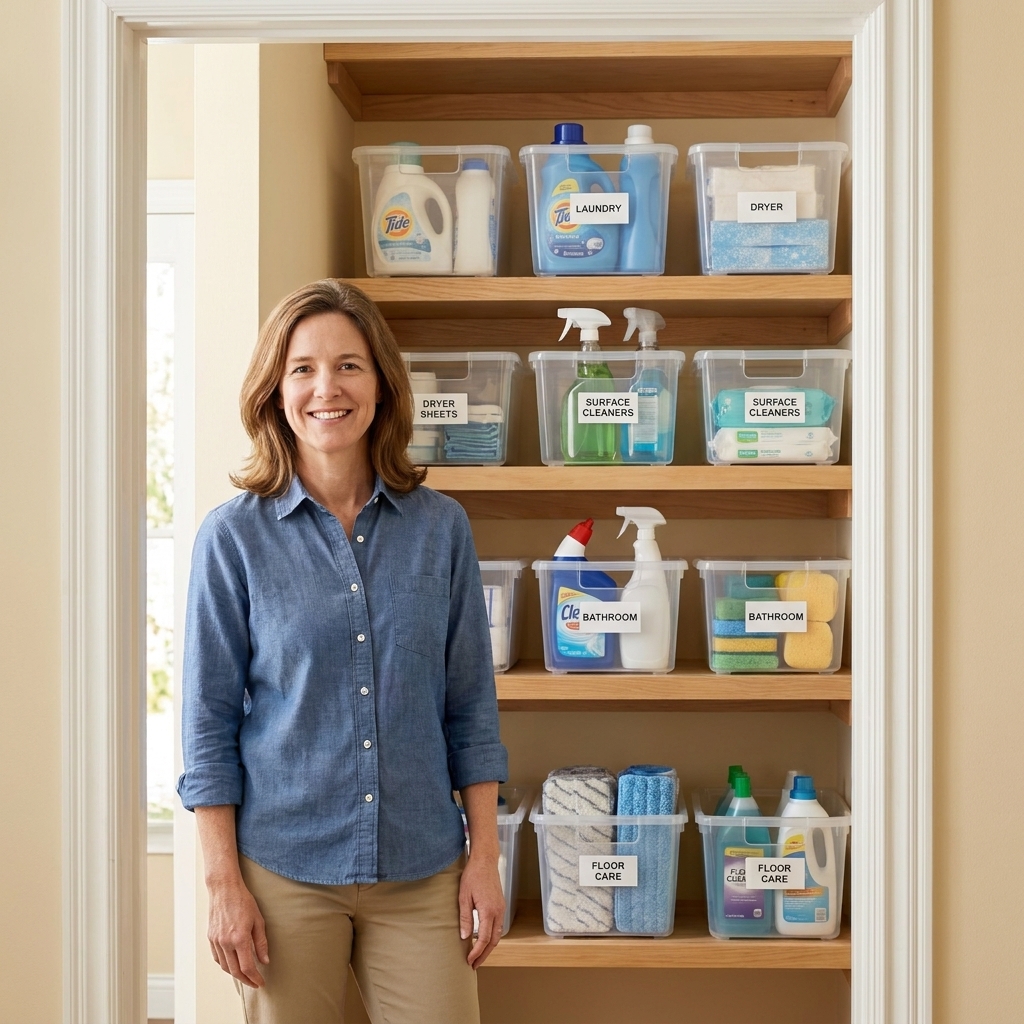
When a laundry closet is tiny, you do not have room to “set things down.” That is why zones matter. Each zone prevents the classic drift where items pile up on top of the dryer.
Zone ideas for a bi-fold laundry closet
- Sorting zone: a slim hamper, two tall bags, or a divided basket if you can fit it.
- Treating zone: a small tray or bin for stain sprays and a rag.
- Folding zone: if you have any surface at all, keep it clear by storing supplies on the walls, not on the machines.
- Hang-dry zone: a hook for a foldable rack or a short wall-mounted bar for drip-dry pieces.
If you love the “tiny space, big payoff” kind of makeover, you will probably enjoy the ideas in Small Spaces & Closets too. Laundry closets and small closets have the same problem: not enough flat surfaces, so walls and doors have to do the work.
Small upgrades, big impact
You can organize perfectly and still feel cramped if the closet is dark, awkward, or constantly snagging the doors. These are the little upgrades that have made the biggest difference in my own home.
- Add a bright battery light (stick-up puck or bar). A well-lit closet feels instantly larger.
- Use matching hangers if you store air-dry items on a bar. Bulky hangers eat space fast.
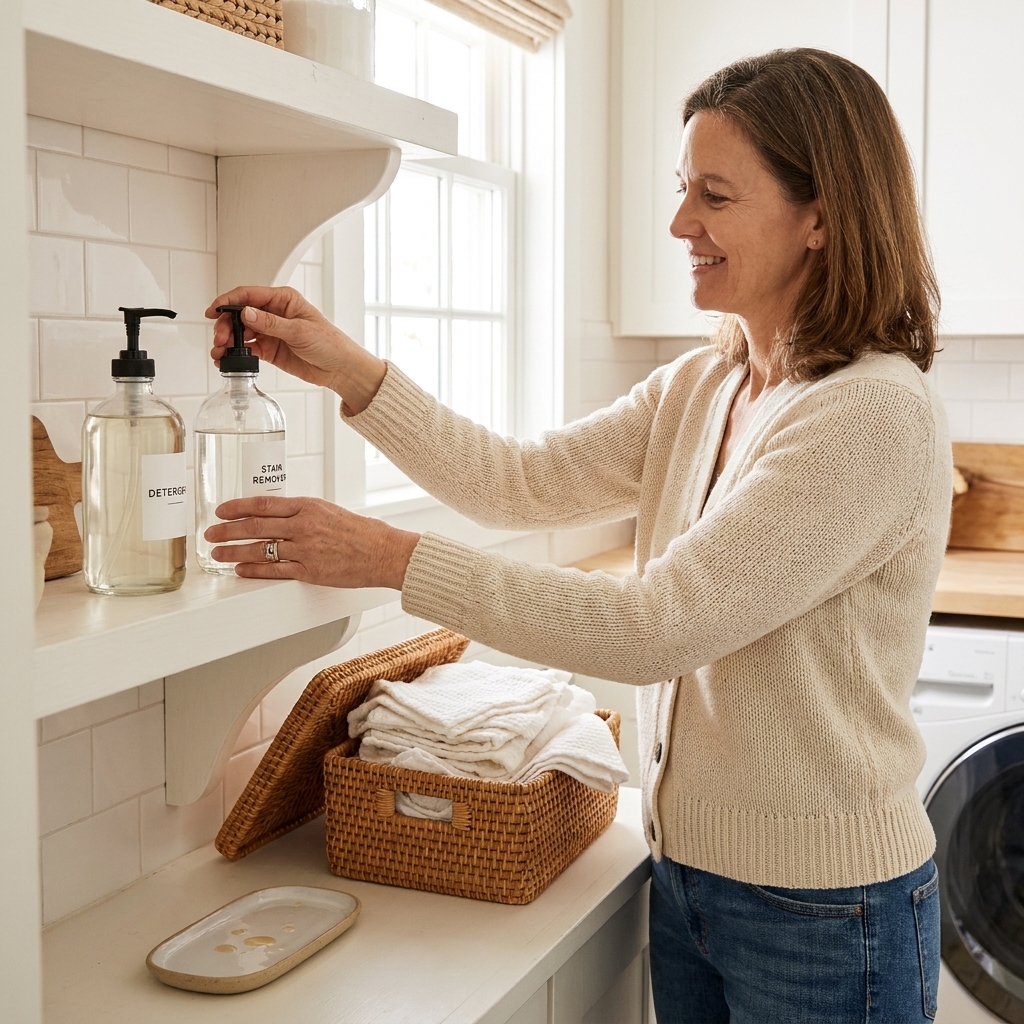
- Decant only what you actually use. One pretty container is helpful. Ten containers become a part-time job.
- Put a shallow catch tray under pods or powder to contain spills. Less mess means less re-organizing.
- Label for other humans. In a family home, labels are not Pinterest. They are peace.
For more budget-minded improvements that do not require a full renovation, I keep ideas collected over on Budget Makeovers.
Quick fixes for door issues
The doors hit my bins or baskets
Switch to slimmer door storage, and move bulky items to side-wall shelves. Also check if the doors are properly aligned. Misaligned bi-fold doors steal precious clearance.
My shelves feel crowded and messy
Reduce the number of categories. In tiny closets, fewer, bigger zones work better than lots of tiny bins. Aim for 3 to 5 containers total on your main shelf.
I do not have wall space
Go upward above the machines if possible, and use the door for light items. If you can only add one thing, add a slim pocket organizer and a single high shelf for backstock.
Everything falls behind the machines
Add a narrow “no-drop” barrier. A simple foam pipe insulation strip, a slim board, or even a tension rod can keep things from migrating into the void, but keep anything you add away from heat sources and do not block dryer vents, exhaust, or airflow.
My simple closet plan
If you want a straightforward plan without overthinking it, here is what I would do in order:
- Measure door clearance and decide if you can use a shallow rack or only fabric pockets.
- Add door storage for small daily items.
- Install one vertical shelf run on the side wall or one shelf above the machines, keeping valves, hookups, and venting accessible.
- Use 3 to 5 stackable bins, sorted by function, not by brand.
- Assign micro-zones: treat, sort, backstock, hang-dry.
It is not fancy. It is not fussy. It is the kind of setup that survives real life, which is the only kind I have time for.