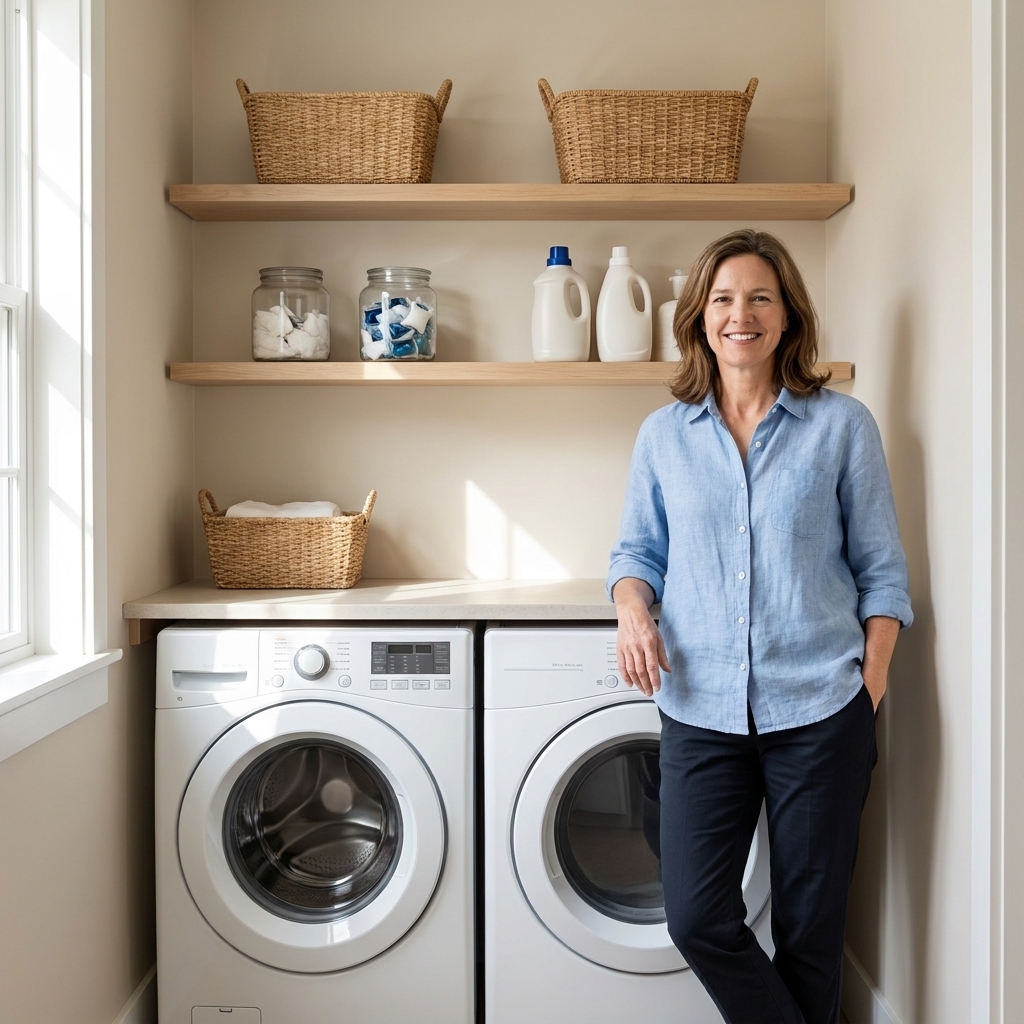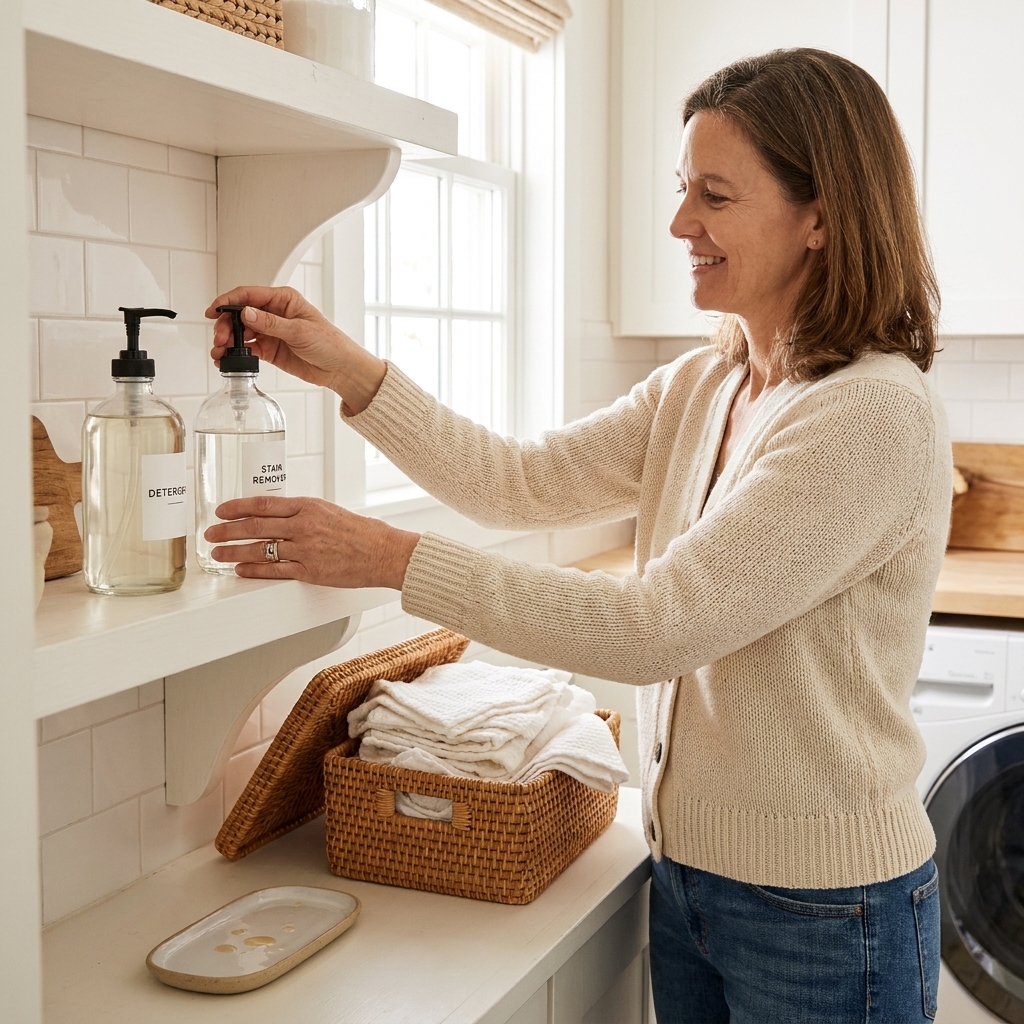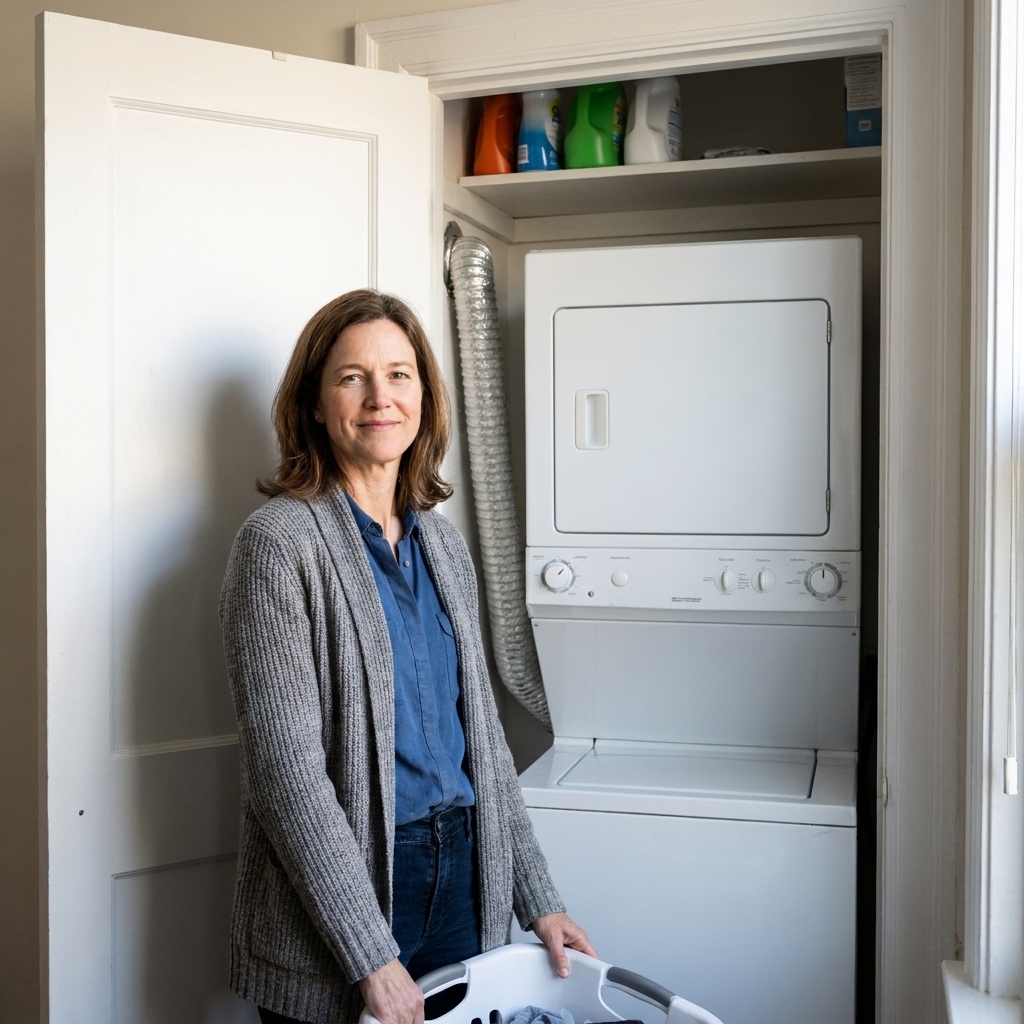

If you have a top-loading washer in a small laundry space, you already know the struggle. The lid needs headroom, but your walls are begging for storage. I learned this the hard way in my own hallway laundry closet when I proudly hung a pretty shelf… and then couldn’t open the washer without grazing the bottom like it was an obstacle course.
The good news is you can add floating shelves and even upper cabinets with a top-loader. You just need a layout that respects the lid swing, keeps detergents within reach, and does not turn laundry day into a game of Tetris.
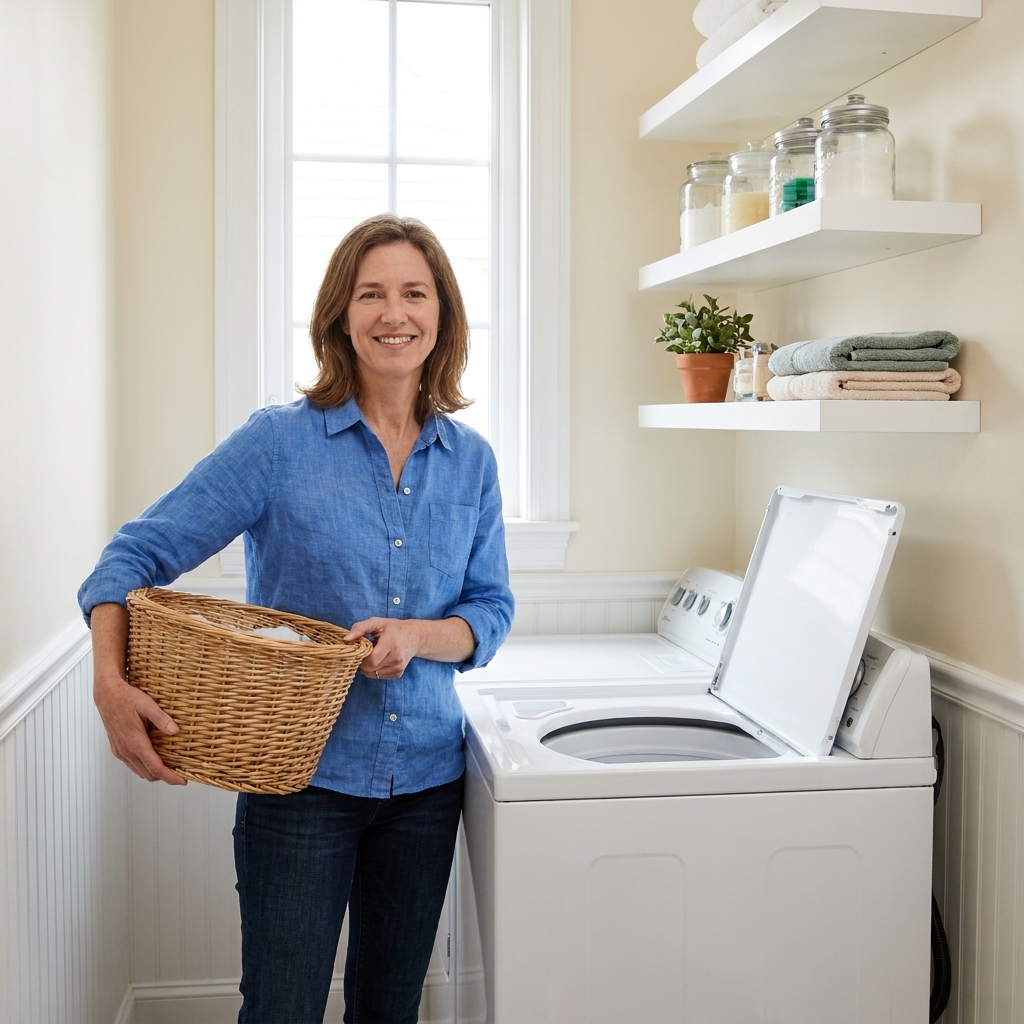
Start with lid clearance
Before you buy lumber, brackets, or a cabinet set, do two quick measurements. The first is vertical clearance.
- Open the washer lid fully and measure from the top of the washer to the highest point of the open lid.
- Add a comfort buffer. A common buffer is 1 to 2 inches, and some lids (soft-close hinges, taller hinge housings, or thicker lids) appreciate a little extra breathing room.
- That final number is your no-shelf zone.
Real-life tip: If your washer manual has clearance guidance, follow that first. When it does not (or it’s vague), measuring with the lid open saves you from “I swear it fit yesterday” frustration later.
If your laundry space is tight, also pay attention to where you stand. Even if the lid clears a shelf, your elbows might not if the shelf is too low or too deep.
Also check the lid’s back swing
This is the step most people skip. On many top-loaders, the lid does not just go up, it leans back toward the wall. That means a shelf or cabinet can be “high enough” but still get in the way if it sticks out into the lid’s path.
- With the lid fully open, look at the lid’s closest point to the wall.
- Measure the distance from the wall to the furthest-back point of the open lid.
- Now compare that to what you want to install. If your shelf, cabinet face frame, or chunky bracket would project into that space, it is going to bump.
Quick trick: Mark the lid arc and the “do not enter” zone on the wall with painter’s tape before you drill anything.
Put shelves above the lid arc
In most small laundry closets, the sweet spot is placing storage higher than you first want it, then making it easy to use with the right products and containers.
A simple rule
- Nothing fixed should sit inside the lid’s swing path, including the back swing toward the wall.
- If you want a shelf close to the washer, keep it shallow and place it high enough to clear both the height and the back-lean of the lid.
- Put your everyday supplies on the lowest shelf that still clears the lid, and reserve higher shelves for backstock.
If you need a refresher on how different shelf types perform in cramped rooms, I put together a full comparison here: Floating shelves vs wire racks for laundry storage.
Floating shelf depths that work
Shelf depth is where small laundry rooms live or die. Deep shelves sound helpful, but in a narrow laundry nook they can make the space feel tight and turn bottles into a tipping hazard.
Typical workable depths
- 6 to 8 inches deep: Great for narrow closets and for keeping the washer zone feeling open. Works well for baskets, pods, stain sticks, and small refill bottles.
- 9 to 10 inches deep: A nice middle ground if your wall space is limited and you need a little more footprint for bins.
- 11 to 12 inches deep: Use with caution in tight walkways. This can work better above eye level or on a side wall where you are not leaning over the washer.
Busy-mom reality check: If you store detergent jugs up high, they will eventually come down with one hand while you are holding a basket with the other. Shallow shelves plus smaller decanted containers are safer and calmer.
If you love the neat look of matching bottles, this is the exact reason I’m a fan of decanting in small spaces: Decanting and organizing laundry supplies.
3 top-loader friendly layouts
Option 1: One high shelf + one reach shelf
This is my favorite “most homes can do it” setup.
- Bottom shelf: Installed just above your measured lid-clearance line (plus buffer). Keep it shallow and for daily supplies.
- Top shelf: Higher, for backstock, paper goods, and overflow.
This layout keeps the area over the washer functional without constantly bumping the lid.
Option 2: Side-wall shelves
If you have any side wall at all, even a skinny strip, use it. Shelves on the side wall avoid the lid path completely and make reaching easier.
- Install two or three shelves on the side wall at staggered heights.
- Put heavier items on the lowest side shelf.
- Use baskets to prevent small items from migrating.
Need more side-wall inspiration? Pegboard can be a huge help in skinny rooms: Custom pegboard wall for a skinny laundry room.
Option 3: A cabinet bridge, planned for the lid
Upper cabinets can work over a top-loader, but they have two common failure points: mounted too low, and too deep.
- Keep cabinets high enough to clear the open lid with a buffer.
- Check the lid back swing so the cabinet face does not intrude into that space.
- Consider shorter-height uppers rather than tall boxes that visually crowd the washer zone.
- If possible, choose doors that open without smacking adjacent walls or trim in a closet.
If your space is narrow and you are leaning toward full-height storage instead, this guide is a better match: Floor-to-ceiling utility cabinets for narrow laundry rooms.
Organize for real laundry flow
When my kids were little, I used to organize the laundry shelf like a showroom. It lasted exactly one week. What stuck long-term was organizing by actions, not categories.
My simple zones
- Washer zone: Detergent, scent booster, measuring scoop, stain stick. Keep it closest to the washer and easiest to reach.
- Dryer zone: Dryer sheets or wool balls, small lint brush, delicates bag. Closest to the dryer side.
- Fix-it zone: Mini sewing kit, missing-sock bin, safety pins. Up high or in a small lidded bin so it does not become a junk shelf.
- Backstock zone: Refills, extra pods, extra spray bottles. Highest shelf, or a cabinet you do not open ten times a day.
If you are also building a family sorting routine, pair your shelving plan with a real-life hamper system that does not require superhuman habits: Built-in laundry sorting hamper system for families.
Cabinet tricks that keep clearance
If you want the clean look of cabinets but the lid clearance is tight, these workarounds help a lot.
Try cabinets to the side, shelf over the washer
Instead of a full bank of cabinets directly above the washer, mount a taller cabinet on the side wall or at one end, then use one shallow shelf above the washer for daily items.
Pick doors that behave
- Lift-up doors can be fantastic if you have the vertical room.
- Standard swing doors can be annoying in a narrow laundry closet if they bump bi-folds or your head.
Use the space above cabinets
If your cabinets stop short of the ceiling, the top becomes a dust shelf unless you plan it. Use lidded bins for infrequently used items.
Hardware and safety
Floating shelves in a laundry room have a tougher job than shelves in a guest room. Liquids are heavy, and laundry rooms are humid.
- Anchor properly: Whenever possible, hit studs. If you cannot, use heavy-duty wall anchors rated for the load you plan to store.
- Keep heavy liquids low: I try not to store large detergent jugs above shoulder height, especially over a top-loader where you are reaching forward.
- Leave a little breathing room: Do not install shelves so close they touch the washer. Vibration can cause rattling, scuffed paint, and noisy bins.
- Prevent the slide: A simple non-slip shelf liner under baskets can cut down on shifting when the washer is spinning.
- Choose wipeable finishes: Semi-gloss paint, sealed wood, or melamine makes sticky drips less of a lifestyle.
- Add a lip or rail if needed: A small front rail can prevent a bottle from getting bumped off when you are moving fast.
If your laundry closet includes a dryer with tight clearances, especially in ultra-compact setups, it is worth reading this before you build out the wall: Airflow and dryer vent clearance in ultra-compact laundry closets.
If you cannot shelf over the washer
Sometimes the lid swing and ceiling height make over-washer shelving a no-go. That does not mean you are out of options.
Use the back of the door
This is one of the easiest ways to add storage in a closet laundry. Hooks and slim racks can hold sprays, clothespins, and even a small bin of pods.
Ideas here: Back-of-door laundry closet storage ideas.
Use the gap between machines
If you have any space between washer and dryer, do not let it sit empty. A slim rolling organizer can hold stain removers and refills without blocking the lid.
My favorite gap solutions: Genius storage for the gap between washer and dryer.
Go down, not up
Drawer pedestals or a base cabinet nearby can hold the heavy stuff so your shelves can stay shallow and light.
If you are in DIY mode, this is a fun build: DIY washer and dryer pedestals with deep drawer storage.
Checklist before you drill
- I measured the washer lid height with the lid fully open.
- I measured how far the open lid leans back toward the wall.
- I marked the lid swing space on the wall with painter’s tape.
- I chose shelf depths that fit my walkway.
- I planned daily items at reachable height, backstock up high.
- I decided where heavy liquids will live (ideally not overhead).
- I left a small gap so shelves and bins do not rattle against the washer.
- I checked door swing and whether I need back-of-door storage.
If you are working inside a super-tight closet, this pairs nicely with my small-space planning approach here: Maximizing storage in a tiny bi-fold laundry closet.
FAQ
How high should shelves be above a top-loading washer?
High enough to clear the lid when it is fully open, plus a buffer. Many people use about 1 to 2 inches, but measure your specific model and follow any manufacturer clearance guidance when available.
Can I put cabinets above a top-loader?
Yes, as long as they are mounted above the lid clearance zone and do not project into the lid’s back swing toward the wall. Many small spaces do better with a shallow shelf over the washer and cabinets to the side.
What should I store on the shelf over a top-loader?
Lightweight daily items in small containers, plus bins for soft goods. I avoid storing big liquid jugs overhead whenever I can, especially in a narrow closet.
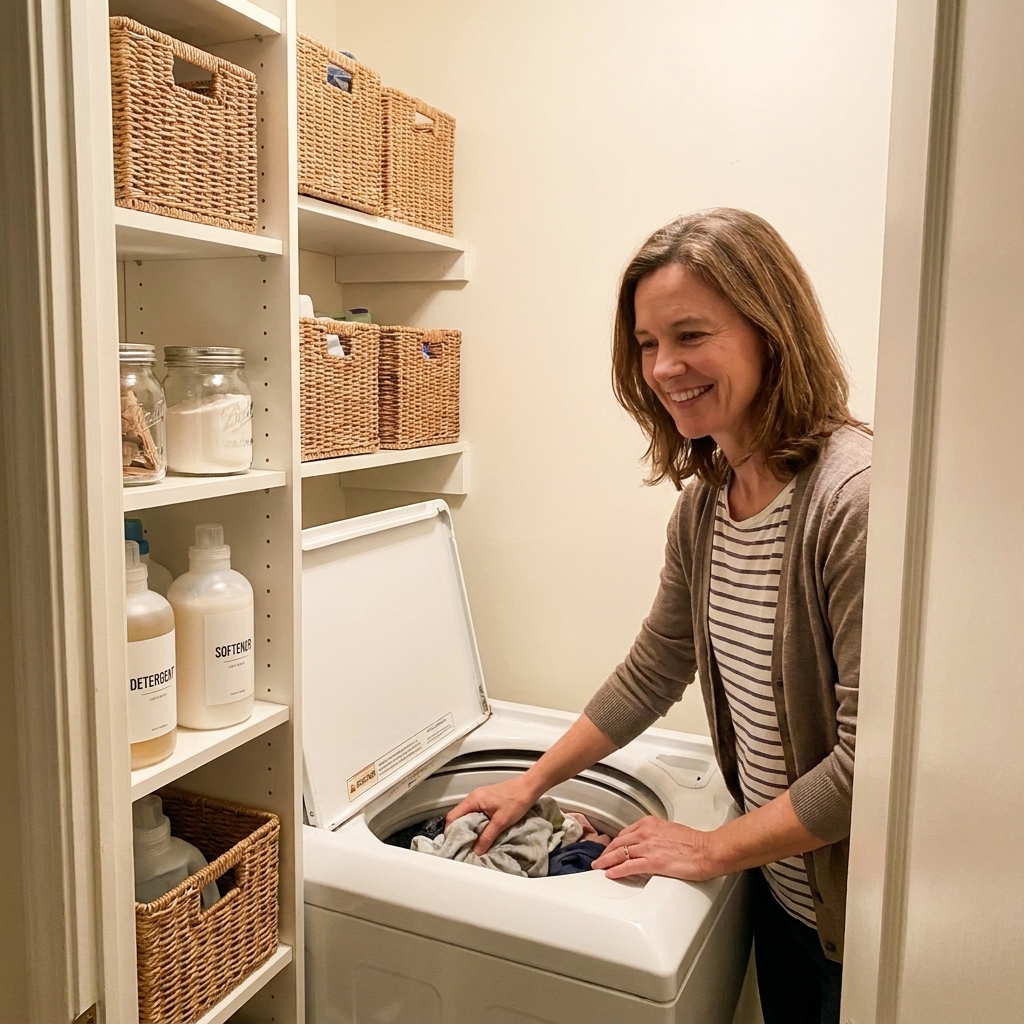
If you take one thing from this, let it be this: top-load washers do not hate shelves. They just demand a little respect for that lid. Measure the height, check the back swing, keep shelves shallow, and organize around your laundry flow, not a picture-perfect fantasy. Your future self, standing there with a basket on one hip, will be very grateful.