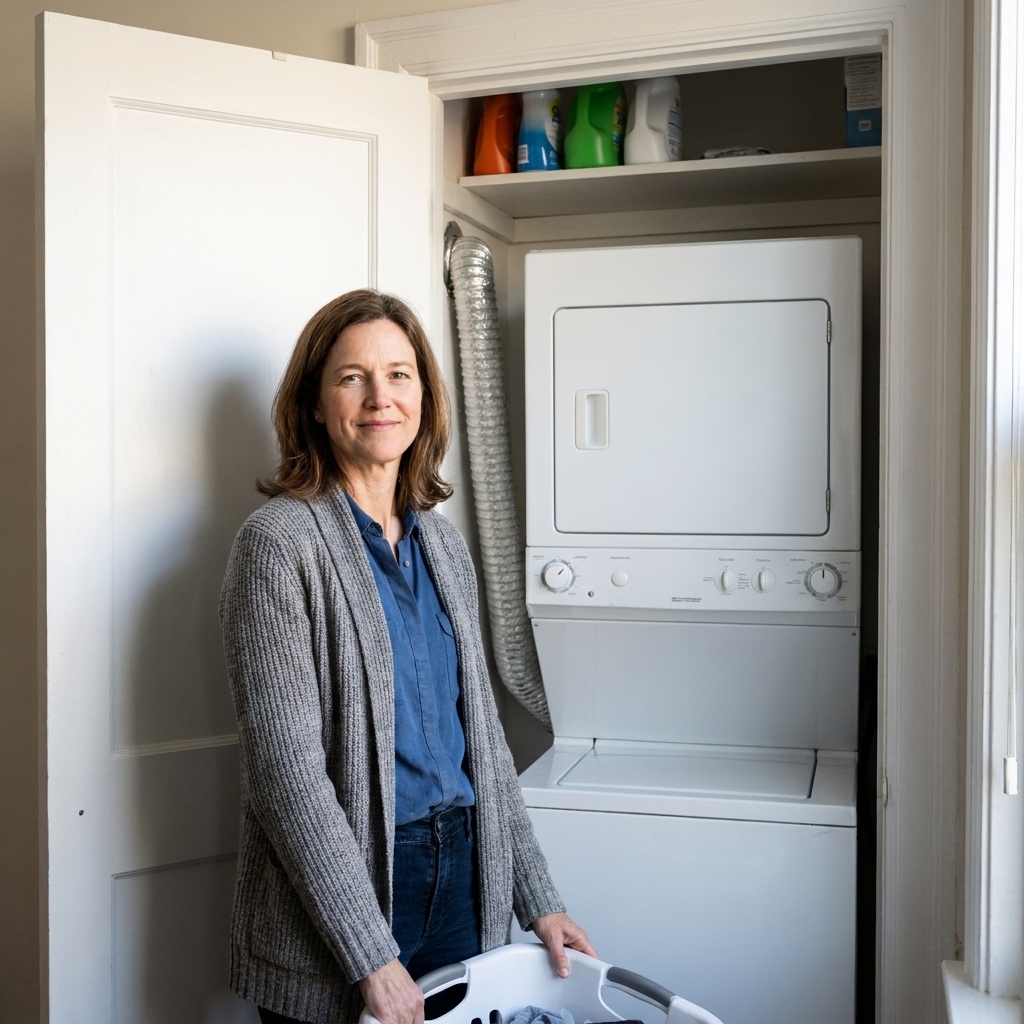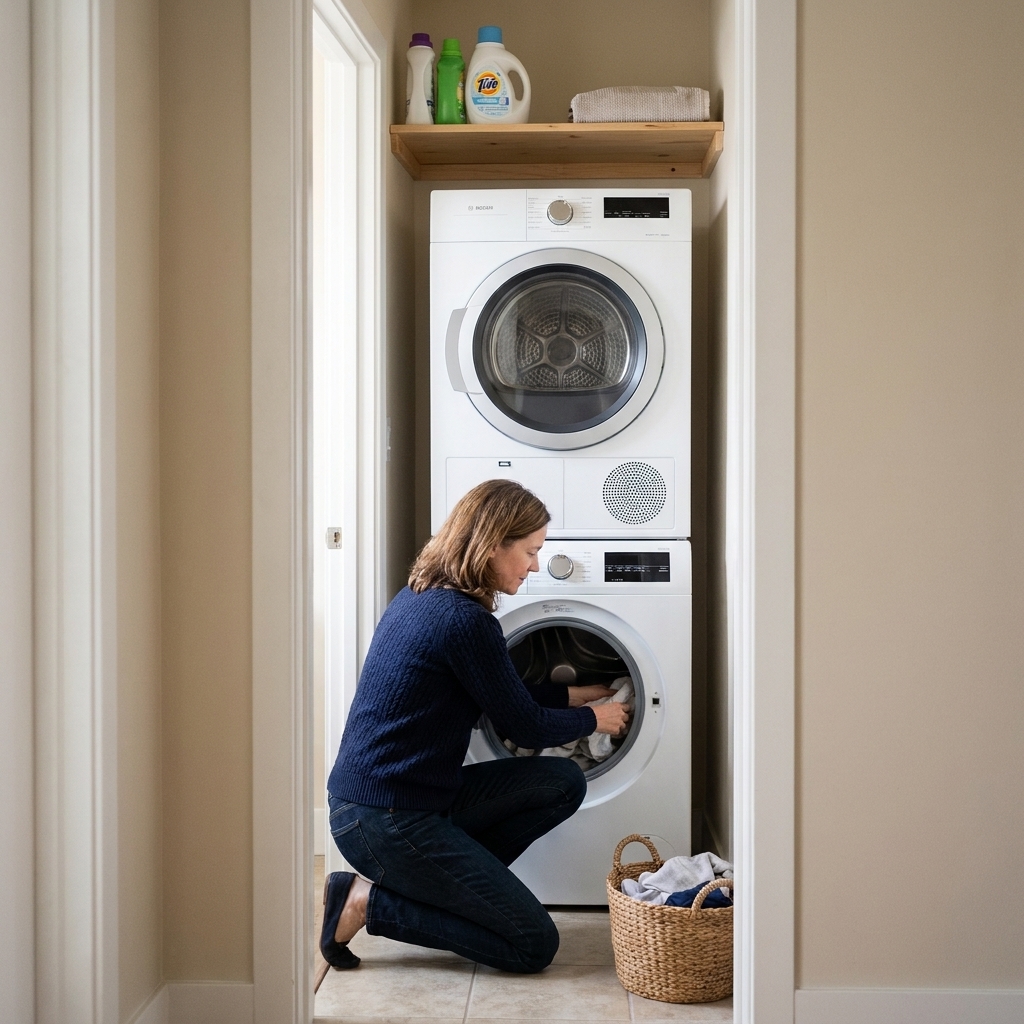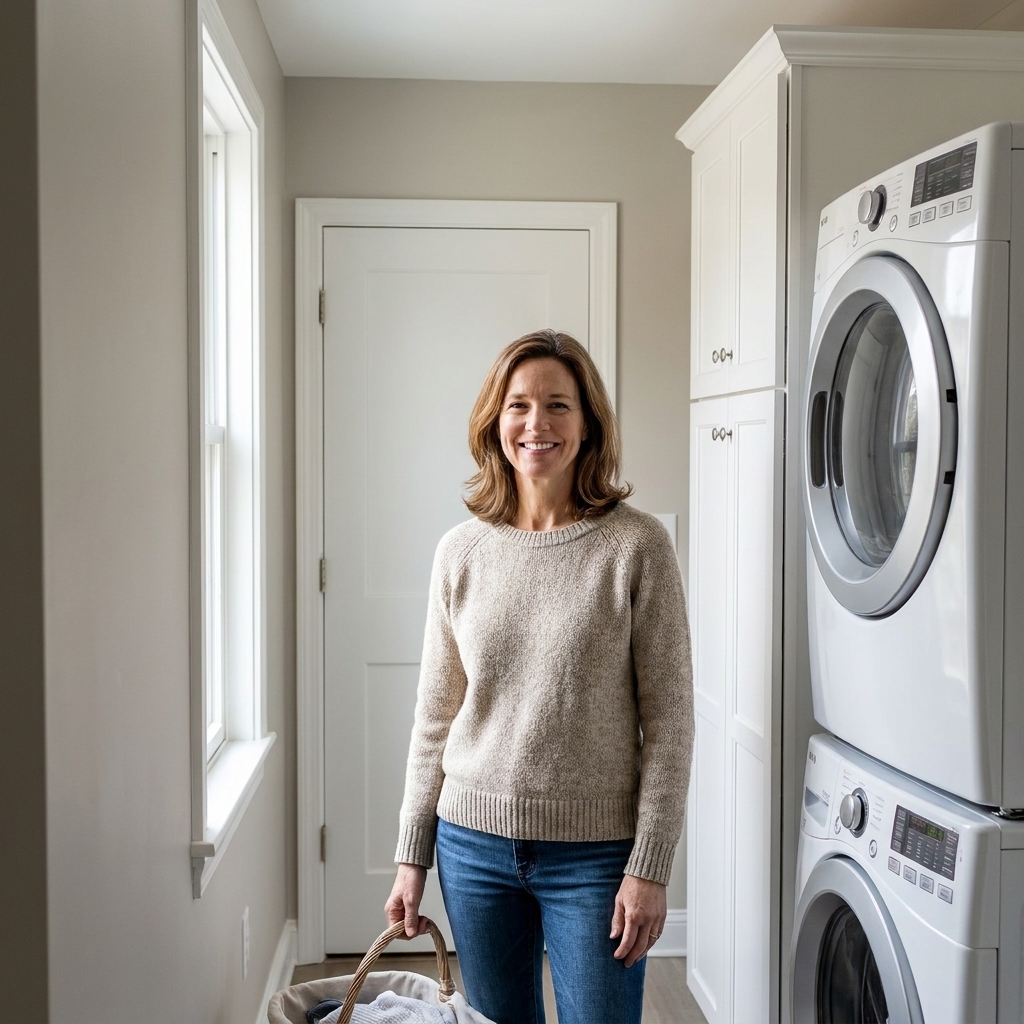

I used to think a “real” laundry room was the only way to stay sane with three kids. Then I lived through a season where the only available square footage was already spoken for by backpacks, pantry snacks, and muddy shoes. So I learned to do what small homes ask us to do best: blend functions, hide the chaos, and make it easy to maintain.
A concealed laundry station tucked into a kitchen pantry or mudroom can be a total game changer if you plan for three things up front: sound, airflow, and cabinetry that actually works. Let’s walk through how to do it in a way that feels intentional, not like you shoved appliances into a closet and hoped for the best.
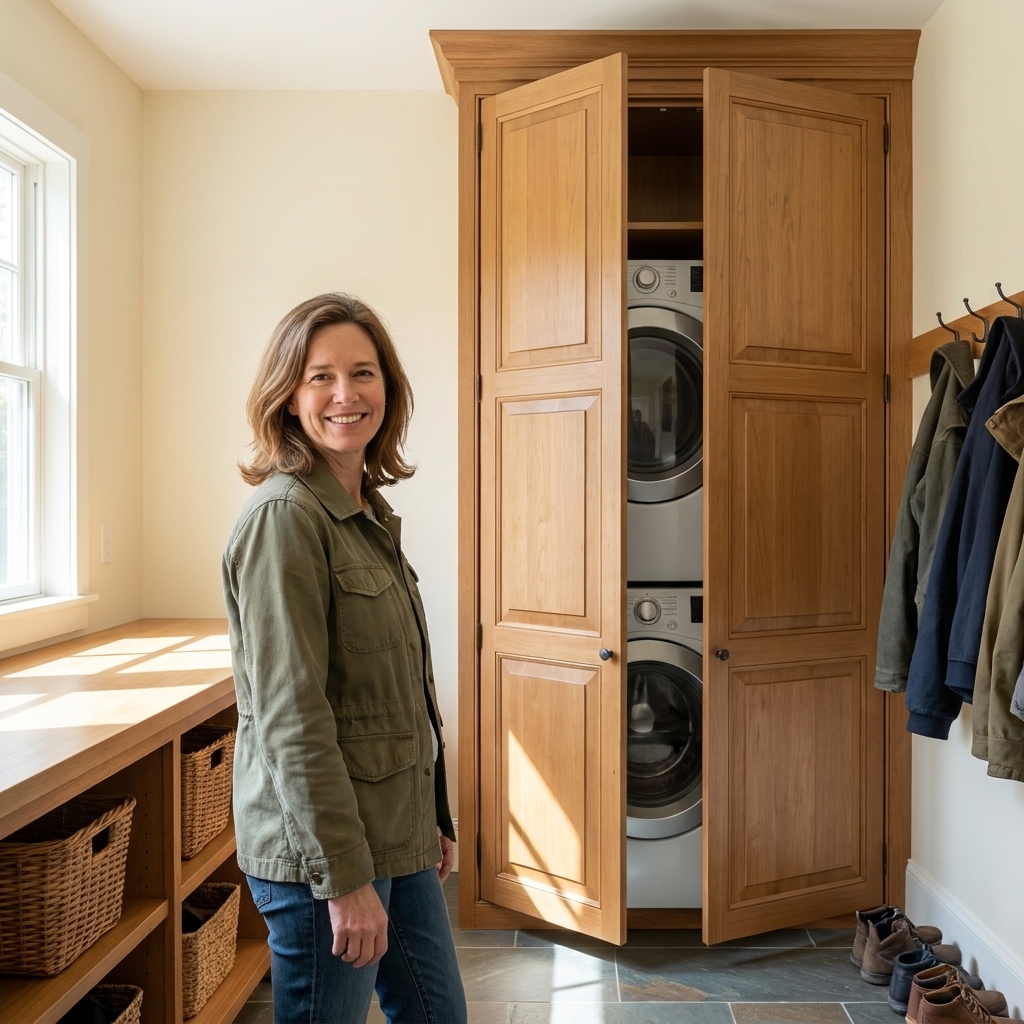
Start with the right spot
In a high-traffic space, placement matters as much as the appliances. Think about two things first: door swing and standing room. If you cannot comfortably open the cabinet and stand there to move a wet load over, you will hate it fast.
Best spots in a kitchen pantry
- On an exterior wall if you are venting a dryer. Shorter, straighter vent runs typically perform better and can reduce lint buildup risk, but confirm your model’s maximum equivalent duct length and your local code.
- Near a sink (or at least near plumbing access). Being close reduces install cost and makes leak protection easier.
- Not directly beside open food shelving. Laundry products and lint do not need to mingle with cereal boxes.
Best spots in a mudroom
- Closest to where dirty clothes enter, like sports uniforms and muddy socks.
- Avoid the tightest pinch point of your walkway. You need the doors to open comfortably, and you need room to stand in front of the machines.
- Choose a spot where noise will travel the least. Backing up to a bedroom wall is usually my last choice.
If you are choosing between pantry and mudroom, I like to ask one question: Where does laundry pile up now? Put the station closest to that choke point.
Choose appliances that fit the cabinet plan
Stacked vs side-by-side
For most pantries and mudrooms, stacked wins because it preserves floor space for a hamper, step stool, or a narrow pull-out. If you are on the fence, this breakdown can help: Stacked vs side-by-side laundry: which saves more space?.
Ventless vs vented dryers
If you can go ventless, your concealment options get easier fast. Ventless heat pump models still need adequate clearances and airflow around the unit per the manufacturer, and they often run best when the cabinet is not sealed up tight. They also handle moisture in one of two ways: some collect water in a reservoir you empty, and some can be plumbed to a drain. In a pantry or mudroom, that condensate plan matters more than you think.
If you are using a traditional vented dryer, treat venting as a non-negotiable design requirement, not an afterthought. I get into clearance and airflow details here: Airflow and dryer vent clearance in ultra-compact laundry closets.
Quick electrical reality check
Before you commit to cabinetry, confirm what your machines actually require. Many electric dryers need 240V and a dedicated circuit, while some compact or ventless models plug into 120V. Requirements vary by model, so check your installation manual and have an electrician confirm what your space can support.
Don’t forget service access
Even a perfectly hidden station needs maintenance access. Make sure your cabinet design allows:
- Access to shutoff valves
- Access to the outlet
- Ability to pull the machine out for hose replacement or vent cleaning
- Space to disconnect a vent or hoses without wrecking your cabinet panels
Cabinetry that hides laundry and still works
This is where concealed laundry stations either feel dreamy or drive you nuts.
Door styles for tight walkways
- Bifold doors: good for shallow clearance, but they can feel visually busy.
- Pocket doors: amazing if your wall can accommodate them.
- Wide swing doors: classic and simple, but you need the clearance.
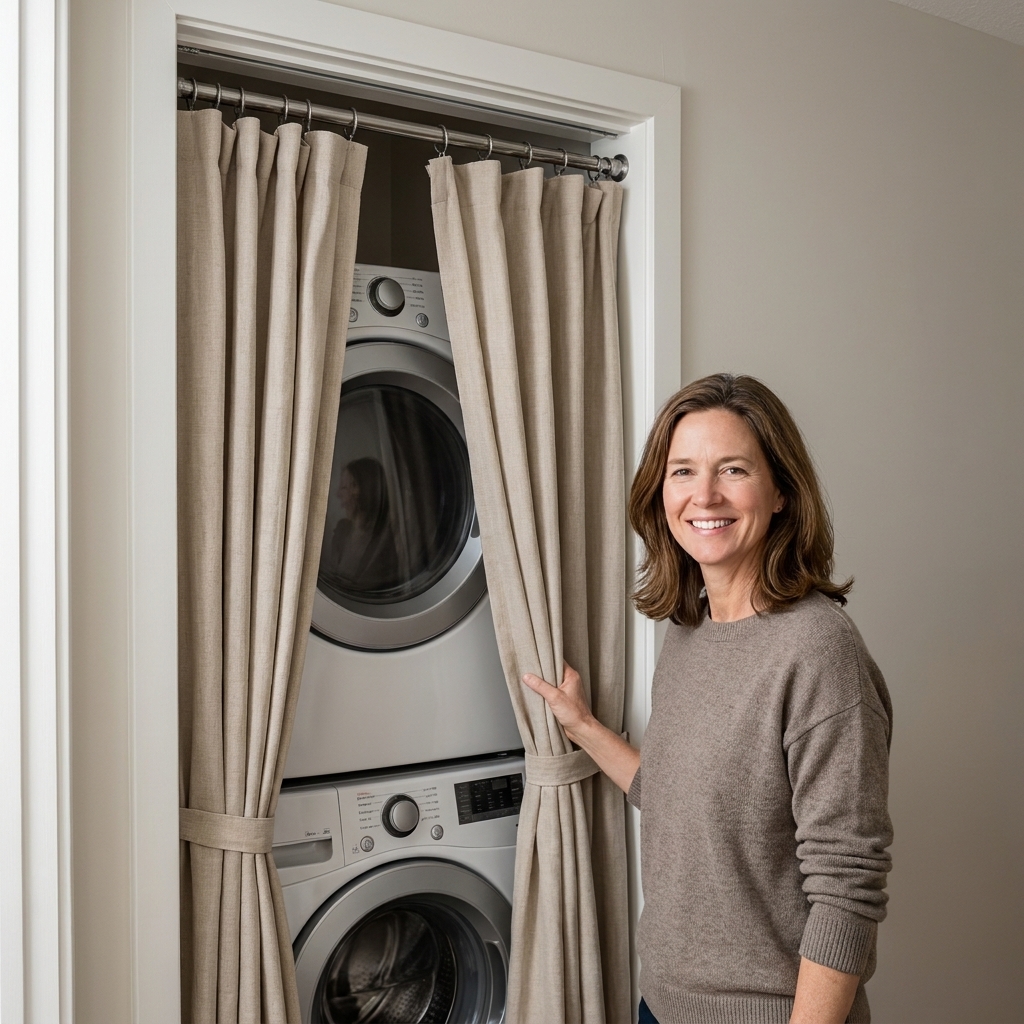
- Curtains: surprisingly practical in kid-heavy spaces, especially if you want easy access and fewer dings. If that idea intrigues you, see Swap laundry closet doors for curtains.
Add landing zones
In a pantry or mudroom, the laundry setup should do double duty. My favorite mixed-use add-ons:
- A counter for folding or sorting. Even a small one helps keep piles from migrating to the kitchen table.
- A vertical cubby for detergent and stain tools above or beside the machines, behind closed doors.
- A pull-out hamper on heavy-duty slides for dirty clothes or towels.
- A narrow pull-out for lint roller, mesh bags, and a mini sewing kit.
If you love the idea of built-ins, you may also like Floor-to-ceiling utility cabinets for narrow laundry rooms for layout inspiration that translates well to pantries.
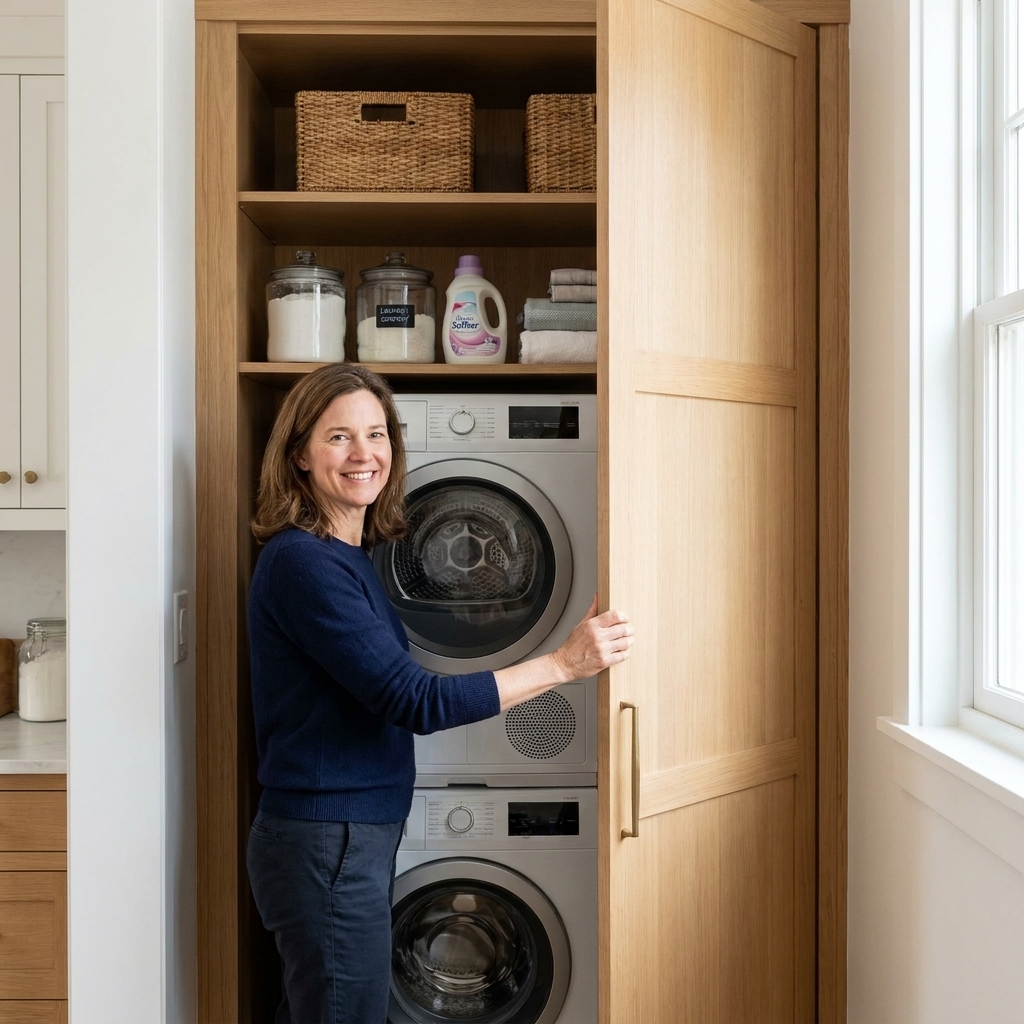
Sound control that matters
When laundry moves into the kitchen zone, noise becomes personal. Here’s what I have found to be worth the effort.
1) Start with vibration control
- Use vibration pads made for washers under each corner.
- Make sure the machine is properly leveled. A slightly unlevel washer is louder than you think.
2) Add soft, airtight door details
- Weatherstripping around cabinet doors can help reduce sound leaks and may reduce lint escape through gaps.
- Magnetic catches or quality latches keep doors from buzzing.
3) Add mass where you can
Sound is harder to stop in hollow spaces. If you are building or upgrading cabinetry:
- Choose thicker cabinet doors if possible.
- Add a finished panel behind the appliances instead of leaving an open stud bay.
4) Be careful with foam inside a laundry cabinet
Foam can trap dust and lint, and it is not something I like right next to a dryer. Focus first on leveling, door seals, and vibration control.
Venting and airflow
Concealment is great. Starving machines for air is not. Your goal is to keep the laundry station breathing even with the doors closed, and to manage heat and humidity so the pantry does not turn into a warm, damp box.
Give the cabinet an air path
- Louvered doors are the easiest built-in ventilation.
- Door undercut: leave a small gap at the bottom of the doors, especially for ventless dryers that pull from room air.
- Vent grilles high and low in the cabinet (placed so they do not dump lint onto food shelves). For pantry installs, I prefer grilles that face into the kitchen or a utility zone, not into dry goods storage.
Keep venting simple if you have a vented dryer
- Keep the vent run as short and straight as possible, within the limits in your dryer manual and local code.
- Avoid flimsy foil ducting. Use a rigid or semi-rigid metal duct where allowed, per local code and manufacturer instructions.
- Plan access for cleaning. Lint build-up is the enemy of performance and safety.
If your setup is extremely tight, read this airflow and clearance guide before you finalize cabinet depth and door style.
Water protection
Putting a washer in a pantry or mudroom is completely doable, but you do want to think like water is a messy toddler. Assume it will find a way to cause trouble eventually.
- Use a washer drain pan if your layout allows it.
- Install quality braided hoses, then inspect them annually and replace them per manufacturer or insurer recommendations.
- Add a simple leak alarm behind the machine where you can hear it.
- Know where the shutoff is and make sure you can reach it fast, even with the cabinet packed.
- Choose easy-clean flooring inside the cabinet zone if you are remodeling. In a pantry, that can be the difference between a wipe-up and a full panic.
Make it look intentional
Match the cabinet face
In a pantry, this usually means matching your kitchen cabinet color and hardware. In a mudroom, it might mean matching your built-in bench or locker system.
Use one bridge material
A single consistent element helps the laundry zone disappear:
- Same countertop material as nearby surfaces
- Same basket style across shelves and cubbies
- Same door fronts and pulls as surrounding cabinetry
Hide the supplies, not the workflow
I love decanting for small spaces because it cuts visual clutter fast and makes daily use easier. If you want a system that is pretty and practical, see Decanting and organizing laundry supplies.
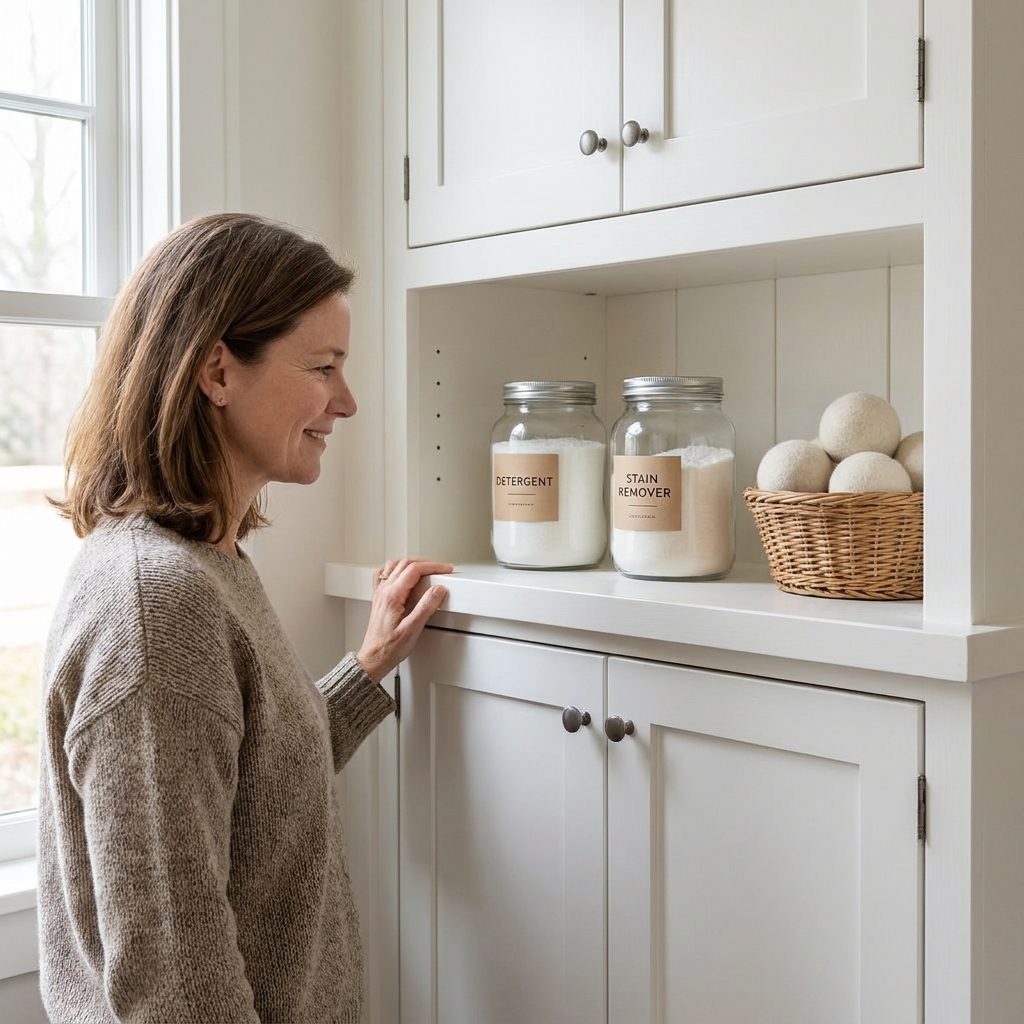
Mixed-use storage ideas
If it’s in a kitchen pantry
- Create a hard boundary between food and laundry. I like a full-height cabinet bay for laundry, then separate bays for food.
- Use back-of-door storage for stain sticks, lint roller, and delicates bags. These slim items are perfect there. Try these ideas: Back-of-door laundry closet storage ideas.
- Add a shallow shelf at eye level for “in-between” items like dish towels that are always being washed.
If it’s in a mudroom
- Pair laundry with a family sorting system. A built-in hamper setup prevents piles on the floor. See Built-in laundry sorting hamper system for families.
- Plan a drop zone right beside the laundry cabinet for items that need washing: sports gear, swimsuits, dog towels.
- Consider a fold-down drying rack nearby for air-dry items. If wall space is tight, this tutorial can help: How to install a space-saving fold-down wall drying rack.
Planning checklist
- Measure the appliance dimensions and door swing, plus clearance for hoses and venting.
- Confirm electrical requirements (voltage, amperage, and whether a dedicated circuit is required) and outlet location.
- Confirm plumbing access and drain route.
- Decide ventless vs vented and plan airflow accordingly.
- If ventless, confirm condensate handling (tank vs drain hookup) and have a heat and humidity plan for the space.
- Choose door style based on walkway clearance.
- Plan sound control: leveling, vibration pads, weatherstripping.
- Build in one landing zone: counter, pull-out hamper, or shelf set.
FAQ
Can I put a washer and dryer in a pantry?
Often yes, as long as you can meet electrical, plumbing, and venting requirements for your specific machines, and you can maintain airflow. I also recommend separating the laundry bay from food storage so lint and fragrance products stay contained.
How do I keep it from smelling like detergent in my kitchen?
Keep products in closed containers inside a closed cabinet, avoid open baskets of scented items, and run a cleaning cycle on the washer regularly. Weatherstripping around doors can help, too.
What is the biggest mistake people make with concealed laundry?
Designing beautiful doors and cabinetry, then forgetting the boring parts: clearance for hoses, access for maintenance, and airflow. If the station is hard to use, it will not stay tidy.