
My ironing board used to live in the worst possible place: wedged between the washer and the wall, just waiting to topple. In a small laundry room (or a laundry closet like mine), that kind of clutter turns into a daily headache fast. The good news is that ironing boards are surprisingly easy to store when you stop treating them like a floor item and start treating them like a wall item.
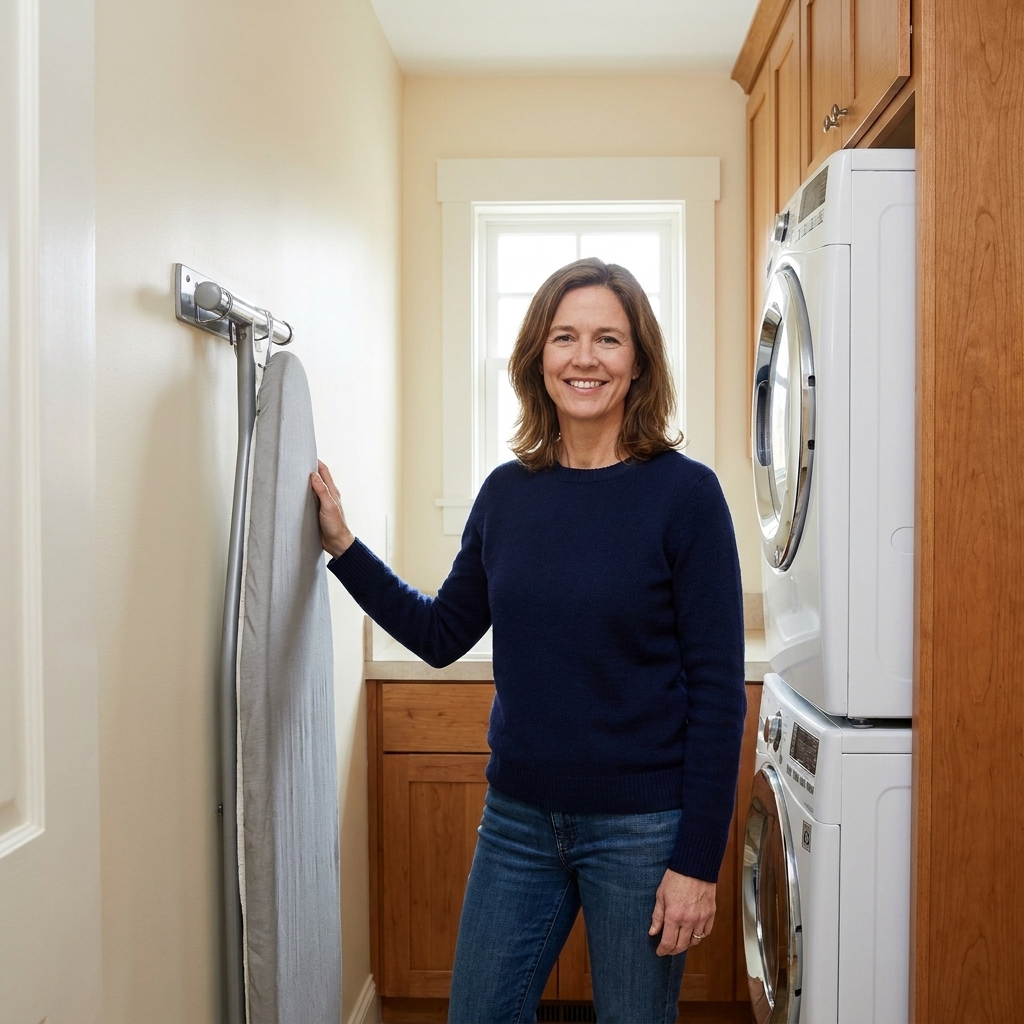
Below are the best wall-mounted and hidden ironing board storage solutions I recommend for real-life laundry rooms, including what works best in tight spaces, rentals, and family homes.
Quick pick: Pick your best fit
- Small laundry closet: Over-the-door hooks, behind-door wall hooks, or a slim recessed cabinet between studs.
- Open laundry room wall: A dedicated wall hanger system with an iron caddy, or a flip-down wall-mounted ironing board.
- Need it truly hidden: Recessed cabinet or inside a tall utility cabinet.
- Want it hidden but no drywall cutting: A pull-out cabinet rack or a drawer-style pull-out board (if you have the right cabinet).
- Renting: Over-the-door options or removable hook systems rated for the board’s weight.
If you are actively reworking your laundry storage, the ideas in Organization & Storage pair really well with ironing board placement since you can plan the awkward items together.
Before you buy: Measure first
- Door clearance: Measure the gap at the top of the door and the door thickness for over-the-door hooks.
- Stud bay width: If you want a recessed cabinet, confirm your stud spacing and check for anything in the wall where you plan to cut.
- Cabinet opening: For pull-outs, measure the cabinet interior width, depth, and hinge clearance.
- Your board type: X-leg boards, tabletop boards, and extra-wide boards do not all fit the same brackets and caddies.
1) Over-the-door hooks
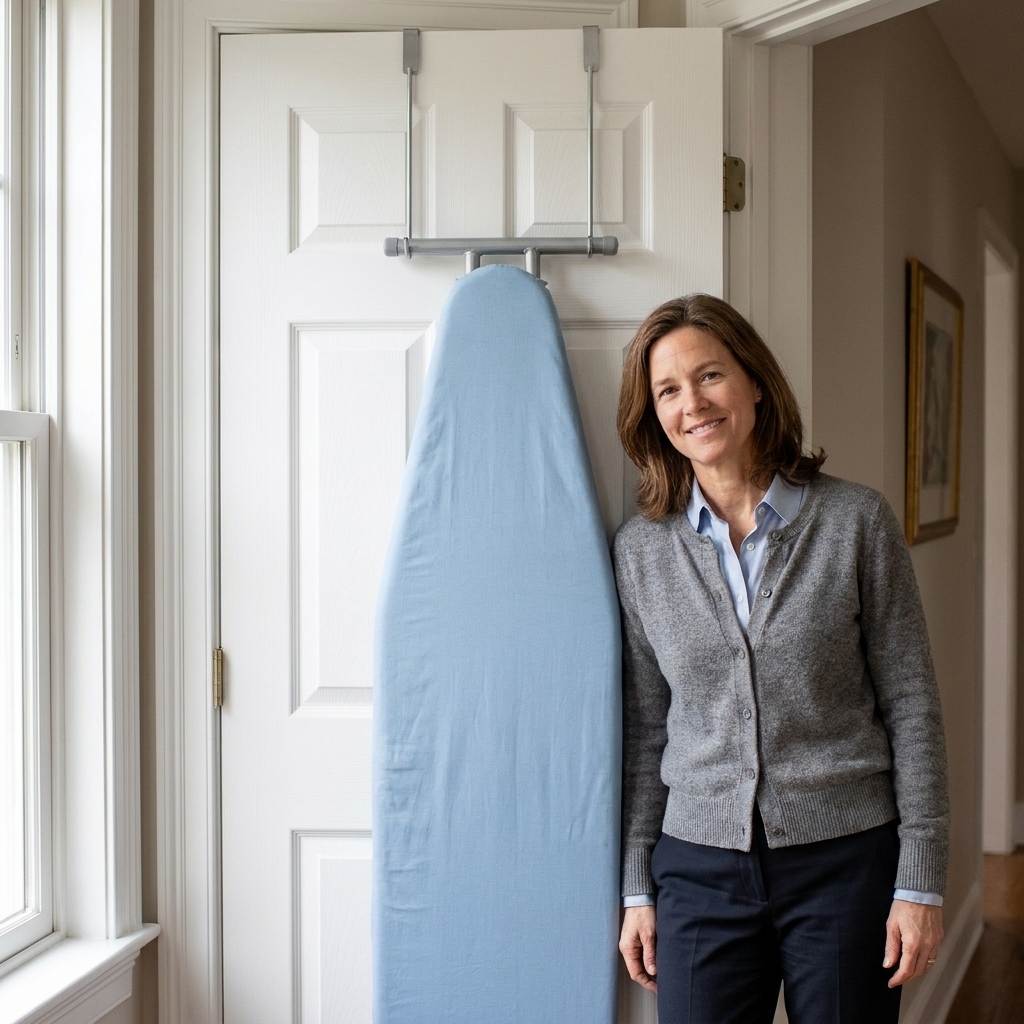
If you want an immediate win, over-the-door storage is hard to beat. It uses dead space, requires no drilling, and keeps the board from sliding around behind your machines.
Why it works
- No holes in the wall, usually no tools.
- Great for laundry closets where wall space is limited.
- Easy to move if you rearrange.
What to look for
- Deep, coated hooks that will not dent the board frame.
- Door clearance: measure the gap at the top of the door so it still closes smoothly.
- Stability: models with a stabilizer pad or lower bracket reduce swinging.
Tip: Put a thin felt pad where the metal touches the door to prevent scuffs, especially on painted interior doors.
2) Simple wall hooks
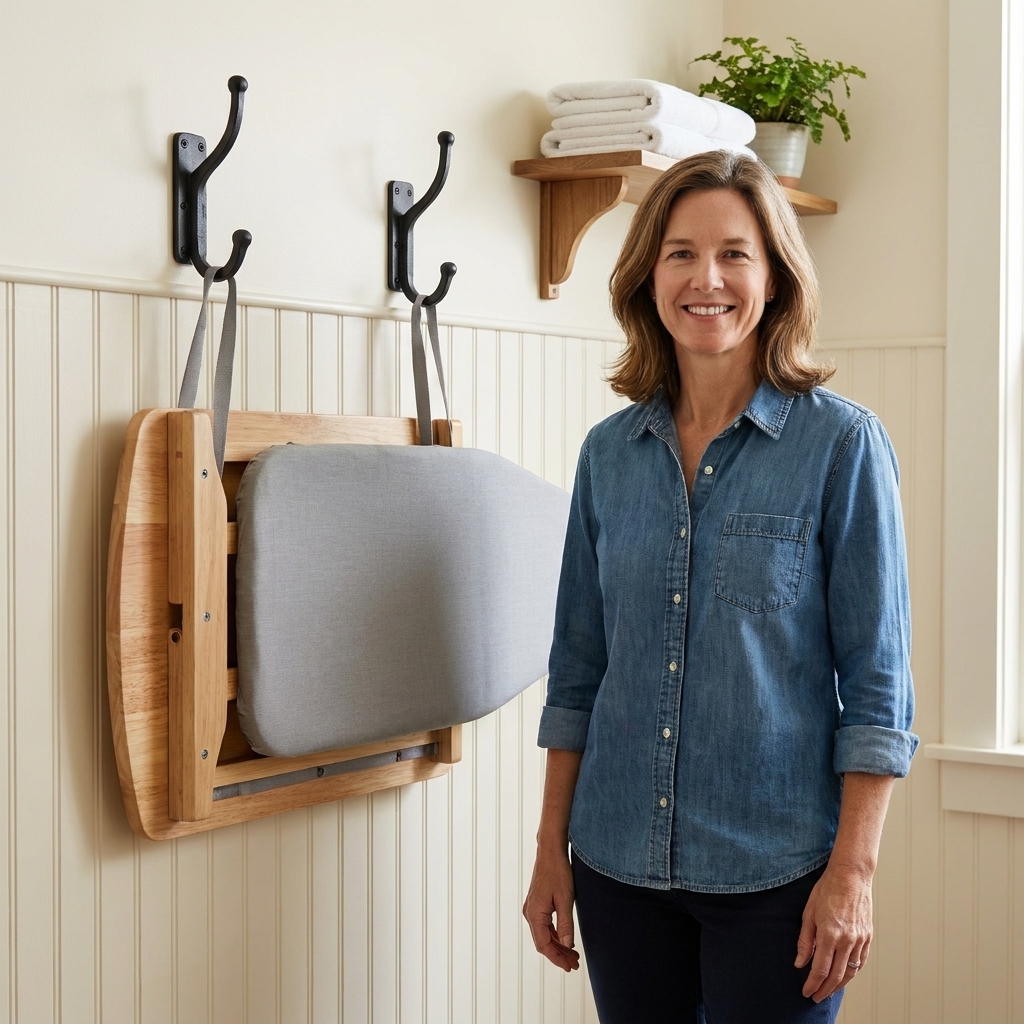
Two heavy-duty hooks, installed into a stud (or into studs if you use a wider spacing), can store a full-size board flat against the wall. This is the solution I see work best in busy family laundry rooms because it is intuitive. Grab it, use it, hang it back up.
Best spots for wall hooks
- On the side wall beside the dryer (leave room for vents and airflow).
- On the wall behind the laundry room door, if the door swings away from it.
- Inside a utility closet wall, especially near a folding surface.
Installation notes
- Use stud placement whenever possible. Anchors can work, but the board’s weight plus daily tugging adds up.
- Hang the board high enough that the feet do not scrape the floor, but low enough you are not wrestling it down.
- Leave clearance for the board to lift off the hooks without bumping shelves.
If you are already building storage, wall hooks combine nicely with shelves above. I walk through shelf choices and spacing ideas in Floating Shelves vs Wire Racks for Laundry Storage.
3) Holder with an iron caddy
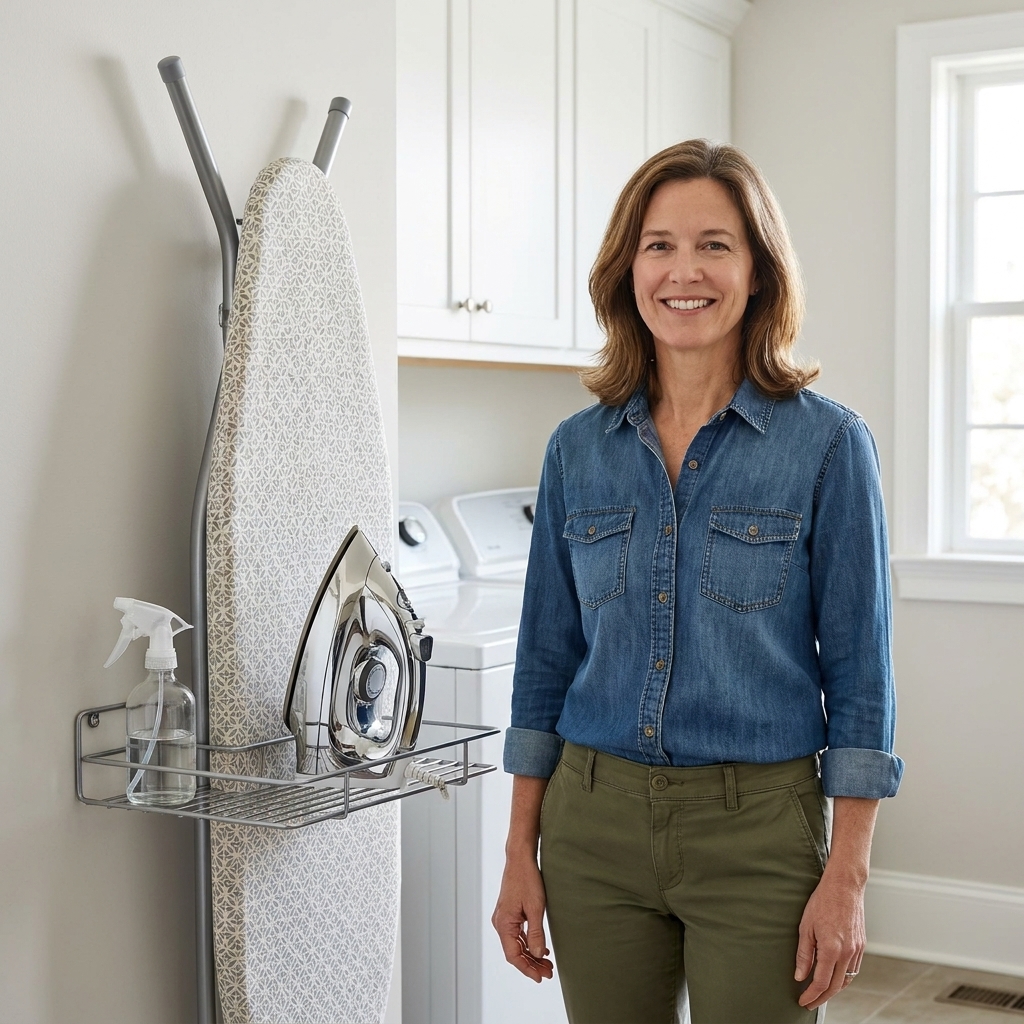
If you iron often, a purpose-built holder is worth it. These typically cradle the board and also provide a spot for the iron and a spray bottle, which is a big deal in small rooms where every surface is already doing a job.
What makes a good holder
- Heat-aware iron cradle (often metal or silicone-lined) so you are not setting a recently used iron on a shelf or wire rack.
- Cord management so the cord is not dangling and catching on baskets.
- Wide base support for the board, not just a skinny hook that lets it twist.
Placement that feels good
- Near your folding station, but not so close that it blocks drawers or hampers.
- Avoid mounting where it blocks access to outlets you need for washer or dryer plugs.
Quick fit note: If you use a larger iron or a steam-generator base, double-check caddy dimensions. Some caddies are made for compact irons and will not comfortably hold bulkier setups.
This is also one of my favorite upgrade additions after you have a folding surface. If you are planning an over-the-machines worktop, my build details are here: DIY Waterfall Countertop Folding Station Over Front Loaders.
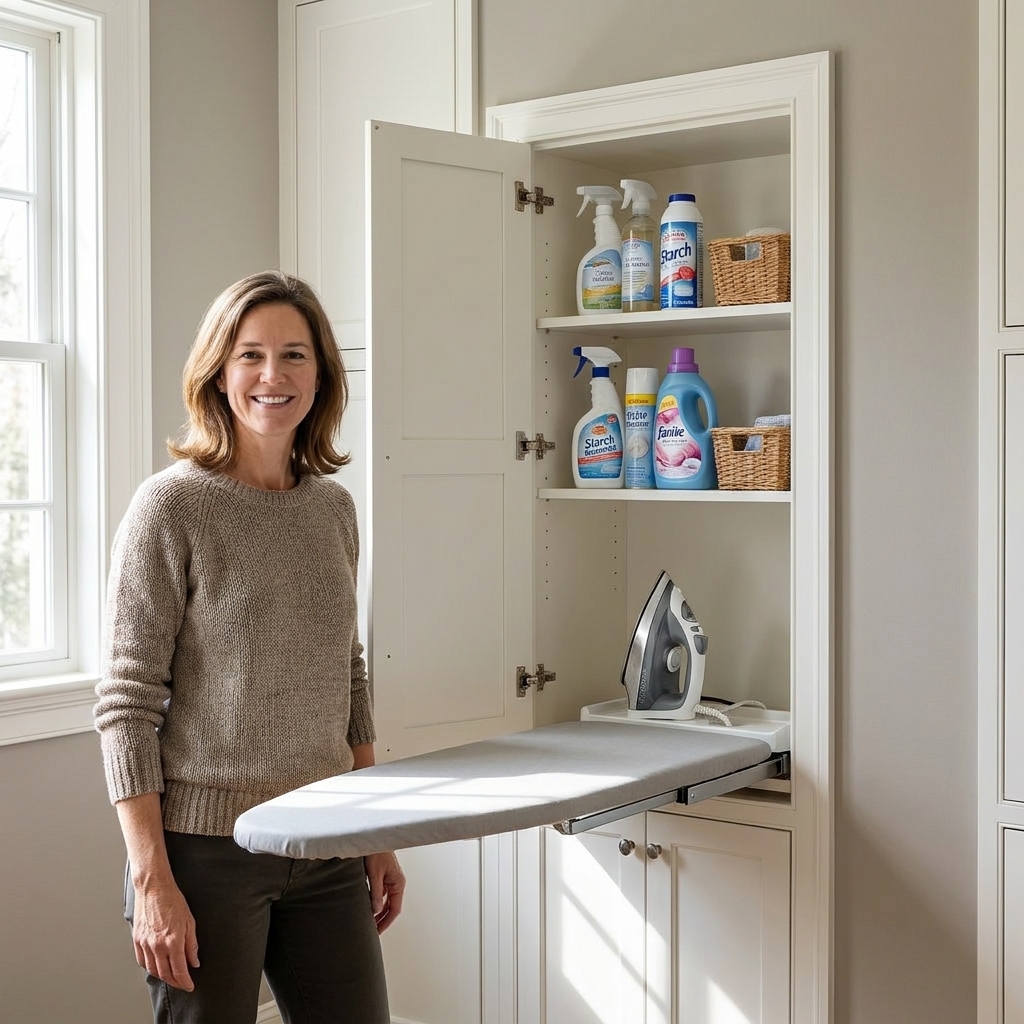
4) Recessed wall cabinet
If you want the ironing board completely out of sight, a recessed cabinet is one of the cleanest, most space-efficient looks. It tucks between studs so it barely eats into your room at all, which is perfect in narrow laundry zones and hall laundry closets.
Why recessed cabinets shine
- The board and iron disappear behind a door.
- Minimal footprint, since most of the depth is inside the wall.
- Looks built-in and intentional, even in a small space.
Before you buy or cut
- Check the wall: Exterior walls often have insulation and may have air sealing or a vapor barrier you do not want to compromise. Any wall can hide wiring or plumbing, so confirm what is behind your drywall before you open it up.
- Find stud spacing: Many cabinets are designed for standard stud bays, but measure yours. Stud placement can be the deciding factor.
- Plan the swing: The cabinet door should open without hitting shelves, machines, or a nearby door.
Mom-of-three reality check: If little hands are in the house, choose a cabinet with a latch that stays shut. A stored iron cord is basically a toddler invitation.
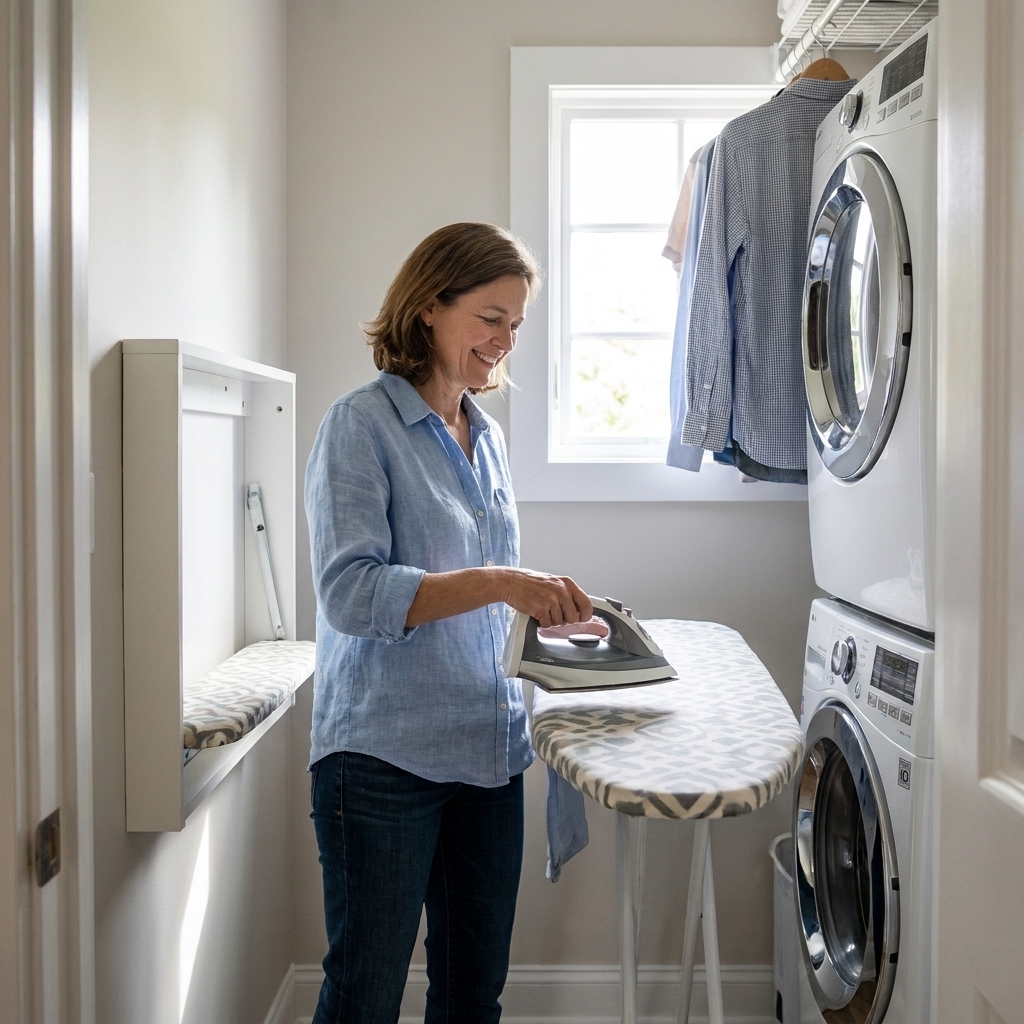
5) Flip-down wall board
For small laundry rooms where you do not have space to set up a freestanding board, a flip-down unit can be a game changer. It mounts on the wall and folds up flat when you are done.
Where flip-down boards work best
- In a mudroom-laundry combo where floor space needs to stay open.
- In long, narrow laundry rooms where a traditional board blocks walking paths.
- In a closet laundry setup where you can mount it on the side wall and use it with doors open.
What to look for
- Solid mounting system that hits studs.
- A positive latch or a hinge that holds firmly so it stays up when stored and feels steady when in use.
- Comfortable height: measure so you are not ironing at an awkward angle.
6) Inside-cabinet pull-outs
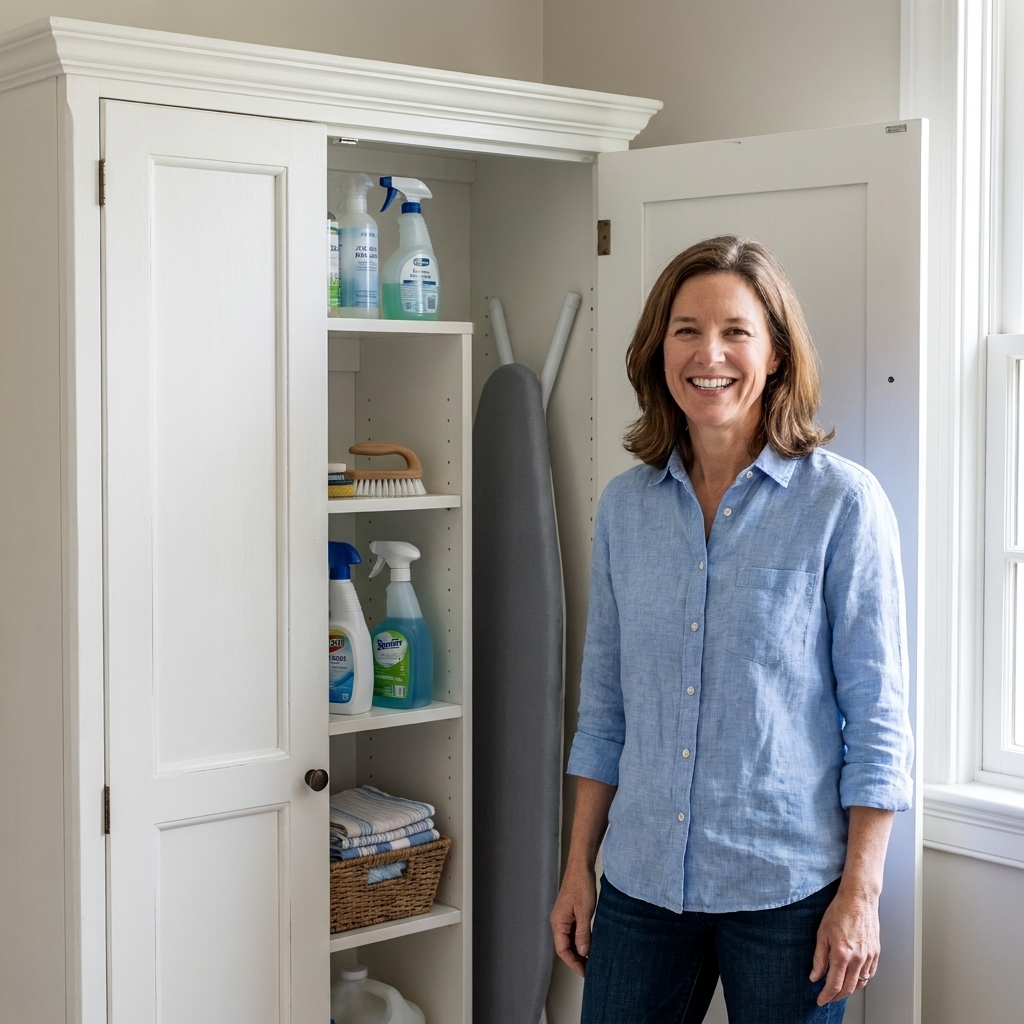
If you have a base cabinet, pantry cabinet, or tall utility cabinet in your laundry area, you can hide an ironing board inside it. This is especially nice when you want the space to feel calm and minimal, without cutting into drywall.
Popular hidden cabinet options
- Door-mounted brackets: The board hangs on the inside of a cabinet door.
- Slide-out rack: A vertical pull-out stores the board upright and slides out like a skinny pantry.
- Pull-out ironing board drawer: A board that folds out from a drawer base (amazing when it fits, but measure carefully).
Make sure it actually fits
- Measure the ironing board at its widest point and include the legs and hinge bulk.
- Confirm the cabinet door hinges can handle the added weight if you mount to the door.
- Leave room for detergent jugs and hampers so you are not playing storage Tetris.
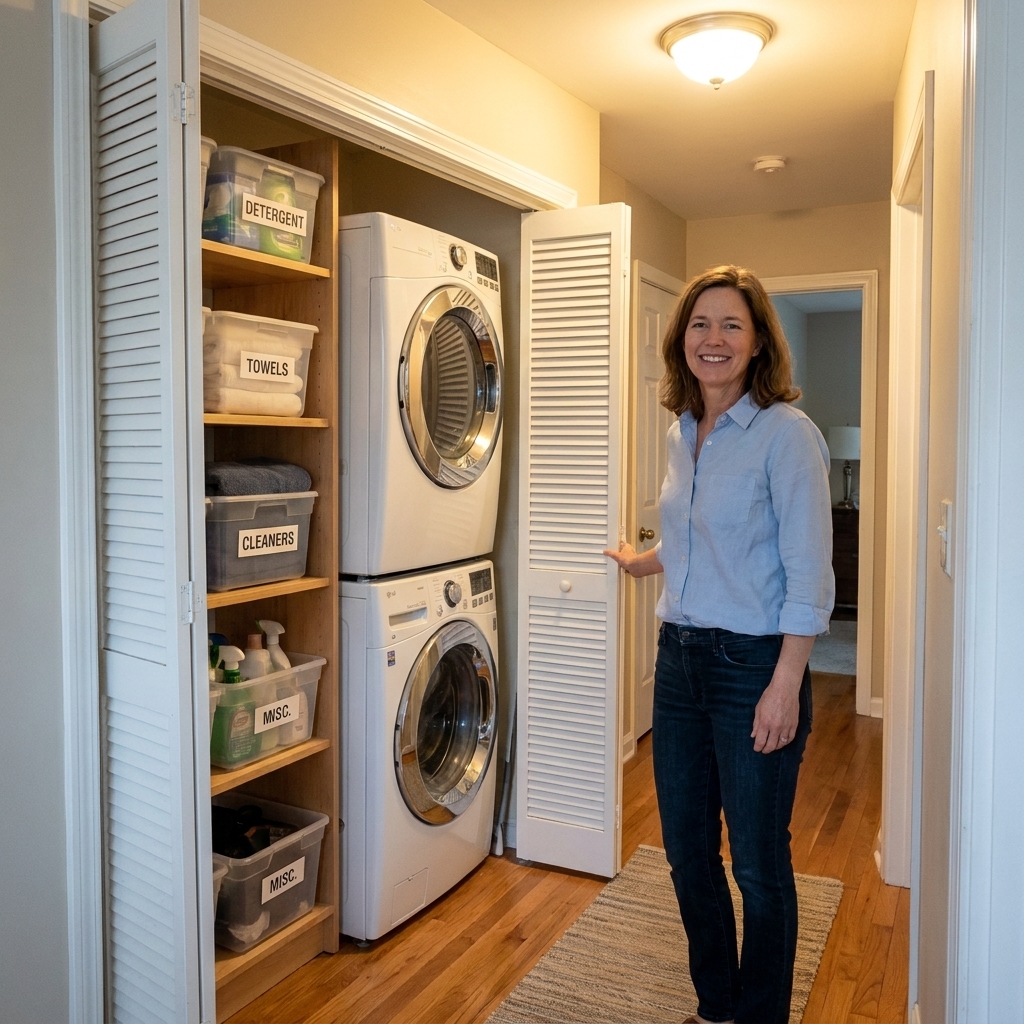
If your laundry setup is closet-sized, this style of hidden storage often pairs well with a full vertical zone plan. I share my best small-layout strategies here: Maximizing Storage in a Tiny Bi-Fold Laundry Closet.
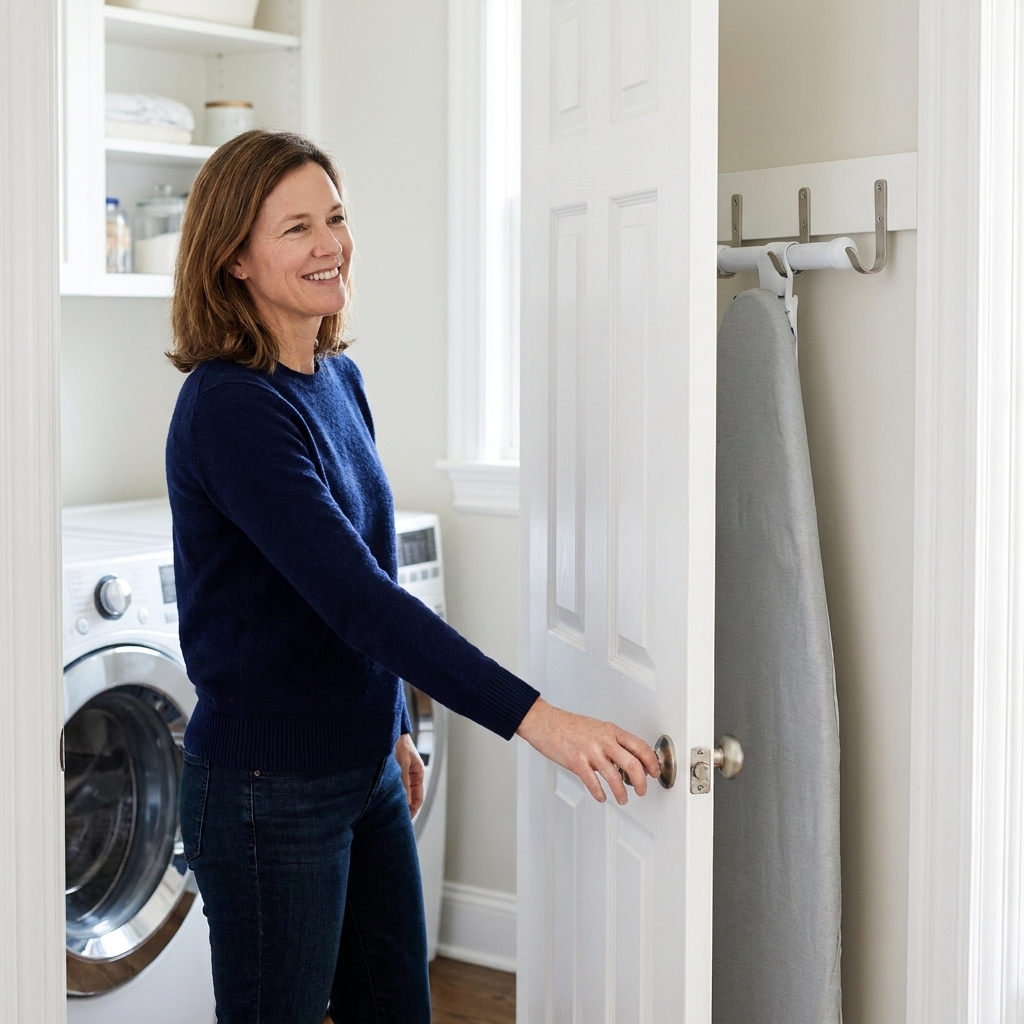
7) Behind-the-door hooks
Behind the laundry room door is one of the most underused storage areas in the whole house. If your door opens against a blank wall, you can mount low-profile hooks or a slim holder there and keep the ironing board practically invisible.
How to make it work
- Open the door fully and mark the hidden rectangle behind it.
- Keep the board high enough that the door knob does not bang into it.
- Use a rubber bumper or door stop if needed so the door does not slam into your stored items.
What I avoid
- Leaning the board in a corner: it always migrates, falls, or blocks a hamper.
- Storing it on the floor behind the machines: dust city, plus it is miserable to pull out.
- Mounting too close to heat or vents: especially near a dryer exhaust path or a radiator.
- Overstuffed cabinets: if you dread pulling it out, you will stop using it or you will leave it out permanently.
Safety and spacing checklist
- Studs matter: If the solution bears weight and gets tugged daily, mount into studs when possible.
- Anchors are not all equal: If you cannot hit a stud, use the hardware recommended by the mount manufacturer and choose an anchor designed for your wall type and load. Toggle-style anchors are typically more secure than basic plastic expansion anchors for this kind of pulling motion.
- Follow rated loads: Respect the product’s load rating, and remember the real stress comes from repeated pulling, not just the board’s static weight.
- Mind the cord: Store the iron cord so it cannot snag or dangle.
- Heat safety: Let the iron cool before placing it in any enclosed storage unless the holder is designed for heat.
- Clearance: Make sure doors, drawers, and washer lids (or front-loader doors) can open fully.
- Kid and pet traffic: Keep sharp metal feet and hot tools out of the main path.
Budget-friendly add-ons
You do not have to buy a fancy system to make your setup feel finished. A few small tweaks go a long way.
- Command-style cord clips to tame the iron cord (only for the cord, not for supporting the board).
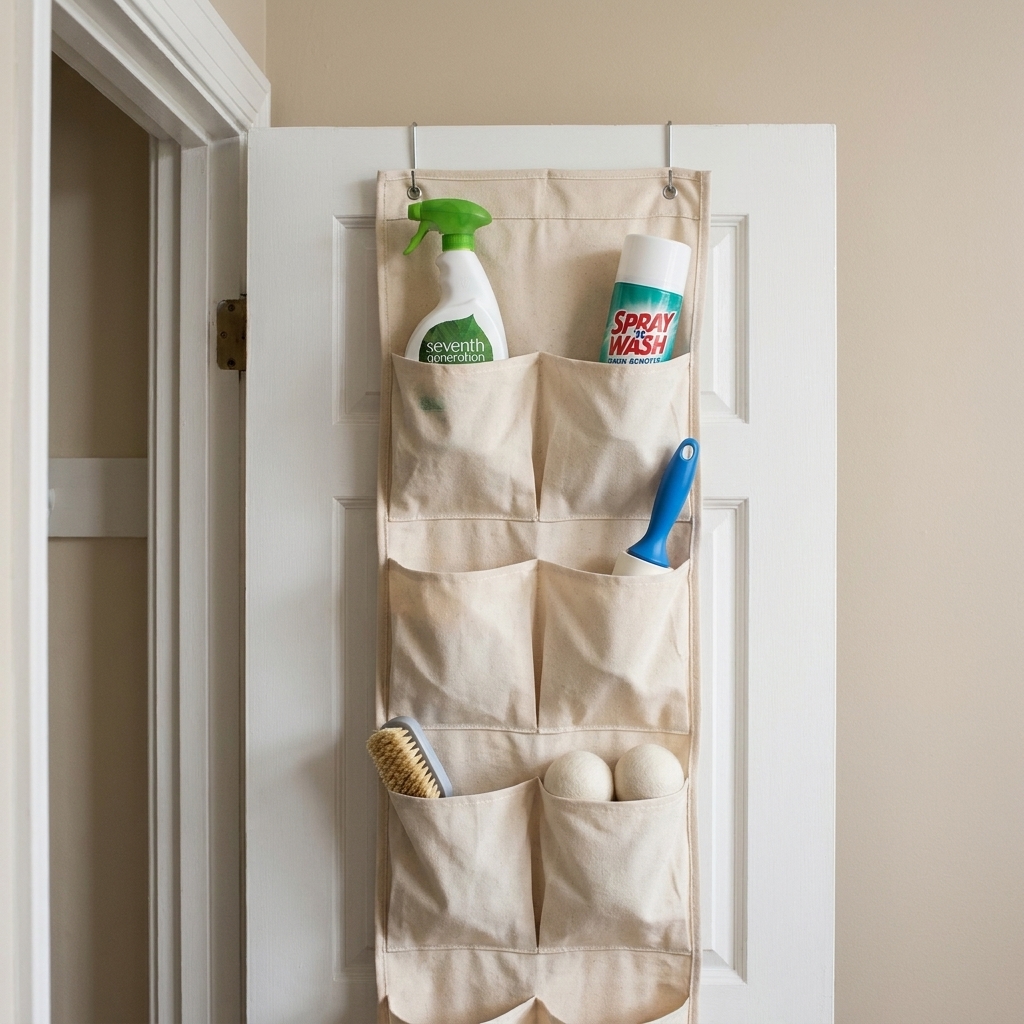
- A small wall bin for starch, lint roller, and a water spritzer.
- One labeled basket on a shelf for mending and ironing so the supplies stay together.
If you love a low-cost organization challenge, my favorite small-space upgrades are in 15 Dollar Store Organization Hacks for a Budget Laundry Makeover.
FAQ
Can I mount an ironing board to drywall with anchors?
Sometimes, yes, but it depends on the board’s weight, the mount design, and how often you pull it down. If you iron weekly (or daily), I strongly prefer hitting a stud. If you have to use anchors, follow the mount’s rated load, choose a heavy-duty anchor appropriate for your wall type, and remember that repeated tugging is what loosens weaker anchors over time.
What is the slimmest hidden option?
If you can use the wall cavity, a recessed cabinet is one of the slimmest ways to hide a full-size board because the depth lives inside the wall. The tradeoff is that you are constrained by stud bay width, what is inside that wall, and where the door can swing. If recessed is not an option, behind-the-door hooks are usually the next best invisible solution.
Does board type matter for storage?
Yes. Full-size X-leg boards tend to be heavier and need sturdier hooks or brackets. Tabletop boards can fit on shorter hooks or inside smaller cabinets. Wall-mounted fold-out boards are their own category because the storage and the board are one unit.
Where should I store the iron?
Ideally in a heat-safe caddy mounted with the board, or in a nearby shelf bin once fully cooled. I avoid storing a warm iron in a closed cabinet. It is not worth the risk.
My bottom line
If you want the quickest win, go over-the-door. If you want the sturdiest everyday setup, install wall hooks or a holder with an iron caddy. And if you want that calm, built-in look in a small laundry space, a recessed cabinet is absolutely worth considering, as long as your wall layout allows it.
Whichever option you choose, the goal is the same: the ironing board should have a home that is easy enough to use that you actually put it back. That is the secret sauce to keeping a laundry room feeling peaceful, even when the laundry pile is not.